
19 min 41 sec
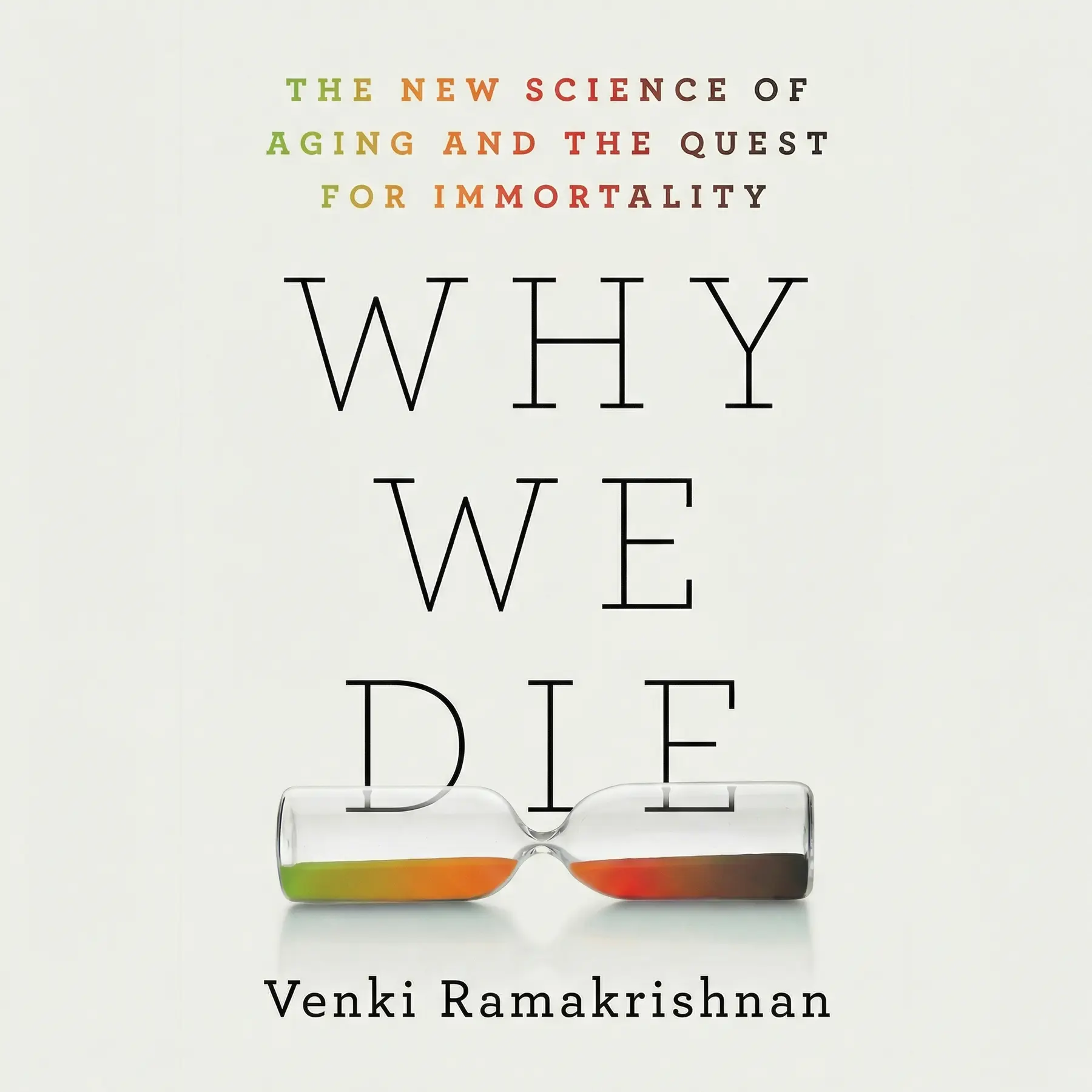
Why We Die: The New Science of Aging and the Quest for Immortality
Why We Die explores the biological machinery behind aging, the controversial quest to achieve extreme longevity, and the profound ethical and societal questions that arise when we challenge the finality of human life.
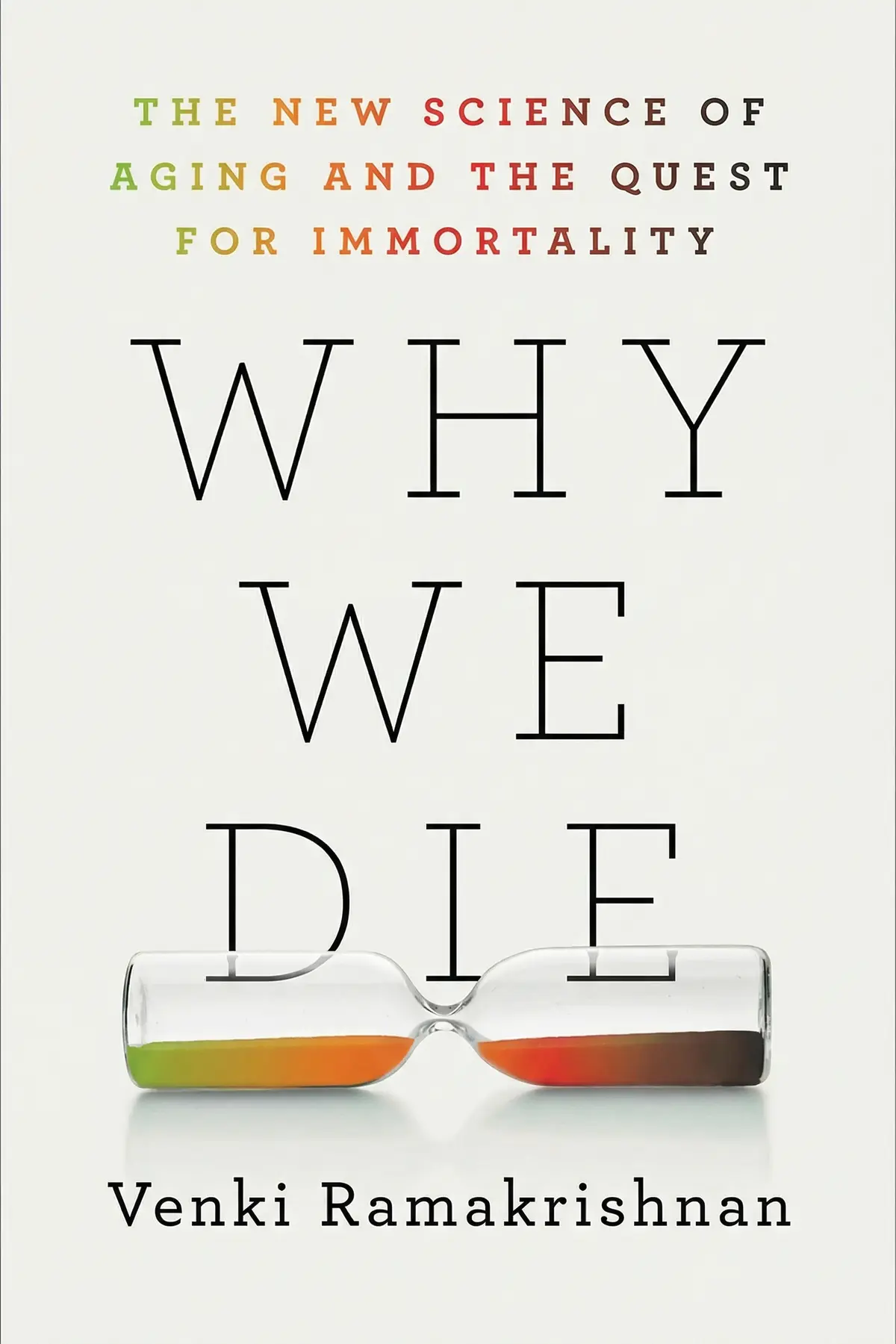
Table of Content
1. Introduction
1 min 52 sec
Every morning, millions of us look in the mirror and notice the subtle, relentless march of time—a new gray hair, a slightly deeper wrinkle, or a morning where the joints feel just a bit stiffer. For as long as we have been sentient, humans have been trying to outrun this process. We’ve moved from alchemy and folklore to high-tech laboratories where the goal isn’t just to live better, but to live significantly longer—perhaps even forever. But what if our quest for immortality is built on a misunderstanding of what life actually is?
In this exploration of Venki Ramakrishnan’s Why We Die, we are invited to pull back the curtain on the most fundamental mystery of our existence. We often think of death as a single moment, a light switch being flipped off, but the biological reality is far more complex. It is a slow, intricate breakdown of a system that was never really designed to last indefinitely. This narrative doesn’t just explain the ‘how’ of aging; it asks the uncomfortable ‘why.’ Why do our cells give up? Why do our genes seem to care more about our children than they do about us? And most importantly, what would happen to the world if we actually succeeded in stopping the clock?
As we navigate the cutting edge of longevity research, from the frozen chambers of cryonics facilities to the molecular repairs of our DNA, we’ll discover that the science of death is actually the ultimate celebration of life. By understanding the limits of our biology, we can better appreciate the time we have and see through the seductive promises of an anti-aging industry that often prioritizes profit over physiological truth. Let’s dive into the fascinating, sometimes messy, and always profound journey toward the end of our lives.
2. The Fluid Definition of Death
2 min 09 sec
Determining exactly when a person ceases to exist is more complicated than a stopped heart, revealing a surprising gap between biological and legal definitions.
3. The Genetic Fountain of Youth
1 min 58 sec
While our bodies are destined to decay, a specific set of cells holds the secret to biological immortality, passing the torch of life across generations.
4. The Theoretical Ceiling of Life
2 min 03 sec
Despite medical breakthroughs and rising average lifespans, evidence suggests there may be a hard biological limit that humans simply cannot cross.
5. The Paradox of DNA Repair
2 min 02 sec
Aging isn’t just caused by damage itself, but by the body’s own frantic and sometimes destructive attempts to fix its crumbling genetic blueprint.
6. The Flawed Vision of Cryonics
1 min 53 sec
Freezing the dead for future revival remains a popular dream for the wealthy, but it ignores the staggering complexity of the human brain’s architecture.
7. Profit and Hype in the Longevity Industry
1 min 59 sec
The massive influx of capital into anti-aging startups is driven more by a primal fear of death than by proven clinical results.
8. The Hidden Costs of Forever
2 min 01 sec
Extending the human lifespan significantly would trigger a cascade of societal problems, from extreme wealth concentration to generational stagnation.
9. Accepting the Beauty of the Finish Line
1 min 59 sec
Rather than obsessing over an unreachable immortality, we should embrace the simple, proven habits that enhance the life we already have.
10. Conclusion
1 min 45 sec
As we wrap up our journey through the science of mortality, we are left with a clearer picture of why we age and what it truly means to die. We’ve seen that aging is not a single process, but a complex, interconnected failure of the systems that keep our molecular blueprints intact and our cells communicating. We’ve explored the seductive but often hollow promises of the longevity industry and the staggering biological hurdles that stand in the way of true immortality. From the ‘reset button’ found in our germ-line cells to the ethical minefields of a world that refuses to grow old, it’s clear that the quest to live forever is fraught with more questions than answers.
The throughline of Venki Ramakrishnan’s insights is a call for balance. While it is noble and necessary to pursue medical advancements that alleviate the suffering associated with age-related diseases, we must be careful not to let our fear of death drive us toward a future that is socially and spiritually bankrupt. The goal should not be to add more years to life at any cost, but to add more life to our years.
So, what can you take away from this? Perhaps the most actionable advice is to stop looking for the fountain of youth in a laboratory and start finding it in your daily habits. Move your body, nourish it with real food, and give it the rest it needs. Beyond the physical, remember that it is the very fact that our time is limited that makes every moment valuable. The finitude of life is not a flaw in the system; it is the framework that allows for growth, change, and the constant renewal of the human spirit. Use your time wisely, live with intention, and appreciate the incredible biological miracle that is a single, finite human life.
About this book
What is this book about?
Humanity has long been obsessed with the fountain of youth, but modern science is taking this pursuit from myth to laboratory. This book investigates the intricate biological processes that lead to our inevitable decline, from the accumulation of DNA damage to the failure of cellular cooperation. Nobel laureate Venki Ramakrishnan examines the current state of anti-aging research, separating the grounded science from the hype fueled by silicon valley billionaires. The narrative bridges the gap between complex molecular biology and the philosophical implications of extending the human lifespan. It challenges readers to consider what it means to be alive, the difference between biological survival and human experience, and the potential consequences of a world where death is no longer a certainty. Ultimately, the book promises a clear-eyed look at whether we should be trying to cure aging at all, or if our finite nature is what gives life its meaning.
Book Information
About the Author
Venki Ramakrishnan
Venki Ramakrishnan is a world-renowned biologist who was awarded the 2009 Nobel Prize in Chemistry for his groundbreaking work on the structure and function of the ribosome. He served as the president of the Royal Society from 2015 to 2020 and currently leads a distinguished research group at the Medical Research Council Laboratory of Molecular Biology in Cambridge, UK. Ramakrishnan is also the acclaimed author of Gene Machine.
Ratings & Reviews
Ratings at a glance
What people think
Listeners find the book deeply insightful, with one review highlighting how it masterfully explains complex biological processes. The writing is also well-organized and simple to follow, as one listener mentions that the science is easily understood. Furthermore, the work delivers significant insights into combatting cellular effects of aging. However, reactions to the advice level are varied, with one listener noting the lack of practical information regarding habits.
Top reviews
Ivan
Venki Ramakrishnan has managed to take the incredibly dense machinery of cellular decay and turn it into a compelling narrative that even a layperson can grasp. Unlike some other pop-science books that lean too heavily on anecdotes, this one stays grounded in the actual mechanisms of molecular biology. I was particularly fascinated by the sections detailing the combatting of cellular aging through various experimental therapies. The writing is well-structured and moves at a brisk pace, which is no small feat given the complexity of the subject matter. It's refreshing to see a Nobel laureate explain his field with such humility and clarity. If you want to understand the current frontier of longevity research without the hype, this is your book. I walked away feeling like I actually understood the trade-offs evolution made for our survival.
Show moreAom
After hearing so many wild claims about living to 150, reading a Nobel laureate’s grounded perspective on longevity was a breath of fresh air. The book masterfully explains complex biological processes like senescence and the role of mitochondria without ever feeling like a dry textbook. Ramakrishnan takes a hard look at things like calorie restriction, rapamycin, and metformin, providing a balanced view of what actually works in the lab versus what is just marketing. It’s a very informative and well-written book that doesn't shy away from the ethical and social problems of an aging population. I loved how it bridged the gap between hard science and the human experience of mortality. The research quoted is wide-ranging and gave me a lot to think about regarding the future of medicine.
Show moreAkira
As someone who hasn't stepped into a biology classroom in twenty years, I found this remarkably easy to follow. The author’s clear passion for his discipline shines through on every page, making even the most technical bits about protein synthesis feel vital and interesting. I specifically appreciated the detailed breakdown of how dementia and other age-related diseases are being researched at the molecular level. It’s not just a book about death; it’s a book about the incredible complexity of life. The writing is well-structured, moving logically from the micro to the macro. It provides valuable information about what is actually happening to our cells as we age. This is easily one of the best science books I've read this year.
Show moreGin
A masterful breakdown of the biological limits of our existence. Ramakrishnan explains why we aren't built to last forever in a way that is both sobering and deeply interesting. I loved the comparisons between different species, like why a hydra doesn't age the same way a mammal does. The book is technical without being difficult, provided you are willing to engage with the material. It offers a realistic portrayal of where longevity research stands today, stripping away the hype of Silicon Valley 'immortality' startups. I found the discussion on the social impacts of a significantly longer-lived population to be particularly thought-provoking. This is essential reading for anyone curious about the science of their own mortality. Five stars for the clarity and the rigorous approach.
Show moreManee
Ever wonder why evolution allows us to wither away after our reproductive prime instead of just letting us keep going forever? This book tackles that question with scientific rigor, though I have to agree with other reviewers who suggested the title should probably be 'How We Die.' Ramakrishnan excels at explaining the 'how'—the DNA damage, the protein folding issues, and the breakdown of homeostasis. My only real gripe is the lack of practical information regarding daily habits. I was hoping for a few more concrete insights into how this research translates to diet or exercise, but the author remains very cautious and avoids giving health advice. Still, it’s a brilliant survey of the field. The science is easily understood if you pay attention, and the tone is much more realistic than the overly optimistic 'eternal life' books currently flooding the market.
Show moreHannah
Picked this up because I’ve been following the longevity space for a while now, specifically after reading David Sinclair’s work. Ramakrishnan offers a much more cautious and realistic approach compared to Sinclair’s optimism, which I actually appreciated. He doesn't promise a magic pill, but instead provides a highly accessible survey of why our bodies eventually fail. The chapter on the collapse of homeostasis was particularly eye-opening for me. To be fair, some of the molecular biology gets a bit thick in the middle, and I found myself skimming a few pages of the more technical descriptions. However, the overall insights into the science of aging are invaluable. It’s a solid 4-star read for anyone interested in the biological limits of human life.
Show moreBig
Finally got around to finishing this, and while the science is top-notch, potential readers should know it’s not a self-help book. You won't find a checklist of supplements to take or a specific workout plan to follow here. Instead, you get a deep dive into why these things might work—or why they probably won't. The truth is, aging is a messy, multi-faceted process that we are only just beginning to understand. I found the sections on cryogenics and the quest for immortality to be fascinatingly skeptical. Ramakrishnan is a great guide, even if he gets a little deep into the weeds of microbiology at times. It’s a dense read but ultimately rewarding if you want to understand the 'why' behind our biological decline.
Show moreRoo
The chapter on the history of DNA research felt like a bit of a missed opportunity for a more nuanced perspective on scientific discovery. I was disappointed that the author perpetuated the standard narrative of Watson and Crick 'deducing' the structure without mentioning the essential contributions of others like Rosalind Franklin. It felt like a very traditional, Western-centric lens that ignored the messy reality of how science actually happens. Aside from that, the basic science is okay, though I found it a bit rehashed from other popular science books on the same topic. There's nothing particularly new here if you’ve kept up with health news over the last decade. It’s clearly written, but it lacks the 'edge' I was looking for in a new release.
Show morePakinee
To be fair, the first half of this book is a brilliant survey of why we age, but the second half gets bogged down in the molecular weeds. I found myself getting lost in the technical jargon once it moved into the deeper microbiology sections. It’s a bit of a Jekyll and Hyde experience—partly a smooth pop-science read and partly a dense academic lecture. I also listened to parts of the audiobook and found the production a bit lacking; the narration didn't always hit the right emphasis for the technical terms, making it harder to follow. If you have a background in science, you'll likely enjoy the detail. For the rest of us, it’s a bit of a slog through the middle. Interesting, but definitely requires focus.
Show moreMo
Look, I really wanted to love this, especially given the author’s credentials, but the pacing was completely off for me. It felt too technical and yet too fluffy at the same time, which is a weird combination to achieve. For the first few chapters, I felt like I was back in a high school Biology 101 class re-learning the central dogma of DNA, which felt like a waste of time. Then, suddenly, it would pivot into deep molecular microbiology that felt far too dense for a casual read. I didn't gain any new insights that will actually influence my life or guide my personal health choices. Frankly, the real substance is buried under pages of elementary explanations. It’s an okay primer if you know absolutely nothing about cells, but for everyone else, there isn't much here.
Show moreReaders also enjoyed
A Life Decoded: My Genome: My Life
J. Craig Venter
A Planet of Viruses
Carl Zimmer
A Short History of Nearly Everything
Bill Bryson
A Thousand Brains: A New Theory of Intelligence
Jeff Hawkins
AUDIO SUMMARY AVAILABLE
Listen to Why We Die in 15 minutes
Get the key ideas from Why We Die by Venki Ramakrishnan, plus 5,000+ more titles in English and Thai.
- 5,000+ titles
- Listen as much as you want
- 7-day free trial
- Cancel anytime







