Beyond Good and Evil
Friedrich Nietzsche
A daring exploration of Friedrich Nietzsche’s life and philosophy, revealing how physical vitality, radical self-honesty, and the courage to challenge traditional morality lead to the ultimate realization of one’s authentic self.
1 min 58 sec
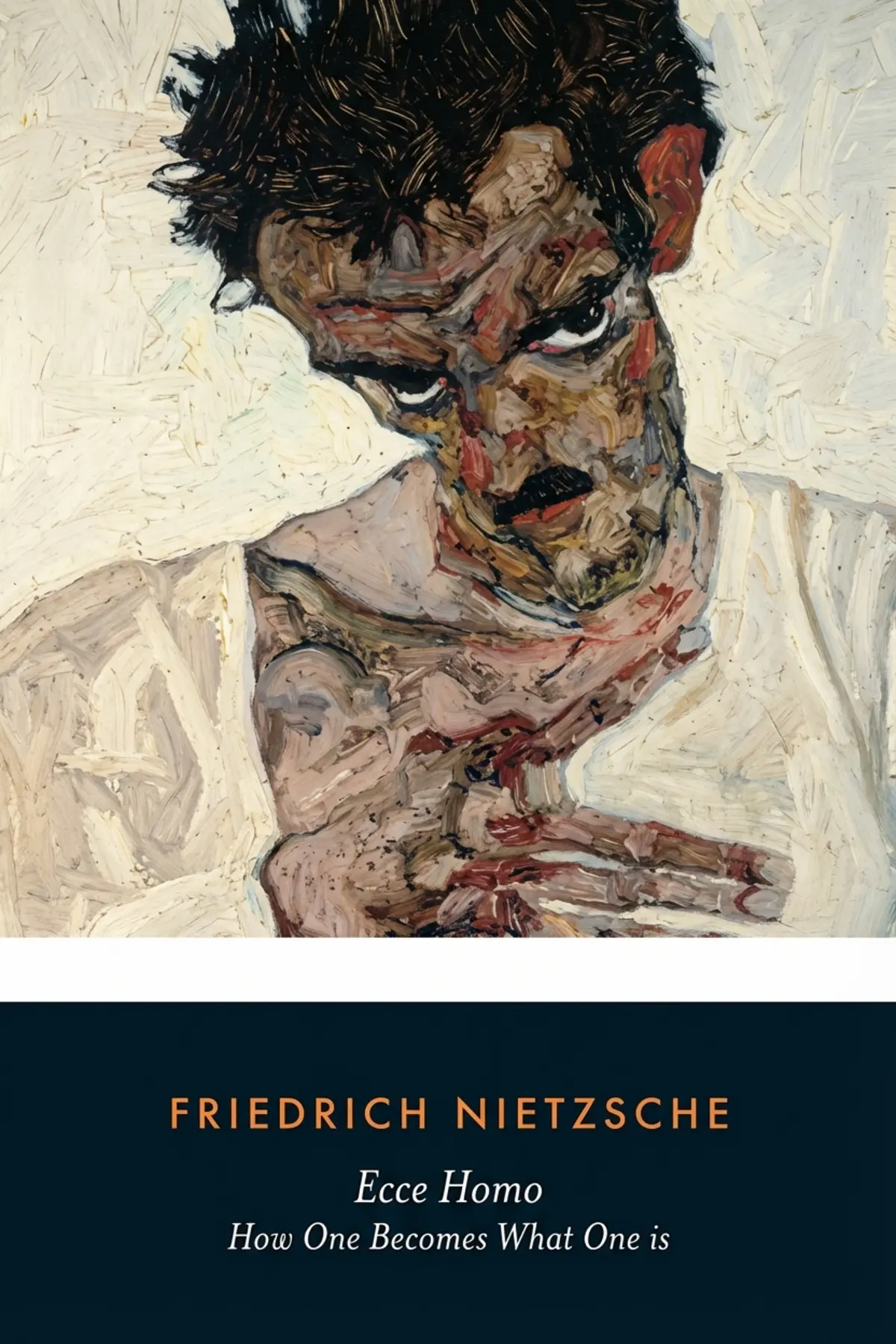
Imagine reaching the end of your creative life and choosing to look back, not with nostalgia, but with a searing, clinical intensity. This is precisely what Friedrich Nietzsche did in the final months of 1889, just before his health finally gave way to a permanent mental collapse. The result was a work titled after the Latin phrase ‘Behold the Man,’ a provocative and deeply layered self-examination that serves as both an autobiography and a philosophical manifesto. It is a guide to the most difficult journey a human being can take: the process of becoming who you truly are.
Nietzsche doesn’t offer a dry list of dates or life events. Instead, he invites us into the laboratory of his mind and body. He suggests that we have all been looking for truth in the wrong places—in abstract heavens or rigid moral laws—while ignoring the very physical reality of our existence. He argues that our greatness doesn’t come from following a crowd or adhering to a pre-packaged set of virtues. Rather, it comes from the courage to stand in total isolation, to question everything we’ve been told is holy, and to transform our deepest pains into our greatest insights.
As we walk through these ideas, we will see how Nietzsche viewed his own life as a series of experiments. We will explore why he believed a simple change in climate or diet could be more important for a philosopher than a thousand books. We will uncover his scathing critique of traditional morality, which he saw as a cage for the human spirit, and we will see how he found beauty in the very suffering that threatened to destroy him. This isn’t just a book about a philosopher; it is a call to arms for anyone who suspects that there is a more authentic version of themselves waiting to be released from the constraints of societal expectation. By the end of this journey, the throughline becomes clear: true wisdom is the result of a lived experience that refuses to compromise with the mediocre or the safe.
2 min 20 sec
Explore how physical agony can be transformed into a sharp tool for intellectual discovery and why periods of weakness are essential for true growth.
2 min 24 sec
Discover why the air you breathe and the food you eat might be more important to your intellectual success than any book you ever read.
2 min 11 sec
Learn how the ability to see the world through the eyes of both the strong and the weak provides a comprehensive understanding of human nature.
2 min 04 sec
Uncover the provocative idea that traditional virtues may actually be a form of ‘life-denial’ designed to protect the weak at the expense of the strong.
1 min 59 sec
Understand why true intellectual independence requires a radical withdrawal from the noise of public opinion and the influence of other people’s ideas.
2 min 00 sec
See how a rigorous and disciplined approach to daily life can create the space necessary for your highest potential to emerge.
1 min 44 sec
As we conclude this exploration of ‘Ecce Homo,’ we are left with a portrait of a man who refused to be anything less than his absolute self. Friedrich Nietzsche’s life and work challenge us to reconsider everything we think we know about health, morality, and greatness. He reminds us that the path to becoming who you are is not found in a textbook or a religious creed, but in the gritty reality of your own body and the quiet sanctuary of your own mind.
The throughline of this work is a call to radical self-responsibility. We have seen that suffering is not a sign of failure, but a potential source of wisdom. We have learned that our physical environment and our daily habits are the true foundations of our intellectual life. We have been challenged to look at our ‘virtues’ and ask if they are truly helping us grow or if they are just masks for our own fears and weaknesses.
Nietzsche’s final message is one of profound affirmation. Despite his physical pain and his professional isolation, he remained ‘in love’ with life—not a sterilized, easy version of life, but life in all its terrifying complexity. The actionable takeaway for us is clear: stop looking for outside permission to be yourself. Start paying attention to the unique requirements of your own constitution. Have the courage to question the values you’ve inherited and the discipline to build a life that reflects your own highest potential. To ‘behold the man’ is to look into the mirror and see not just who you are, but who you have the power to become if you are willing to embrace the struggle.
Ecce Homo serves as Friedrich Nietzsche’s final and perhaps most personal philosophical statement, written just before his mental decline. It is not a traditional autobiography but a strategic examination of how a human being becomes a distinct, powerful individual. The book promises a blueprint for self-overcoming, urging readers to look past societal norms and embrace their own biological and intellectual truths. Throughout the text, Nietzsche explores the vital connection between the body and the mind, arguing that health, diet, and even the weather are the true foundations of genius. He critiques the 'slave morality' of Western culture and explains how suffering can be harnessed as a tool for deeper wisdom. By the end, the work offers a fierce defense of individuality and a guide to living a life of profound, uncompromising meaning.
Friedrich Nietzsche was a German philosopher, cultural critic, and classical philologist whose radical ideas profoundly influenced modern thought. His works include Beyond Good and Evil, The Genealogy of Morals, and Thus Spoke Zarathustra, which challenged traditional Western values and morality.
Friedrich Nietzsche
Friedrich Nietzsche
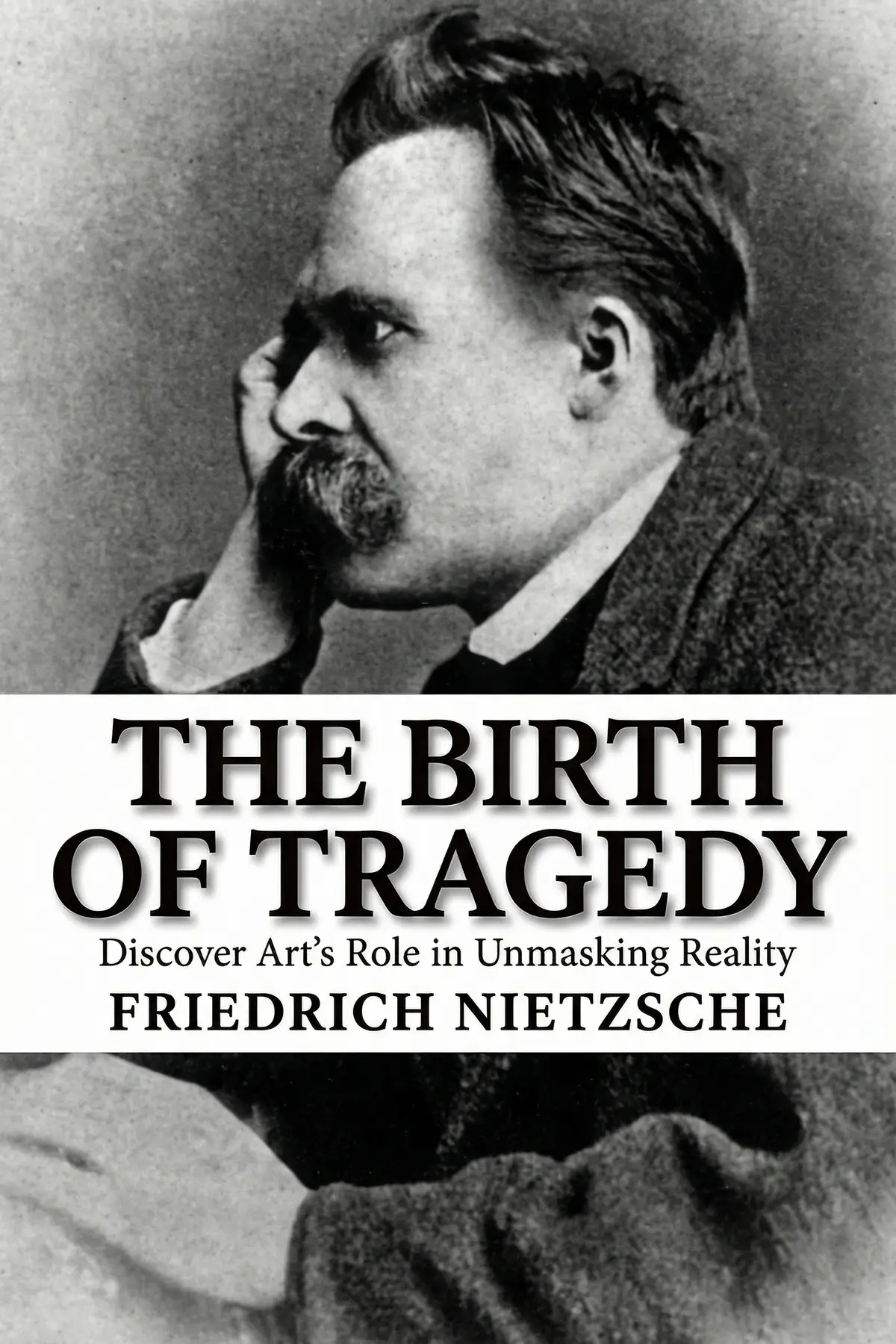
Friedrich Nietzsche
Friedrich Nietzsche
Friedrich Nietzsche
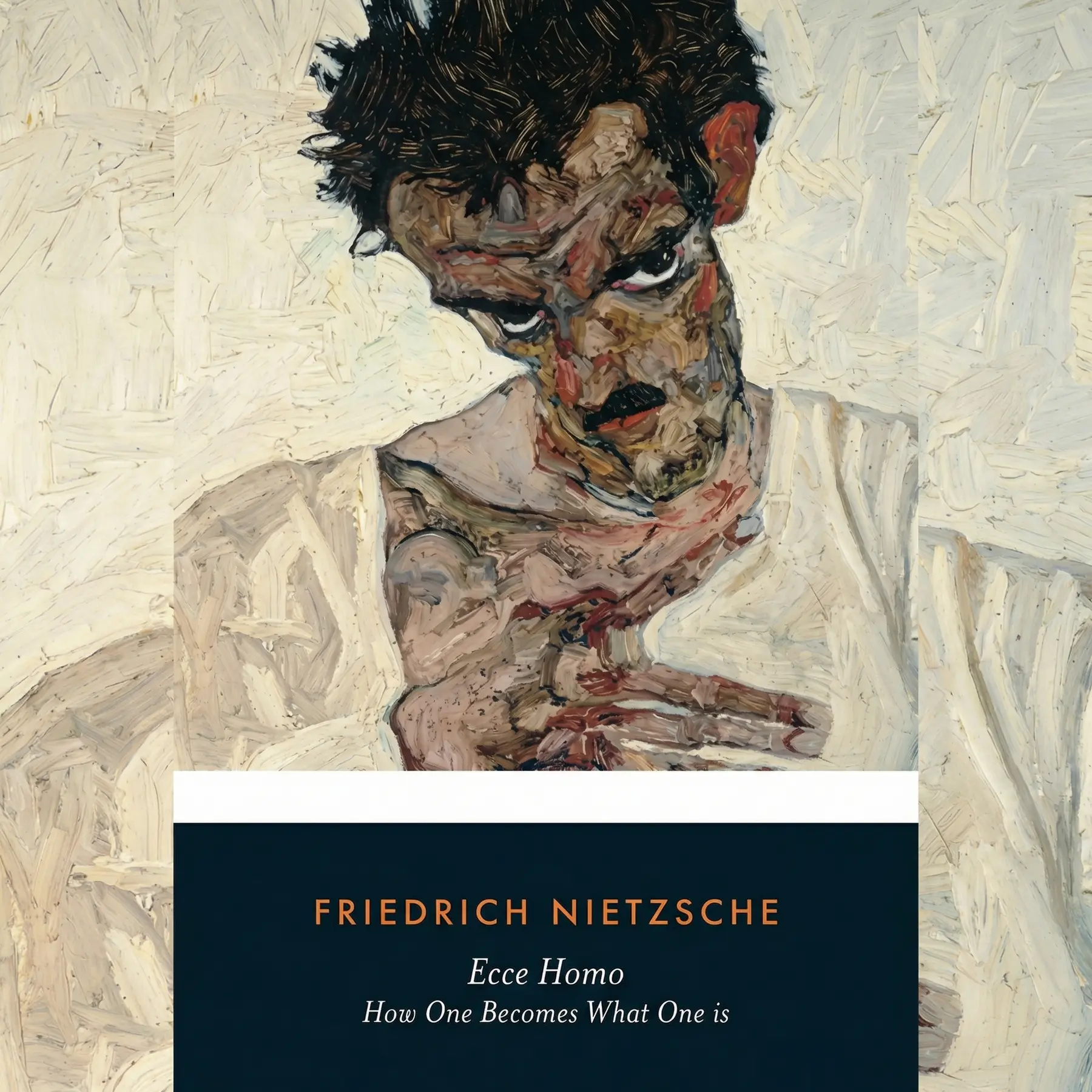
Listeners view this autobiography as a masterful and profoundly intimate self-portrait that illustrates Nietzsche’s distinct philosophical complexity and literary energy. Even though perspectives differ on the author’s arrogant delivery and noted ego, listeners value the unshielded sincerity of his musings and his devotion to living with mental fervor. Additionally, they highlight the text's importance as a deep psychological study, with one listener describing it as "sometimes brilliant, sometimes confounding" in its quirkiness. Furthermore, they find the author’s particular details about his compositional methods and daily routines to be especially intriguing.
Wow, I wasn't prepared for the sheer poetic force of Nietzsche’s self-reflection in his final sane months. There is an intensity here that you just don't find in modern philosophy. He writes with a commitment to living that is almost frightening. His rejection of 'free will' as a tool for psychological torture is a masterstroke of insight. The book functions as a map of his intellectual journey, but it’s also a deeply personal account of his struggle with health and isolation. When he speaks about being a 'destiny' and his fear of one day being considered a 'saint' instead of a 'buffoon,' you can sense his desperation to be understood on his own terms. It’s a stunning, confounding, and ultimately tragic self-portrait that every serious reader should experience at least once. Truly a soaring piece of literature.
Show moreThe chapter on 'Why I Am So Clever' might seem insufferable to the average reader, but to those who have lived in the 'ice and high mountains' of thought, it is pure liberation. Nietzsche is stripping away the masks of humility that society forces us to wear. This is a work of total honesty. He knows he is a 'destiny,' and history has proven him right. His writing style here is more refined and explosive than ever—every sentence feels like a lightning bolt. I love how he connects his physical well-being to his intellectual output; the idea that a bad diet can lead to bad philosophy is a hilarious but profound observation. This is a book for the bold venturers, the ones who aren't afraid of the abyss. It is arguably the most 'alive' book I have ever read.
Show moreThis book is less of a traditional autobiography and more of a fever dream composed by a man who knows his mind is slipping away. Nietzsche’s reflections in Turin are hauntingly beautiful, though his ego is undeniably massive. He asks himself questions like 'Why I am so wise' and 'Why I am so clever' with a total lack of bourgeois modesty that is both refreshing and slightly alarming. The way he discusses his physical ailments, like those agonizing migraines and his strict dietary rules against coffee and alcohol, adds a layer of human fragility to his 'Superman' persona. You can feel the poetic force in every sentence, even when the logic starts to fray at the edges. It is a heartbreaking psychological document of a genius standing on the precipice of a total breakdown. Highly recommended for those who want to see the man behind the hammer.
Show moreAfter hearing so much about Nietzsche’s 'madness,' reading his own account of his health and habits was surprisingly grounding. He details his migraines and vomiting with such clinical detachment that it makes his philosophical 'overcoming' seem much more impressive. The book is bizarrely structured, yet the 'Why I Am So Wise' section contains some of his most piercing observations on morality and the self. He treats his life as a work of art, which explains the high-intensity tone. My only gripe is that his dismissiveness of other thinkers can feel a bit petulant at times. However, his commitment to intellectual passion is infectious. It’s an outrageous, braggadocious, and sometimes brilliant look into the mind of a man who changed the course of modern thought before falling into silence.
Show moreGotta say, the way he discusses his literary output as a series of monumental victories is both hilarious and deeply moving. He is so terrified of being misunderstood or turned into a 'holy' figure that he goes out of his way to be as provocative as possible. He would rather be a saltimbank—a clown—than a saint. This work provides a crucial context for all his other books. You see the man who suffered through blindness and isolation yet still managed to write with a poetic force that rivals Heine. It’s not a perfect book; some of the tangents about German culture feel a bit dated and repetitive. But the central project—the judgment of one's own life without hypocrisy—is handled with incredible courage. It’s a haunting final testament.
Show moreAs someone who appreciates a good intellectual middle finger to the establishment, this book hit all the right notes. Nietzsche’s contempt for 'pudoare burgheză' or middle-class modesty is on full display here. He doesn't just think he's right; he thinks he's the most important event in the history of mankind. While that might sound like a lot to handle, his prose is so vibrant that you almost find yourself agreeing with him. The insights into his writing process are particularly fascinating for anyone who has struggled to produce creative work. He describes a state of exaltation that is both enviable and terrifying. It’s a short, punchy book that serves as a perfect, if eccentric, introduction to the man’s internal world. Not a dull page in the whole thing.
Show moreLook, you have to approach this work with the understanding that Nietzsche was writing on the very edge of an abyss. If you expect a standard life story, you'll be disappointed. This is a soul baring itself. The way he frames his existence around 'Why I Am So Wise' and 'Why I Am So Clever' is a deliberate subversion of the way people usually write about themselves. Personally, I found his obsession with his own health—the vomiting, the weather in Turin, the specific types of tea—to be the most humanizing part of the text. It grounds his high-flying philosophy in a very tangible, physical reality. It’s a brilliant and intensely personal self-portrait that showcases his unique philosophical depth. Even the confounding parts feel necessary to the overall picture of a mind in overdrive.
Show moreEver wonder what a literal 'ego trip' looks like when translated into nineteenth-century German prose? This is it. While Nietzsche is undeniably brilliant, the sheer braggadocio in Ecce Homo can be exhausting to wade through. He spends a significant portion of the text praising his own books—especially Zarathustra—as if they were divine revelations rather than philosophical texts. To be fair, his insights into nutrition and the 'climatology' of the spirit are fascinating, if a bit eccentric. He warns against the dulling effects of coffee and advocates for water, which is a funny takeaway from a supposed nihilist. I found the 'Why I Am a Destiny' chapter to be particularly grandiose, bordering on the delusional. It's an important historical artifact for understanding his final sane moments, but the arrogance makes it a difficult 'casual' read.
Show morePicked this up expecting a clear guide to his philosophy, but what I got was a bizarre, brilliant, and often confounding psychological document. It is hard to tell where the genius ends and the pathology begins. He writes about his book Zarathustra with such emotional intensity that he claims he can't even look at it without sobbing for half an hour. That level of hyper-sensitivity is all over these pages. The advice on tea and coffee is actually quite funny, but the way he attacks the concept of 'sin' is deadly serious. It is a strange autobiography because it tells you very little about what he did, and everything about how he felt and what he ate. It's a short read, but I had to take frequent breaks because the ego on display is just so dense.
Show moreTo be fair, I struggle with philosophers who spend more time praising their own genius than actually explaining their ideas to the reader. This entire work feels like one long, unedited boast. The chapter titles alone—'Why I Write Such Good Books'—are enough to make anyone roll their eyes. Nietzsche’s raw frankness is often cited as a strength, but here it just feels like megalomania. I was looking for a deep dive into his philosophical evolution, but instead, I got a list of his favorite foods and a bunch of insults directed at the German people. There are occasional sparks of brilliance, but they are buried under a mountain of self-aggrandizement. Frankly, it’s a bit of a mess. It’s probably a great 'psychological document' for scholars, but as a book, it’s incredibly frustrating and often incoherent.
Show more
James Comey
Philip Freeman
Jonathan Eig
J. Craig Venter

Ishmael Beah
James Herriot
Barack Obama
AUDIO SUMMARY AVAILABLE
Get the key ideas from Ecce Homo by Friedrich Nietzsche, plus 5,000+ more titles in English and Thai.