Ecce Homo: How One Becomes What One is
Friedrich Nietzsche
This summary deconstructs the foundations of Western morality and philosophy. By questioning traditional values and religious influence, it encourages the development of independent thinking and the creation of personal meaning for the modern individual.
1 min 50 sec
We often like to tell ourselves a comforting story about the progress of human civilization. We look back at history and see a steady climb from primitive violence toward a more enlightened, peaceful, and equal society. We assume that because we live in a world of democracy and human rights, we have somehow solved the riddles of existence that baffled our ancestors. But what if this narrative of progress is actually a mask for a deep-seated cultural stagnation? What if the very values we prize most—our sense of morality, our belief in equality, and our pursuit of truth—are actually the things holding us back from our true potential?
This is the provocative starting point for Friedrich Nietzsche, one of the most disruptive thinkers in the history of philosophy. Writing in the late nineteenth century, Nietzsche looked at the landscape of Western thought and didn’t see progress. Instead, he saw a society gripped by dogmatic thinking and blinded by prejudices it refused to acknowledge. He believed that the foundations of our intellectual life were built on shaky ground, heavily influenced by religious concepts that we claim to have outgrown but still unconsciously follow.
In this exploration of one of his most important works, we are going to look beneath the surface of Western morality. We will examine how the concepts of “good” and “evil” were constructed, why the idea of a single “truth” might be a myth, and how the will to power drives everything we do. This isn’t just an academic exercise; it’s a challenge to the way you see yourself and the world around you. Nietzsche’s goal was to clear the path for a new kind of individual—a free spirit who is capable of moving beyond the limits of traditional thinking to create their own values. As we move through these ideas, notice where your own assumptions might be challenged and what it would really mean to live a life that is truly your own.
2 min 11 sec
Philosophers often claim to seek objective truth, but their work is frequently a reflection of personal biases. Explore how even secular thought remains deeply rooted in older religious dogmas.
2 min 14 sec
The idea of a single, consistent ‘self’ is a comfortable fiction. Discover how our identity is actually a complex battleground of competing drives and animalistic instincts.
2 min 12 sec
Beyond mere survival, every living thing seeks to expand and assert itself. Learn why this underlying force is the true engine behind all human achievement and conflict.
2 min 09 sec
Is there one ‘Truth’ that applies to everyone? Nietzsche argues that all knowledge is filtered through individual perspectives, making absolute objectivity impossible.
2 min 18 sec
Common moral values like selflessness and empathy might not be as universal as we think. Discover why Nietzsche believed these virtues could actually stifle individual growth.
2 min 29 sec
Explore the historical clash between the life-affirming values of the powerful and the resentful values of the oppressed that shaped the modern world.
2 min 15 sec
The drive for total social equality might have a hidden downside. Learn why Nietzsche feared that a world without excellence would lead to cultural decline.
2 min 07 sec
The future belongs to those who can master themselves and create their own meaning. Discover the characteristics of Nietzsche’s idealized ‘new philosophers.’
2 min 00 sec
As we reach the end of this journey through Nietzsche’s provocative thought, we are left with a landscape that looks very different from the one we started with. We have seen how the solid ground of “objective truth” and “universal morality” can be revealed as a collection of human inventions and historical accidents. We’ve explored the idea that our identities are not single, unified souls, but dynamic battlegrounds of competing drives, all powered by the fundamental will to power. And we’ve confronted the uncomfortable possibility that our most cherished values of equality and selflessness might actually be tools used by the “herd” to suppress human excellence.
But the ultimate message here is one of liberation. By pulling back the curtain on these dogmas, Nietzsche isn’t trying to leave us in a state of despair. He is trying to set us free. He wants us to realize that since we are the ones who created the concepts of good and evil, we also have the power to create something new. The death of old certainties is not an end, but an invitation—a call to become the creators of our own meaning and the legislators of our own values.
In our modern world, it is easier than ever to fall into the trap of the herd, to let the noise of the majority dictate how we should think and live. Nietzsche’s work serves as a powerful reminder that the path to a truly meaningful life requires the courage to stand apart. It asks us to embrace our internal complexity, to channel our passions toward creative ends, and to never stop questioning the assumptions that society takes for granted. The throughline of this entire exploration is the pursuit of individual sovereignty. As you move forward, ask yourself: Which of your values are truly yours, and which were simply handed to you? What would it look like for you to move beyond the simple categories of good and evil and begin the divine-like act of creating yourself? The future of culture, and the quality of your own life, may well depend on your answer.
This exploration of Friedrich Nietzsche’s work delves into a profound critique of the Western intellectual tradition. It examines the hidden assumptions that philosophers have carried for centuries, specifically the lingering influence of Christian dogma on secular thought. Nietzsche challenges the idea of a unified soul and an objective truth, proposing instead that the world is driven by a fundamental will to power and shaped by individual perspectives. The summary details the distinction between master and slave moralities, arguing that modern society has adopted a "herd" mentality that stifles human potential. The core promise here is a path toward self-liberation. By understanding how our values are constructed, listeners are invited to step beyond the restrictive categories of good and evil. This isn't just a critique; it’s a call for the emergence of "free spirits" who can navigate the chaos of the modern world, discipline their own passions, and legislate their own values to push culture forward in an era of perceived decline.
Friedrich Nietzsche is a foundational figure in European philosophy, celebrated for his iconoclastic ideas and distinctive prose. His influence on modern thought is vast. Remarkably, he produced his most significant works during a brief period of intense creativity before suffering a nervous breakdown in 1889. He lived the remainder of his life in a vegetative state. His bibliography includes titles like Thus Spoke Zarathustra, On the Genealogy of Morals, and Twilight of the Idols.
Friedrich Nietzsche
Friedrich Nietzsche
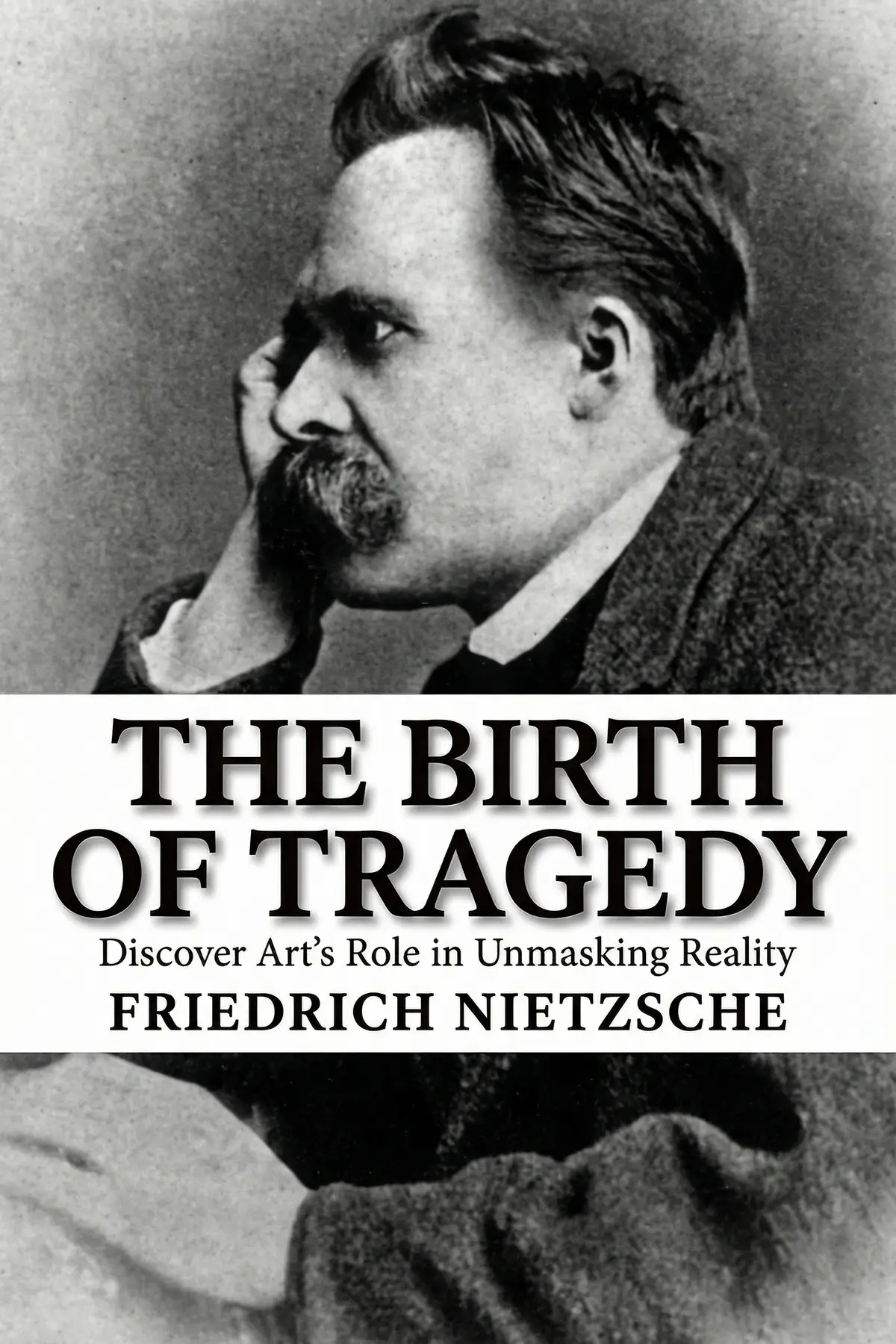
Friedrich Nietzsche
Friedrich Nietzsche
Friedrich Nietzsche
Listeners perceive the book's philosophy as sophisticated, and one highlights how it questions current-day ideology. The writing gains praise for its accessibility, with one listener calling it a must-read for philosophy fans. Feedback on the information is varied; some see it as a fine introduction, but others find it too dense to listen to.
This book isn't the nihilistic manifesto I was led to believe it was back in high school. Far from being a man who believed in nothing, Nietzsche urges us to be the architects of our own values. It’s fascinating how history, fueled by his sister's later revisions, has painted him as an apologist for atrocities he would have despised. He actually hated the rising tide of German nationalism and jingoism. Reading this feels less like studying a cold textbook and more like watching a brilliant mind struggle to reclaim joy from a life of literal, blinding pain. To be a philosopher, in his eyes, is the ultimate act of personal freedom. He is an ally for anyone trying to unwind the prejudice of an impersonal world.
Show moreWow, the sheer intellectual force behind the 'Will to Power' concept is staggering when you actually engage with the text. This isn't about dominating others, but about the personal decision to wrest control of your own life from those who seek to dominate you. Nietzsche provides an invaluable comfort for those of us feeling run down by a world bent on breaking our will. His 'Superman' is the man of the future who refuses to allow any church or government to define his life. The writing is vibrant, joyful, and deeply witty, proving that he was the opposite of the depressive nihilist he is often called. It is a sophisticated call to self-creation that remains relevant today. You have to be willing to be offended to find the truth here.
Show moreIt is a rare experience to feel your entire worldview being dismantled by a man who died over a century ago. This is a must-read because it challenges present-day ideology at its very roots. Nietzsche shows us that 'good' and 'evil' are often just words used by the powerful to justify their own greed. By refusing to accept these handed-down definitions, we take the first step toward freeing ourselves from mental tyranny. His prose is a masterpiece of German literature, even if you are reading it in translation. The 'war of spirits' he predicted seems more real today than ever before. If you want a book that will make you a better philosopher by forcing you to question everything, this is it.
Show moreIn my experience, reading Nietzsche is more akin to a psychological autopsy than a typical philosophical inquiry. He challenges every cherished ideal we hold—from the power of reason to the very foundations of morality—and leaves us standing naked in the cold light of reality. While some find the aphoristic structure too dense to navigate, I found the rhythmic flow of his prose to be incredibly rewarding. He doesn't want to provide a list of facts or a safe moral compass. Instead, he demands that we undertake the exhausting task of creating meaning in a world that offers none. This is a sophisticated masterpiece that forces you to philosophize with your whole self. It remains one of the most challenging and rewarding books I have ever picked up.
Show morePicked this up expecting a linear argument and instead found myself swimming through a sea of aphorisms. It is a sophisticated critique of how we value truth, specifically taking aim at the Platonification of our Socratic roots. You cannot read this book in a passive way. It challenges every present-day ideology you think you understand. While the information content is incredibly dense, the way he views knowledge as something embodied and perspective-based is revolutionary. I did find the sections on 'What is Noble' a bit difficult to stomach, as they lean heavily into a style of aristocratic elitism that feels outdated. Still, as a must-read for philosophy enthusiasts, it provides a foundation that is impossible to ignore.
Show moreAfter hearing how dense this was, I was surprised by how much I actually enjoyed the biting wit in these pages. The way he dismantles the 'herd mentality' of European culture is both hilarious and terrifying. It is surprisingly readable for such a heavy work of philosophy. I absolutely loved the short, sharp power of his aphorisms, like the one about the belly being the reason man doesn't take himself for a god. Some of the rants against the English and the 'feminizing' of society are definitely hard to swallow. However, if you treat it as a spark for your own thoughts rather than a list of facts, it’s brilliant. It is a great introduction to his later, more radical works.
Show moreTo be fair, there is a brilliance here that is frequently buried under a mountain of archaic prejudices and bizarre metaphors. The opening question about Truth being a woman sets a tone that is both poetic and deeply sexist. Nietzsche isn't interested in making a logically impenetrable argument for a single thesis. Instead, he wants to show us how naked we are without our cherished faiths and 'regulative fictions.' The structure of the nine parts and 296 paragraphs can feel a bit disjointed. Despite this, his insights into the nature of value and the embodied subject are essential for understanding modern thought. It is a challenging, sophisticated work that asks the questions most people are too afraid to even consider.
Show moreEver wonder why philosophy professors get so obsessed with a man who clearly held such a low opinion of half the human race? Look, I can appreciate the sophisticated way he deconstructs the 'herd mentality,' but the blatant misogyny is impossible to ignore. He admits these are his own 'personal stupidities,' yet they stain the entire work. The aphorisms are punchy and often hilarious, but the lack of a linear argument makes it a frustrating experience for anyone seeking a clear logical path. It is a dense, provocative mess that demands you argue with it on every single page. Not for the faint of heart or the easily offended, and certainly not a book to be taken as a factual science text.
Show moreGotta say, navigating the 'herd mentality' sections requires a lot of patience, but the payoff is occasionally worth the effort. There are flashes of genuine humor and profound insight into the human condition scattered throughout the rants. I struggled with his views on the 'struggle for existence,' which often sound like a precursor to much darker 20th-century ideologies. To be a fair reader, you have to remember that his sister heavily edited his legacy, but some of the elitism here is clearly his own. It’s an important historical document, but I wouldn't call it a joyful read. It feels more like a battle with a very brilliant, very frustrated man. Take it as an exploration of perspective rather than an instruction manual for life.
Show moreFrankly, Nietzsche feels less like a visionary and more like a disgruntled uncle shouting at a cloud. He spends an exhausting amount of time swaddling his ego in Latin clichés and declaring that anyone who disagrees is simply too dim-witted to grasp his genius. While the critique of modern democracy is certainly sophisticated, his obsession with 'aristocratic society' and eugenics feels like a poison gas for the soul. There is no denying his wit, but the constant arrogance and the way he reduces the majority of humanity to a 'herd' is just obnoxious. It’s an influential book, sure, but that doesn’t mean it’s a pleasant or even coherent one. I found it too dense to listen to as an audiobook, requiring constant rewinding just to parse his endless sentences.
Show more
William B. Irvine
Nigel Warburton
John Rawls
Colin Ward
Robert Nozick
Nassim Nicholas Taleb
AUDIO SUMMARY AVAILABLE
Get the key ideas from Beyond Good and Evil by Friedrich Nietzsche, plus 5,000+ more titles in English and Thai.