
22 min 17 sec
Available in:English
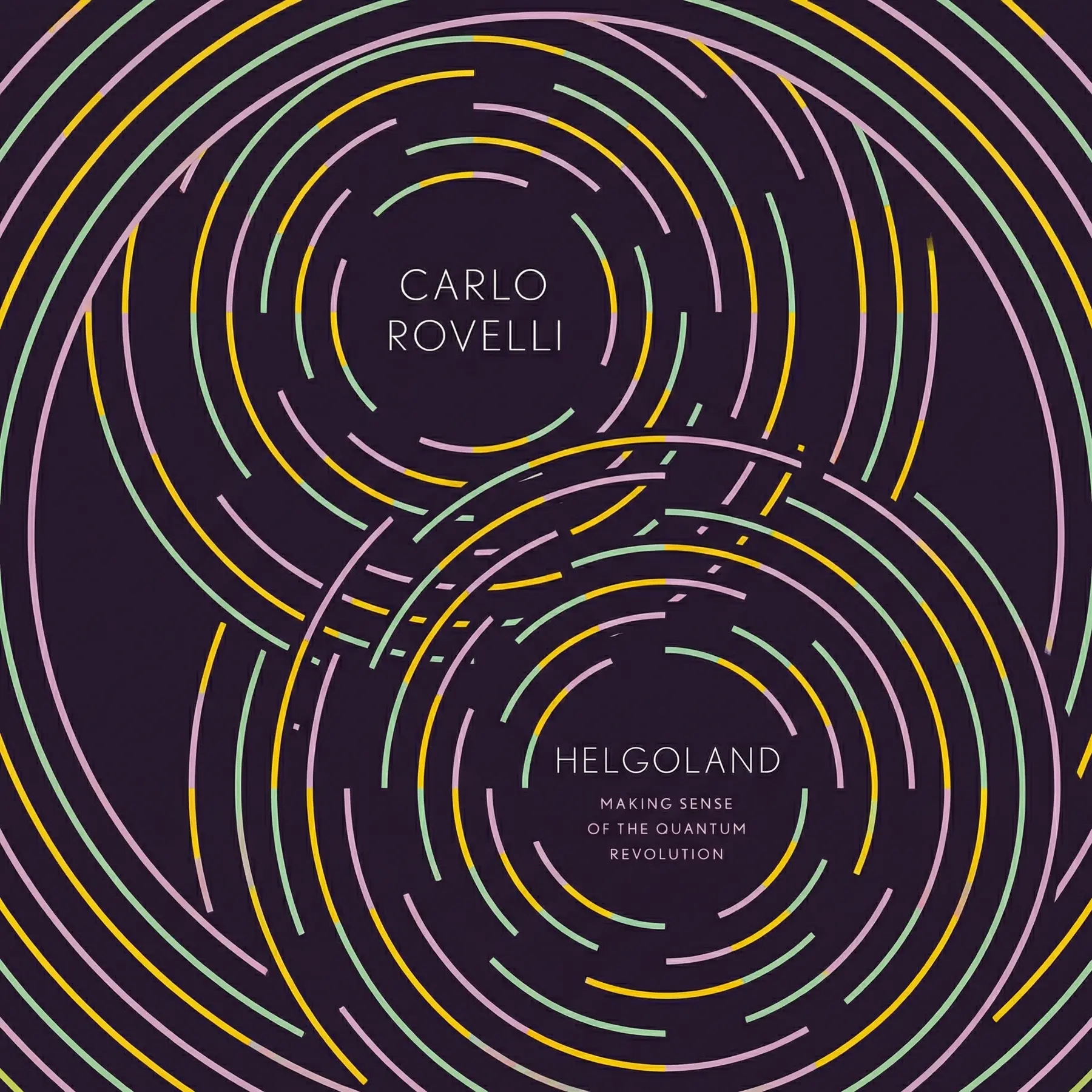
Helgoland: Making Sense of the Quantum Revolution
Physicist Carlo Rovelli explores the radical origins and mind-bending implications of quantum mechanics, proposing a relational reality where nothing exists in isolation and everything is defined by its interactions.
Table of Content
1. Introduction
1 min 41 sec
Picture a small, desolate island in the North Sea called Helgoland. It is a place of jagged rocks, crashing waves, and thin air—a stark environment where, in the summer of 1925, a young man named Werner Heisenberg arrived seeking refuge. He wasn’t there for a vacation; he was fleeing a debilitating case of hay fever that had made his life in the city unbearable. But in the isolation of that rocky outpost, something far more significant than a medical recovery took place. Heisenberg, only twenty-three years old at the time, was about to dismantle the very foundations of how we perceive the physical world.
His breakthrough on Helgoland birthed quantum mechanics, a field of study that has since become the most successful scientific theory in history, yet remains the most misunderstood and mysterious. It is a theory that challenges every intuition we have about reality. We like to think of the world as a collection of solid things that exist whether we look at them or not, but the quantum revolution suggests otherwise.
In the pages that follow, we are guided by the poetic and profound insights of physicist Carlo Rovelli. We will trace the throughline from Heisenberg’s first dizzying calculations to the modern debates that still keep scientists awake at night. We are going to explore a universe that isn’t made of objects, but of relations—a world where nothing is certain until it interacts with something else. By the end of this journey, your perspective on what is ‘real’ will likely be transformed, as we move through the history, the paradoxes, and the philosophical consequences of the quantum revolution.
2. The Quantum Spark on Helgoland
2 min 26 sec
Discover how a young physicist’s escape from hay fever led to a mathematical breakthrough that shattered classical physics and changed our view of the atom forever.
3. The Clash of Matrices and Waves
2 min 13 sec
Explore the intense debate between two competing mathematical models of the atom and the surprising realization that both were actually describing the same reality.
4. The Paradox of the Multi-State Cat
2 min 33 sec
Delve into the famous thought experiment of Schrödinger’s cat and the various theories physicists use to explain how objects can exist in two states at once.
5. A World Defined by Relationships
2 min 25 sec
Explore the relational interpretation of physics, which suggests that nothing has fixed properties on its own, only in relation to other things.
6. The Mystery of Entangled Links
2 min 15 sec
Unpack the strange phenomenon of quantum entanglement and see how the relational model explains how particles stay connected across vast distances.
7. Learning from the Philosophy of Sensations
2 min 13 sec
Discover how the 19th-century ideas of Ernst Mach helped pave the way for quantum theory by shifting the focus from hidden matter to observable interactions.
8. Quantum Insights into the Human Mind
2 min 15 sec
See how the principles of relational physics can be applied to the ‘hard problem’ of consciousness and how we find meaning in the world.
9. Reality as a Confirmed Hallucination
2 min 20 sec
Explore the idea that our perception is a constant process of prediction and correction, much like the scientific method itself.
10. Conclusion
1 min 56 sec
As we reach the end of our journey through the ideas of Helgoland, we find ourselves back on that rocky island in the North Sea, standing where Werner Heisenberg once stood. The hay fever is gone, and in its place is a vision of the universe that is both humbling and exhilarating. We have moved from a world of ‘things’ to a world of ‘events.’
The throughline of Carlo Rovelli’s work is a call to let go of our attachment to solid, independent objects. Whether we are looking at the smallest subatomic particle or the vast reaches of human consciousness, the lesson is the same: nothing exists in isolation. Everything we call ‘real’ is the product of a relationship. The electron is only an electron when it hits a screen; the cat is only alive or dead relative to its environment; and we are only ‘ourselves’ in relation to the people and the world around us.
This shift in perspective is more than just a trick of physics; it is a way of seeing our place in the cosmos. It tells us that the boundaries we draw between ourselves and the rest of the world are fluid and temporary. If there is one actionable takeaway from the quantum revolution, it is to embrace this interconnectedness. When you look at the world, try to see the links instead of just the objects. Understand that your perspective is one of many, and that reality is large enough to hold multiple, seemingly contradictory truths. We are part of an endless, beautiful dance of interactions—a ‘froth’ of existence that is constantly reinventing itself. The quantum world is not a place to be feared or confused by; it is a invitation to wonder, reminding us that at the most fundamental level, we are all woven into the same fabric of the universe.
About this book
What is this book about?
Helgoland takes listeners back to the rocky North Sea island where Werner Heisenberg first glimpsed the strange mathematical foundations of the quantum world. From there, the narrative expands into a profound investigation of what these subatomic secrets mean for our understanding of the universe. It is a journey through the evolution of physics, moving from the rigid, mechanical models of the past to a modern, fluid interpretation of existence. The book promises to demystify the most confusing aspects of quantum theory—like cats that are both dead and alive or particles that communicate across vast distances—by offering a revolutionary perspective known as the relational interpretation. Rather than viewing the world as a collection of independent objects, it suggests that reality is a web of events and relations. This summary bridges the gap between high-level physics and deep philosophy, exploring how our very consciousness might be understood through these same quantum principles.
Book Information
About the Author
Carlo Rovelli
Carlo Rovelli is a theoretical physicist and the director of the Quantum Gravity research group at the Centre de Physique Théorique in Marseille, France. He’s authored several best-selling books on physics including Seven Brief Lessons on Physics, Reality Is Not What It Seems, and The Order of Time.
Ratings & Reviews
Ratings at a glance
What people think
Listeners find that this work offers a superior clarification of the core of quantum physics and value the accessible, eloquent way the material is handled. It is regarded as a top-tier resource in the field, with one listener highlighting that it depicts quantum theory on a broad canvass. Opinions vary on how much it stimulates the mind; while some find it extremely thought-provoking, others have difficulty with the philosophical debates concerning reality. Listeners portray the work as an undeniable nexus between physics and find it liberating.
Top reviews
Gung
This book is essentially a long prose poem about the death of objective reality as we think we know it. Rovelli takes the birth of quantum mechanics on the barren island of Helgoland and turns it into a gripping narrative about Young Heisenberg’s fever dream. I was particularly struck by the relational interpretation, which suggests that things don't have properties in isolation, but only through their interactions with others. It is a liberating way to view the universe, even if it makes your head spin. While some might find the brevity frustrating, I thought the prose was luminous and accessible for a layperson. The connection between modern physics and the ancient philosophy of Nāgārjuna was an unexpected but welcome highlight. Truth is, I haven't stopped thinking about 'relations without objects' since I closed the back cover.
Show moreEleanor
Wow. I didn't expect a book about subatomic particles to lead me into a meditation on the nature of the self and human connection. Rovelli makes a compelling case that there is no 'outside' observer and that everything in the universe is defined by its relationship to something else. This relational interpretation is a wild departure from standard materialist views, yet it fits the data perfectly. I loved the historical context he provided for the young geniuses like Dirac and Heisenberg, making them feel like real, struggling people rather than just names in a textbook. The sentence structure is beautiful and the translation is seamless, capturing a sense of genuine awe. It is one of those rare science books that actually makes you feel more connected to the world around you rather than alienated by it.
Show moreCaleb
Finally got around to reading this and I’m struck by how liberating Rovelli’s perspective feels. He manages to present quantum theory on a broad canvas that includes history, philosophy, and even sociopolitical theory. The truth is, most science writing is either too dense or too patronizing, but Helgoland hits that perfect middle ground of being understandable without losing its soul. I found the discussion of 'qualia' and the hard problem of consciousness toward the end to be particularly brave for a physicist. Some might call his style 'purple prose,' but I think we need more scientists who can write with this much heart. It’s an undeniable masterpiece of popular science that reminds us that questioning the world is the most human thing we can do.
Show moreHang
After hearing so much buzz about Helgoland, I was surprised by how much ground it covers in such a slim volume. Rovelli doesn't just explain the science; he explains the feeling of being a scientist on the edge of a world-changing discovery. His explanation of entanglement as a manifestation of relations rather than 'spooky action' is the most intuitive I’ve ever read. Even the more difficult sections on the empiriocriticism of Mach were handled with a lightness of touch that kept me turning the pages. It's a beautifully written book that manages to make the most complex theory in history feel personal and relevant. If you've ever felt intimidated by physics, this is the book to pick up. It's less about math and more about the beauty of our interconnected reality.
Show morePaiboon
Ever wonder why quantum physics feels so impossible to visualize for the average person? Rovelli argues it is because we are stuck in an old-fashioned way of seeing the world as a collection of independent 'stuff.' Through Helgoland, he attempts to dismantle this view by showing that reality is more like a web of mirrored relations. The first half is a fantastic historical summary of Heisenberg and Bohr, written with a clarity that few scientists can master. However, I’ll admit the second half gets a bit muddled when it dives deep into the philosophy of mind and information theory. To be fair, it’s a lot of ground to cover in less than 200 pages. It is a thought-provoking journey that manages to be both scientifically rigorous and deeply emotional, though the price point for such a short book might sting some readers.
Show morePan
Picked this up after hearing Rovelli is the new 'poet of physics,' and I can certainly see why people say that. He has a gift for making the most abstract concepts, like the Schrödinger's cat paradox or quantum entanglement, feel like something you could almost touch. The way he describes Heisenberg on that pollen-free island, desperately trying to calculate the behavior of electrons, is genuinely cinematic. I appreciated how he didn't just 'shut up and calculate' but actually wrestled with what these equations mean for our daily existence. My only real gripe is that the ending felt a bit rushed, leaping from physics to Russian political history and Buddhism a bit too quickly. Despite that, it’s a brilliant nexus between hard science and humanistic inquiry that I’d recommend to anyone who enjoys a bit of wonder.
Show moreNitaya
This isn't your typical science read because it focuses more on the 'spirit' of discovery than on dry equations. Rovelli is a master at distilling the essence of quantum theory—the idea that the world is made of happenings, not things. I particularly enjoyed the way he handled the many-worlds interpretation versus his own relational view; it was respectful yet firm. The tone is casual and conversational, which helps when you're trying to wrap your head around the fact that an object might not have a position until it interacts with something else. While it’s true that some of the multidisciplinary comparisons feel a little forced, the central message is powerful. It’s a short, punchy read that challenges your most basic assumptions about what is 'real' in the universe.
Show moreRafael
As someone who has followed Rovelli’s work for years, I found this to be a bit of a mixed bag compared to his previous hits. The writing is still gorgeous, and his ability to explain the 'matrix mechanics' of the early 20th century is unparalleled. But frankly, the book feels a bit thin for the cost, with large fonts and plenty of blank space that suggest a bit of padding. He makes some bold claims about the relational nature of reality that are fascinating, yet he often points to footnotes or external papers just as the argument gets interesting. I found the section on the monk Nāgārjuna intriguing but arguably a bit of a stretch for a physics book. It’s an okay introduction for a novice, but if you’re looking for deep technicality, you might walk away feeling a sense of vacuity.
Show morePawinee
Look, I appreciate what Rovelli is trying to do here, but I’m not sure he entirely succeeds in this specific volume. The first few chapters are a solid five-star history of the quantum revolution, filled with vivid imagery and great pacing. But the transition into the 'relational' argument felt a bit like a leap of faith rather than a grounded scientific conclusion. Personally, I found the comparisons to Buddhist emptiness a bit repetitive after a while. It’s a very quick read, which is a plus, but it leaves you with more questions than answers—and not always in the 'good' way. It’s worth reading for the historical bits alone, but keep your skeptical hat on when the philosophy starts raining down like hail in the final chapters.
Show moreCharlotte
The chapter on Heisenberg’s initial discovery was promising, but the rest of the book unfortunately devolved into a confusing maze of philosophical detours. I found Rovelli’s explanations of the actual physics to be too brief and superficial for a beginner to really grasp the gravity of the mystery. For example, he mentions the Stern-Gerlach experiment but skips over the essential details that make it so baffling in the first place. Not gonna lie, the constant jumping between Mach, Lenin, and ancient Indian philosophy felt more like a distraction than a cohesive argument. It’s a very pretty book with lovely metaphors, but it lacks the solid logical nessi needed to bridge the gap between quantum math and metaphysical reality. It felt more like a collection of vague suggestions than a serious scientific exploration.
Show moreReaders also enjoyed
A Life Decoded: My Genome: My Life
J. Craig Venter
A Planet of Viruses
Carl Zimmer
A Short History of Nearly Everything
Bill Bryson
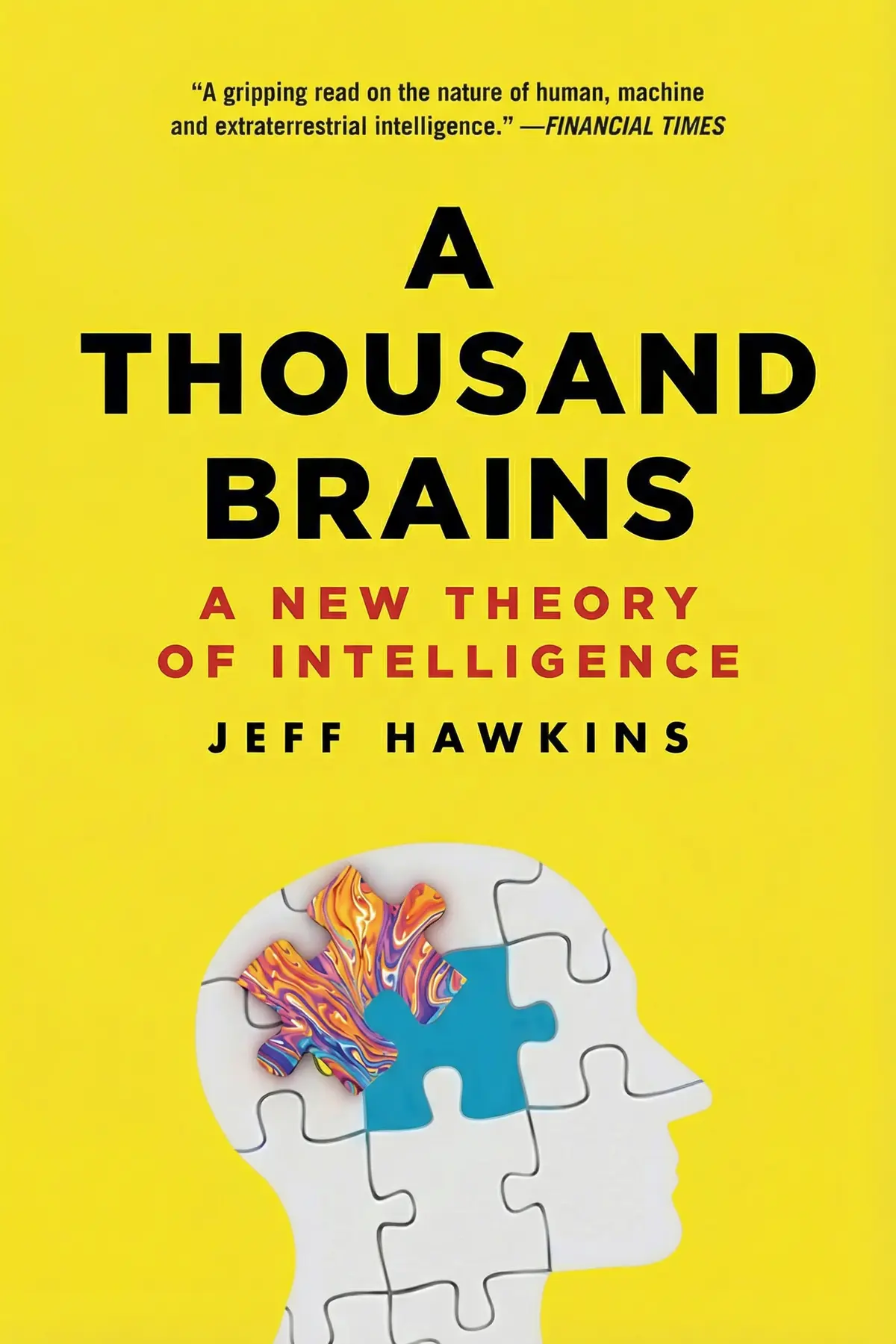
A Thousand Brains: A New Theory of Intelligence
Jeff Hawkins
AUDIO SUMMARY AVAILABLE
Listen to Helgoland in 15 minutes
Get the key ideas from Helgoland by Carlo Rovelli, plus 5,000+ more titles in English and Thai.
- 5,000+ titles
- Listen as much as you want
- 7-day free trial
- Cancel anytime







