
Helgoland: Making Sense of the Quantum Revolution
Carlo Rovelli
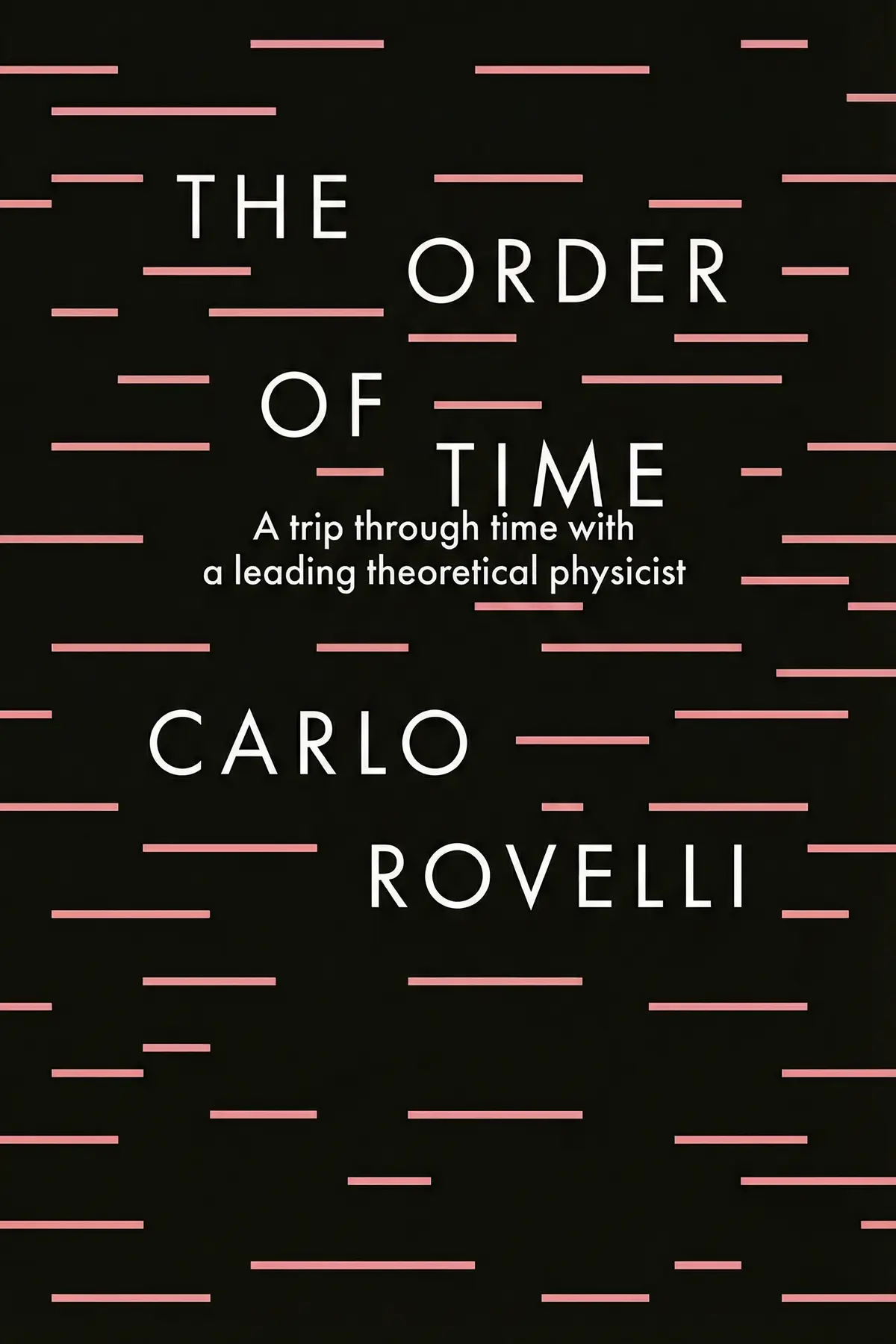
A profound exploration of the nature of time, deconstructing our common perceptions to reveal a universe where time is not a flow, but a complex, multi-layered illusion born from physics and perspective.
1 min 49 sec
Time is perhaps the most familiar experience of our lives, yet it is arguably the one thing we understand the least. We feel it slipping through our fingers; we track it with digital precision; we organize every aspect of our existence around its perceived flow. But what if almost everything we believe about time is actually an illusion? What if the steady, universal ticking of a cosmic clock is simply a byproduct of our limited human perspective? This is the central provocation we are about to explore.
In this journey through the fabric of reality, we will see how modern physics has systematically dismantled the common-sense notion of time. We often think of time as a single, uniform line stretching from the beginning of the universe to its end, moving at the same speed for everyone, everywhere. However, as we look closer at the world through the lens of general relativity and quantum mechanics, that line begins to fray and eventually disappear altogether. We discover that time is not a container in which the world happens, but rather a complex web of relations and events.
Our throughline today is the ‘deconstruction’ of time. We will start with the physical reality of how clocks behave in different places and move toward the shocking realization that at a fundamental level, the distinction between past and future might not even exist in the laws of physics. Finally, we will look at why we, as humans, perceive a flow that the universe itself doesn’t seem to recognize. This isn’t just a lesson in physics; it’s a fundamental shift in how we perceive our own existence within the cosmos. Let’s begin by looking at why your watch might be telling a different story depending on where you stand.
2 min 21 sec
Discover why time is not a constant force, but a flexible dimension that stretches and slows depending on the proximity of massive objects like the Earth.
2 min 25 sec
Explore the scientific reality that simultaneity is a myth and that the concept of ‘the present’ is only a local phenomenon.
2 min 15 sec
Uncover why the only reason we experience a direction to time is found in the laws of thermodynamics and the movement of energy.
2 min 21 sec
Delve into the quantum realm where time ceases to be a smooth flow and instead becomes a series of discrete, uncertain events.
2 min 22 sec
Shift your perspective to see the universe not as a collection of solid objects, but as a continuous series of happenings and processes.
2 min 38 sec
Examine how our human limitations and the way our brains process information create the unique sensation of time’s flow.
1 min 40 sec
We have traveled from the familiar ticking of the clock on the wall to the strange, granular, and directionless world of fundamental physics. We’ve seen that time is not the uniform, universal river we once imagined. It slows down near mountains, it disappears as a global concept across the stars, and it loses its very ‘flow’ when we look at the most basic equations of the universe.
What remains is a vision of a world made not of things, but of events. In this reality, time is a multi-layered phenomenon. At its base, there is no direction, only a web of quantum interactions. Above that, the movement of heat creates a local arrow. And finally, at the human level, our memory and perspective weave these physical realities into the story of our lives. Time, as we know it, is a gift of our limited perception.
This understanding doesn’t make time any less precious. On the contrary, realizing that the ‘now’ is a local, human experience allows us to appreciate the unique perspective we hold in the cosmos. We are the points where the universe becomes aware of its own processes. As you move forward from this summary, try to see the world not as a collection of static objects, but as a vibrant, ever-changing symphony of happenings. Recognize that your sense of the past and future is a unique creation of your own mind, shaped by the physical laws of entropy. In the end, the ‘order’ of time is not a prison that traps us, but the very structure that allows our lives to have meaning, narrative, and beauty.
The Order of Time is an intellectual journey that dismantles our intuitive understanding of time. Starting with the most basic assumptions—that time is universal, independent, and moves in a straight line—the narrative systematically peels away these layers using the tools of modern physics. It explains how gravity warps the passage of minutes, why there is no such thing as a global 'now,' and how the very concept of a past and future is tied to the movement of heat rather than the fundamental laws of the universe. The book promises to reshape how you see your life and the cosmos. It moves from the hard science of general relativity and quantum mechanics into the philosophical realm, exploring how human memory and our blurred perception of reality create the sensation of time's passage. By the end, the focus shifts from abstract equations to the human experience, offering a new way to understand our place in a world made of events rather than things.
Carlo Rovelli is a theoretical physicist who specializes in the physics of space and time. He currently directs the quantum gravity research group at the Centre de physique théorique in Marseille, France. Rovelli is also the author of Reality is Not What It Seems and Seven Brief Lessons on Physics.
Carlo Rovelli
Carlo Rovelli
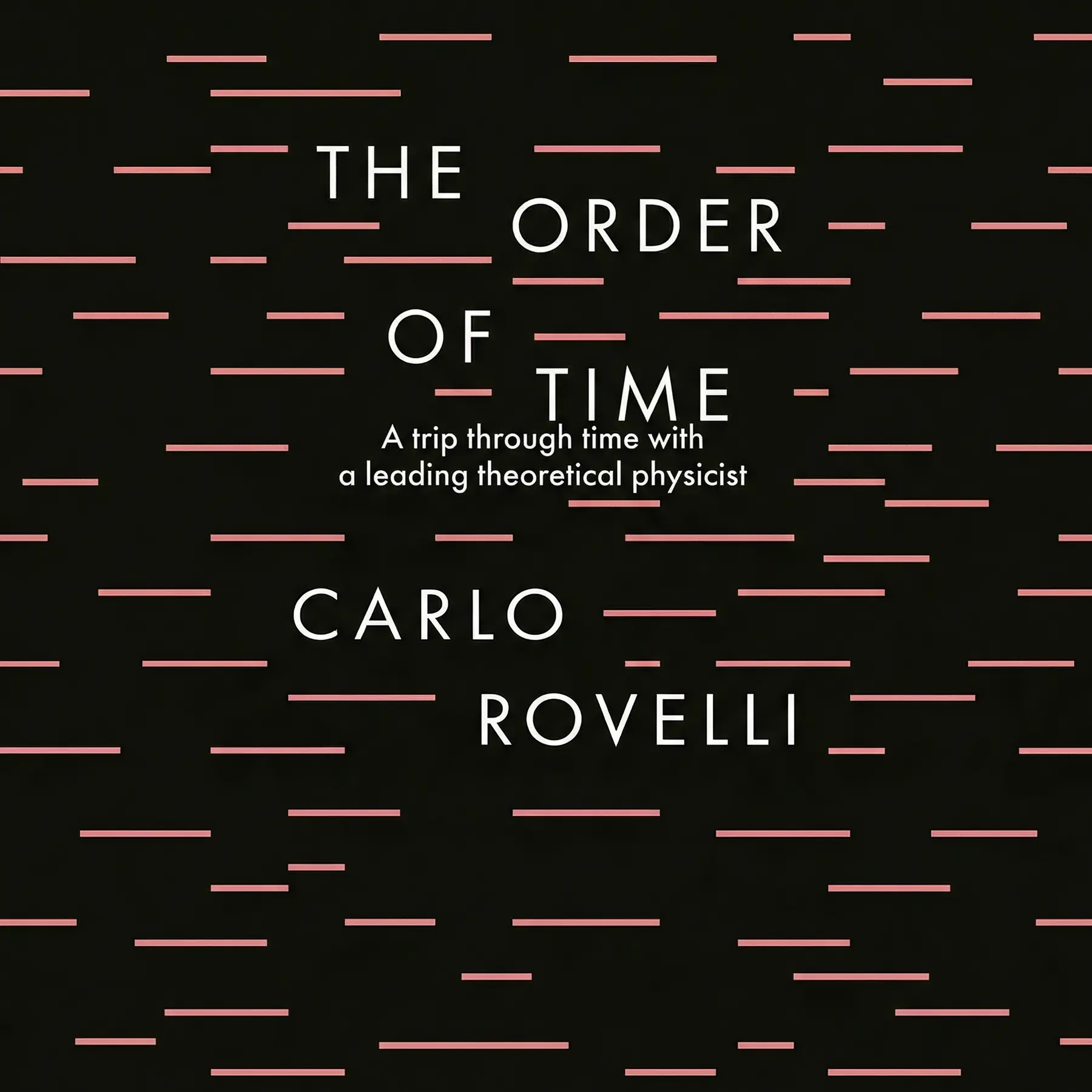
Listeners find this work captivating and intellectually stimulating, as it makes difficult theories more approachable while providing a broad look at temporal concepts. Furthermore, the writing is both reachable and lyrical, with one listener characterizing it as a page-turner. However, listeners are split on the ease of following the narrative; while some perceive the discussions of time as tangible and detailed, others find them confusing.
Picked this up after seeing Rovelli's name everywhere, and I am genuinely stunned by how much he can pack into such a short volume. He takes incredibly dense concepts like Loop Quantum Gravity and translates them into something that feels almost like a prayer or a poem. The truth is, I’ve always struggled to grasp Einstein’s relativity in a way that felt visceral, but this book finally bridged that gap. He explains how time crumbles at the Planck scale, leaving us with a world made of events rather than things. It is rare to find a scientist who can reference Proust and thermodynamics in the same breath without sounding pretentious. Even when the math got fuzzy for me, the beauty of his prose kept me turning the pages. This is easily one of the most thought-provoking science books I have read in a decade.
Show moreWow, what a trip this book was for my brain! It’s not every day you find a page-turner about the fundamental nature of reality and the thermal behavior of time. Rovelli has a gift for making the granular and microscopic feel relevant to our macroscopic, 'blurred' lives. I loved the section on how our memory and expectations create the illusion of a flowing stream. It makes you realize that our perception is just one particular perspective in a much more chaotic universe. The writing is accessible and elegant, avoiding the dry tone that plagues so many other physics books. If you want a high-level overview of time that feels more like a philosophical meditation, this is the one for you.
Show moreAfter hearing so much about the 'Scalar War' in science, I wanted to see Rovelli’s take for myself. He definitely leans into the microscopic view, suggesting that our experience of time is a result of our limited perspective. Some might find this reductionist, but I found his explanation of entropy as the source of time’s arrow to be revelatory. He writes with a sense of wonder that is contagious, making you feel like you're standing on the edge of a vast, nocturnal ocean of the unknown. The book is short, but the ideas are massive and require some serious mental heavy lifting. It’s a magnificent exploration of how physics has moved past the simple Newtonian clockwork universe.
Show moreNot what I expected at all, but in the best possible way. This isn't just another physics textbook; it's a deep, emotional meditation on what it means to be a human being living in a universe that doesn't care about our clocks. Rovelli’s ability to weave together history, philosophy, and cutting-edge science is truly impressive. He makes a compelling case for a world where 'things' are actually just long-running events. This shift in perspective changed the way I think about everything from my own memories to the stars above. It’s a short read, but its impact lingers long after you've finished the last page.
Show moreFinally got around to reading this, and it lives up to the hype as a modern masterpiece of science communication. Rovelli takes the 'block universe' and makes it feel intimately personal, connecting the dots between thermal physics and human consciousness. I was particularly struck by his discussion of how we are stories contained within the twenty centimeters behind our eyes. It’s a bold, slightly controversial take on why time feels like it passes, and it certainly challenges our common-sense notions of reality. The book is concise, poetic, and utterly fascinating from start to finish. It’s the kind of writing that makes you want to go back to school and study physics all over again.
Show moreEver wonder if the clock on your wall is lying to you? Rovelli argues that it is, guiding us through a universe where 'now' has no objective meaning. I listened to the audiobook version narrated by Benedict Cumberbatch, and his voice added a hypnotic layer to an already surreal journey. At times, the concepts of heat and entropy felt like they were slipping through my fingers like sand. Truthfully, the second half gets quite abstract, moving into metaphysical territory that might leave some readers feeling a bit lost. However, the way he deconstructs the 'arrow of time' is fascinating, even if it’s hard to reconcile with daily life. It’s a slim book that demands multiple readings to fully digest the implications of a world without a universal present.
Show moreThe chapter on entropy was the highlight for me, even if it left my head spinning for hours afterward. Rovelli manages to explain why we remember the past but not the future using the laws of thermodynamics, which is no small feat. I’ll admit that some of the later sections on the 'world without time' felt a bit speculative and hazy. Personally, I think he brushes off the reality of complex systems a little too easily in favor of his quantum gravity models. Still, the prose is so beautiful that I didn't mind the occasional leap of faith he asks the reader to take. It’s an engaging, high-level look at a problem that has baffled scientists and philosophers for centuries.
Show moreFrankly, I found this to be a bit of a mixed bag despite the glowing praise it usually receives. While Rovelli is undoubtedly a brilliant physicist, his tendency toward flowery, hand-waving explanations often obscured the actual science for me. There are moments where he tells us time doesn't exist, only to immediately use time-based language to describe events, which felt self-contradictory. The translation also seemed to struggle with some of the more technical nuances, making certain passages unnecessarily confusing. I appreciate the attempt to bring a more humanistic view to physics, but I prefer a popular science book with a bit more meat on its bones. It’s a quick read, yet I walked away feeling like I had inhaled a fragrant perfume that vanished the moment I closed the cover.
Show moreTo be fair, this book is probably more for the 'science as poetry' crowd than for those looking for a rigorous explanation. I felt like Rovelli spent a lot of time on vague impressions and not enough on the actual mechanics of his theories. The idea that time is just our 'ignorance' of the micro-state of the universe sounds profound, but it feels like a bit of a cop-out when you look at the complexity of biology. I enjoyed the historical context, especially the bits about Anaximander and Einstein. However, the later chapters felt like they were drifting off into a 'God's-eye view' that ignores our situated reality. It’s a beautiful book, but I was hoping for something with a bit more substance.
Show moreRovelli’s approach feels like a beautifully packaged attempt to dismiss the entire human experience of growth and decay. He suggests that time is merely a consequence of our blurred perception, which frankly comes across as somewhat arrogant to those of us outside the world of particle physics. While the writing is undeniably poetic, he essentially argues that the 'arrow of time' isn't real, but rather a byproduct of entropy and our own ignorance. I struggle with the idea that the complexities of biology and economics are just 'subjective phenomenology' rather than fundamental realities. The book is short and stylish, yet it avoids the hard questions about why our lived reality matters. If you enjoy reductionist physics that tells you your life is an illusion, you’ll love this. For the rest of us, it feels like a desperate marketing ploy for an old-guard worldview.
Show more

Lisa Kaltenegger

J. Craig Venter

Carl Zimmer
Bill Bryson
AUDIO SUMMARY AVAILABLE
Get the key ideas from The Order of Time by Carlo Rovelli, plus 5,000+ more titles in English and Thai.







