Living Buddha, Living Christ
Thich Nhat Hanh
Explore the transformative power of mindful presence in your relationships. This guide reveals how the ancient wisdom of a Buddhist master can help you cultivate deep compassion, trust, and authentic intimacy in everyday life.
1 min 39 sec
In our fast-paced modern world, the term mindfulness has become a ubiquitous buzzword. We are constantly reminded to stay in the present moment while we eat, walk, or perform our daily chores. We are told that focusing on the now can sharpen our attention, lower our stress levels, and help us find a sense of peace amidst the chaos of life. But while many of us have tried to apply these techniques to our work or our health, we often overlook the area of our lives where mindfulness is needed most: our relationships. This is where the wisdom of the late Vietnamese Buddhist monk Thich Nhat Hanh comes in. He spent a lifetime teaching the world how to breathe and how to be, but in this specific exploration, he turns his focus toward the heart.
Imagine the impact of bringing total presence to the way you interact with your partner, your family, or even yourself. Often, our attempts at love are hindered by past traumas, future anxieties, or simple misunderstandings. We think we are loving, but we might actually be projecting our own needs or failing to see the person right in front of us. This summary explores the profound idea that love is not a static emotion we fall into, but a living practice that requires constant nourishment. Through the lens of Zen philosophy, we will uncover how to transform our hearts into vast reservoirs of compassion and how to approach intimacy with wisdom and respect. The throughline here is simple yet revolutionary: to love is to be truly present. By the end of this journey, you will have a new framework for understanding the four key pillars of a healthy bond and practical tools for navigating the inevitable storms that arise in any connection. Let’s look at how we can begin to cultivate a love that is as solid as it is refreshing.
2 min 37 sec
Discover why the size of your emotional reservoir determines how you react to the flaws of others and how to feed your love with daily joy.
2 min 30 sec
Explore the essential traits of true love that transform a relationship from a personal gain into a universal source of compassion and joy.
2 min 29 sec
Learn why the journey of love must always begin within and how embracing your own unique beauty allows you to truly value your partner.
2 min 28 sec
Discover how the harmony of your physical and spiritual selves can lead to a deeper level of listening and connection with your partner.
2 min 29 sec
Learn the difference between physical desire and true intimacy, and how being authentic about your needs can strengthen your bond.
2 min 28 sec
Understand why having common goals is vital for long-term unity and how to use deep listening to navigate the inevitable conflicts of life.
2 min 23 sec
Learn how to view love as a form of medicine that can soothe the pain of your partner and why admitting your own suffering is an act of courage.
2 min 22 sec
Discover a three-step plan for managing anger and why questioning your first impressions is the key to lasting harmony.
1 min 54 sec
As we reach the end of this exploration of mindful connection, the central message is clear: love is not a mystery to be solved, but a practice to be lived. It is the art of being present, the discipline of listening, and the courage to remain open-hearted even when things get difficult. We have seen that by expanding our own hearts and nourishing ourselves with happiness, we become capable of a love that is expansive and life-giving. We have learned that true intimacy isn’t just a physical act, but a spiritual harmony that requires trust, respect, and deep awareness.
One of the most beautiful examples of this practice comes from the author’s own experience. Coming from a culture where physical touch wasn’t a common way to greet people, he initially felt quite uncomfortable when a student in the West asked him for a hug. Rather than rejecting the gesture, he decided to apply his mindfulness training to it. He created what he called a ‘hugging meditation.’ By focusing entirely on his breath and the person he was holding, he turned a simple social greeting into a moment of profound connection and compassion. This story serves as a reminder that any moment, no matter how small or unfamiliar, can be transformed by the power of presence.
The throughline of all these lessons is that the quality of your love depends on the quality of your presence. If you want to improve your relationships, start by improving your ability to be right here, right now. Take the time to water the flowers of goodness in yourself and those you care about. Practice the three sentences of conflict resolution the next time you feel a storm brewing. Most importantly, remember that you are a unique blossom in a vast meadow, and so is the person you love. By treating each other with the reverence of a guest and the care of a healer, you can build a love that truly lasts.
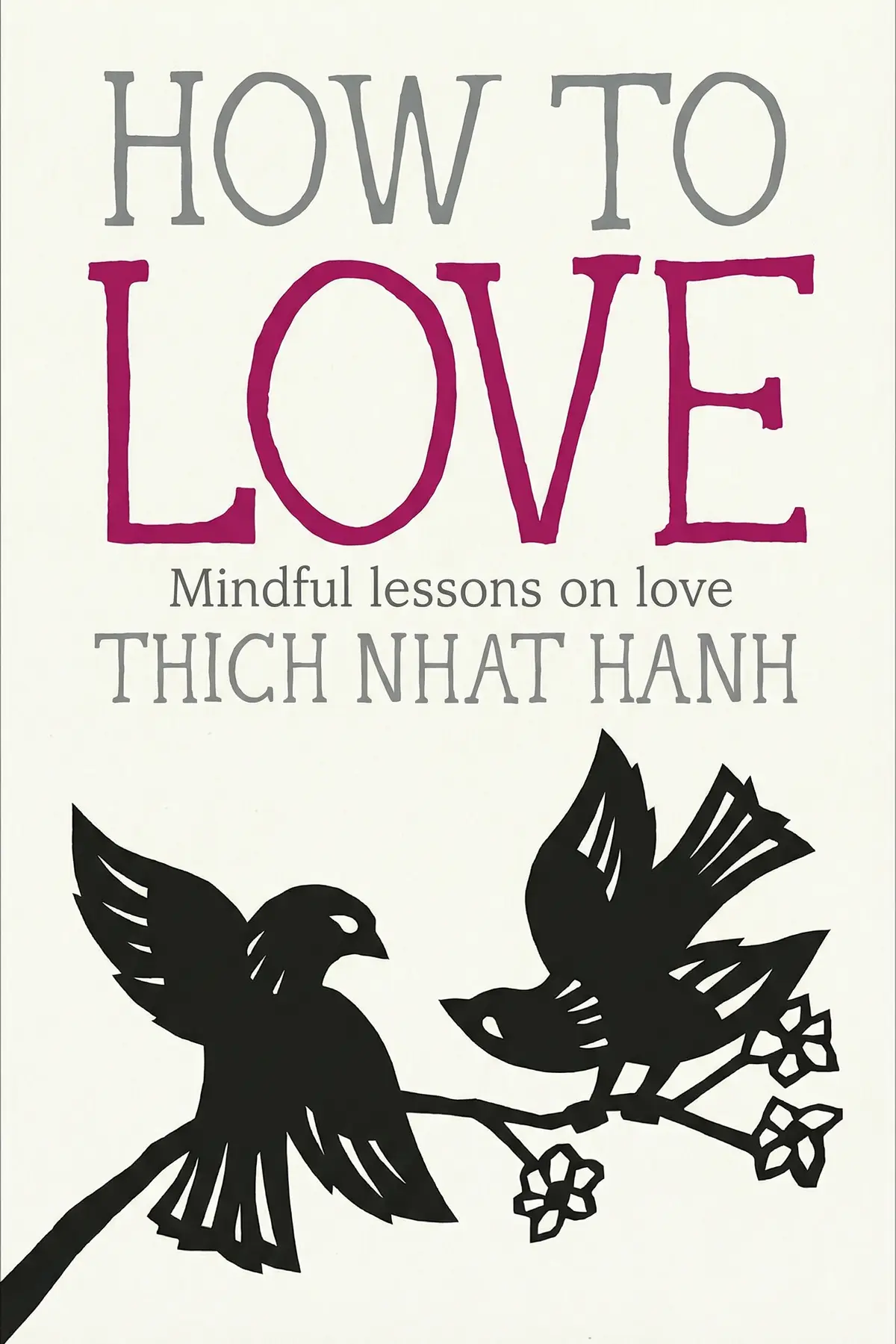
Many people struggle with the complexities of human connection, often mistaking fleeting passion or dependency for true affection. How to Love offers a radical shift in perspective, suggesting that the ability to love another person is a skill that must be nurtured through the practice of mindfulness. It promises to teach you how to expand your heart’s capacity, moving beyond surface-level interactions to achieve a profound spiritual and emotional bond. By exploring the four essential elements of true love—loving-kindness, compassion, joy, and inclusiveness—this book provides a roadmap for healing ourselves and our partners. You will discover how to communicate effectively during moments of conflict and how to treat your partner with the same reverence you would show a guest. Ultimately, the book serves as a gentle reminder that love is not a destination but a continuous process of staying present, listening deeply, and nourishing the happiness of those around us.
Thich Nhat Hanh was a Vietnamese Buddhist monk and a globally recognized spiritual leader. He was a pioneer in bringing the practice of mindfulness to the modern world through his prolific writing, which included numerous essays, poems, and books. Among his most influential works are the international best sellers Anger: Wisdom for Cooling the Flames and The Miracle of Mindfulness.
Thich Nhat Hanh
Thich Nhat Hanh
Thich Nhat Hanh
Thich Nhat Hanh
Listeners find this book highly perceptive, filled with profound bits of wisdom and useful reminders about caring for oneself and others. Moreover, the advice is functional, with lessons that apply to daily life, and listeners appreciate the clear, concise writing style. Furthermore, the volume is easy to read, can be finished in one sitting, and provides substantial material to contemplate on every page.
Picked this up during a difficult period and found it to be an incredible anchor for my wandering mind. Thich Nhat Hanh writes with a deceptive simplicity that makes you feel like you’re sitting on a porch with an old friend. He moves beyond the surface-level fluff of modern dating advice to focus on the 'four defining traits' of love: joy, equanimity, compassion, and kindness. I especially loved the section on deep listening because it challenged me to be truly present without planning my next response. While the text is very short and can be read in under an hour, the weight of each sentence lingers for days afterward. This isn't just a book about romance; it's a guide for being a better human being in every interaction. I think everyone should have a copy on their nightstand for those moments when life feels chaotic.
Show moreWow, this tiny volume packs more punch than most 500-page relationship manuals I’ve encountered. Thich Nhat Hanh has this incredible gift for using metaphors—like the flower made of non-flower elements—to explain the deep interdependence of our lives. He teaches us that a true partner is someone who encourages you to find the beauty already inside you rather than trying to complete you. I found the 'Six Mantras' to be particularly moving, especially the fourth one about admitting your suffering and asking for help. It’s so simple, yet pride often keeps us from saying those exact words when we need to hear them most. This is a must-read for anyone who feels disconnected from their partner or themselves. It’s profound, wise, and written with such a gentle tone that you can’t help but feel calmer by the final page.
Show moreThe chapter on the Six Mantras changed my entire perspective on communication. Thich Nhat Hanh explains that saying 'I am here for you' is a gift of true presence that costs nothing but means everything. I’ve started applying his lessons on 'deep listening' with my spouse, and the shift in our dynamic was almost immediate. It’s amazing how much we take for granted in our daily lives because we are too distracted by our own notions of what happiness should look like. This book reminds us that peace is the direction we should be looking in, not just staring at each other. The information is so practical and the prose is so succinct that I found myself highlighting almost every other paragraph. It’s a meaty little book that invites you to slow down and breathe. I can’t recommend it enough for newlyweds or long-married couples alike.
Show moreHonestly, the concept of 'interbeing' as applied to a flower—and then to ourselves—is purely revolutionary. I never thought about my 'self' as a collection of sunshine, water, and ancestors before, but it makes bridging the gap in relationships so much easier. Thich Nhat Hanh’s writing is like a cool glass of water for a thirsty soul; it’s refreshing, vital, and incredibly clear. He teaches us that understanding is the foundation of true love, and that without it, we are just chasing shadows. I loved the emphasis on finding happiness in the simple stuff, like the white pine out back or just the act of breathing. This book is a gem that offers profound wisdom on every page without ever feeling heavy or preachy. It really is a guide on how to heal through empathy and presence.
Show moreAfter hearing so many friends rave about Thich Nhat Hanh, I finally dived in. This book is short, sweet, and incredibly deep. I was particularly struck by the idea that our notions of happiness can actually be the things that prevent us from being happy. It’s a radical thought in a world that tells us we need more, more, more to be fulfilled. Hanh shows us that love is about looking outward in the same direction—the direction of peace. Not gonna lie, I teared up a bit reading about 'karuna' and the practice of suffering with another to help end their pain. It’s such a beautiful, selfless way to view intimacy. This book should be required reading for every human being on the planet. It’s practical, it’s emotional, and it’s a stunning reminder of what actually matters in life.
Show moreEver wonder why a monk would have so much to say about romance? It turns out that Thich Nhat Hanh’s perspective on the spiritual side of intimacy is exactly what our frantic, screen-obsessed culture needs right now. He breaks down complex Buddhist philosophy into bite-sized, practical lessons that feel remarkably applicable to everyday life. My favorite takeaway was the idea that we cannot love another person until we have nurtured the garden of our own self-love. Truth is, some parts feel a little repetitive if you’ve read his other 'Mindfulness Essentials' books, but the reminders are still valuable. The writing style is succinct and punchy, which makes it easy to digest even if you only have five minutes to spare. It’s a helpful reminder that love isn’t just a feeling we fall into; it’s a practice we must cultivate every single day.
Show moreAs someone who usually finds spiritual texts a bit airy, I was surprised by how grounded this felt. Hanh manages to take high-level concepts like 'karuna' and 'equanimity' and turn them into actionable habits for the modern person. He doesn't waste words, which I appreciate, though sometimes I wished he would delve deeper into the 'thorny pathways' of love he mentions. The focus on self-love as the foundation for everything else is a helpful reminder that we can't pour from an empty cup. Personally, I think the metaphor of the sun offering light to everyone is one of the most beautiful descriptions of love I’ve ever read. Even if you aren't religious or spiritual, the core message of being present for those you care about is universal. It’s a quick, insightful read that provides plenty of food for thought for your next commute.
Show moreFinally got around to reading this staple of mindfulness literature and I'm glad I did. It’s essentially a pocket-sized guide to being more compassionate toward yourself and others. Hanh’s wisdom notes on the 'interbeing' of all things really hit home, especially his point about how our upbringing and surroundings shape our capacity to love. He makes the spiritual side of relationships feel accessible and easy to understand without being condescending. Some of the sections on meditations to do with a partner felt a bit dated, but the underlying principles are timeless. If you’re looking for a succinct book that you can finish in one sitting but will ponder for months, this is definitely it. It’s a gentle nudge to stop focusing on the 'me-first' attitude and start looking at the bigger picture of our connections.
Show moreNot what I expected given the hype, although it definitely has its moments of clarity. The book is very short—almost like a collection of meditations or blog posts rather than a cohesive narrative—which might frustrate some readers. Look, I appreciate the emphasis on 'loving speech' and the rejection of the ego-driven 'self,' but some of the advice felt a bit too idealistic for the real world. For instance, the idea that others' actions are always the result of their own pain feels like it lets people off the hook for being genuinely toxic. I found myself wanting more nuanced discussion on boundaries rather than just constant compassion. That said, it’s a beautiful little object with lovely illustrations, and it serves as a decent introduction to Eastern thought. It’s a nice gift, but don’t expect a comprehensive manual for solving complex relationship issues.
Show moreTo be fair, I struggled with the lack of rigorous argumentation here. While the author makes several decent points about the importance of empathy, he often relies on the reader simply trusting his authority without providing much 'why' behind the 'what.' It felt a bit unscientific and generalized for my taste, as if he assumes all human relationships follow the exact same predictable patterns. I’m a firm believer that the love people share is unique to them and can't be shoehorned into a one-size-fits-all spiritual framework. I found myself cringing at the suggestion that an outsider can fully understand the specific parameters of my personal bonds just by applying a few mantras. If you are looking for a deep, analytical dive into the psychology of relationships, this might feel too airy and unsubstantiated. It’s certainly a quick read, but I just couldn't quite get into it.
Show more
Eckhart Tolle
Pico Iyer
bell hooks
Daniel Siegel
Ram Dass

AUDIO SUMMARY AVAILABLE
Get the key ideas from How to Love by Thich Nhat Hanh, plus 5,000+ more titles in English and Thai.