How to Love
Thich Nhat Hanh
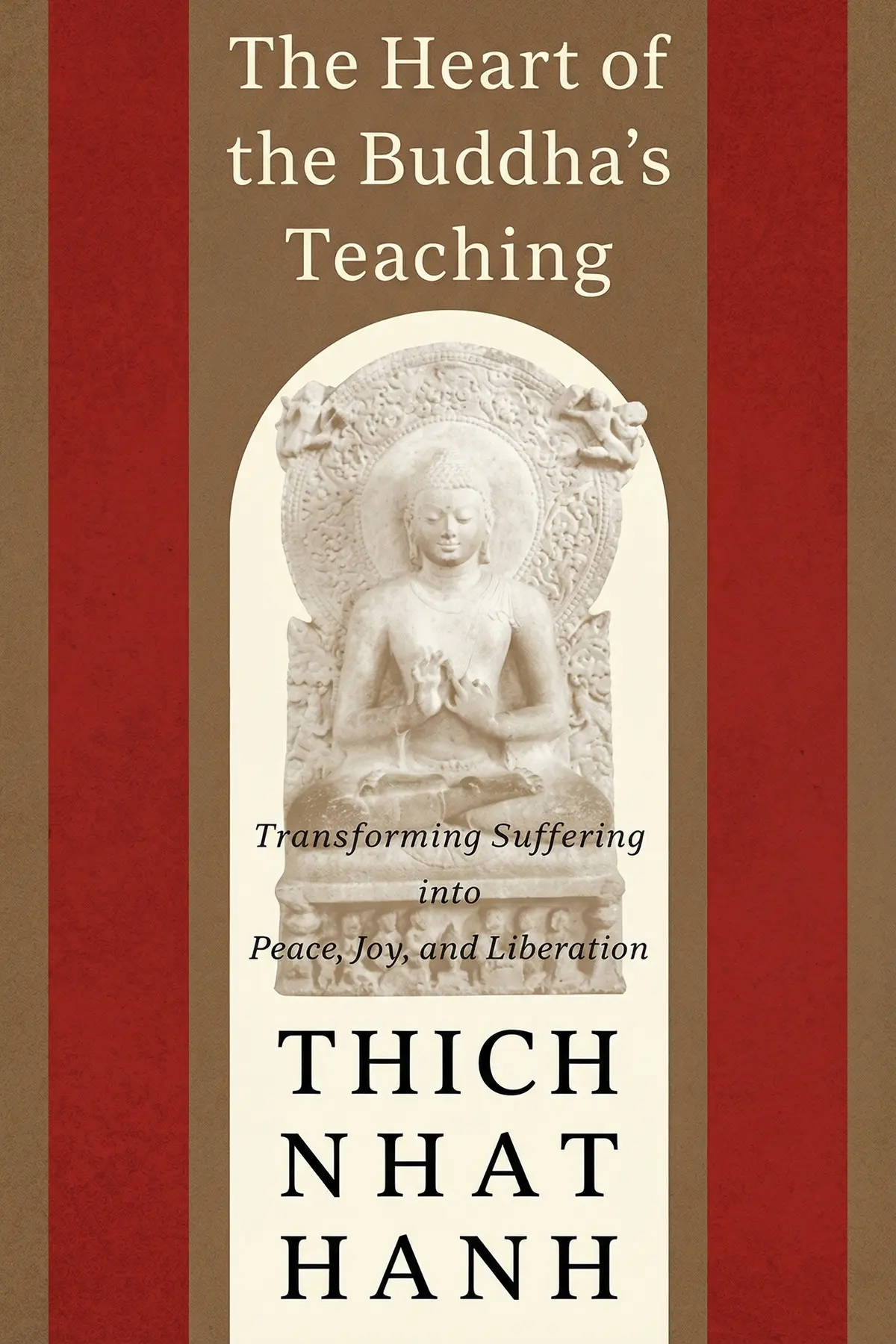
Explore the foundational pillars of Buddhist wisdom with Thich Nhat Hanh. This guide illuminates how mindfulness, compassion, and generosity transform daily existence into a journey toward deep peace and spiritual awakening.
1 min 57 sec
In a world that often feels fractured and hurried, the search for a centered, meaningful existence can feel like an uphill battle. We find ourselves constantly reaching for the next achievement or the next distraction, yet the quiet sense of fulfillment we seek remains just out of reach. This is where the wisdom of Thich Nhat Hanh offers a profound shift in perspective. His work doesn’t just offer a set of abstract philosophical theories; it provides a living, breathing map of the human heart and its potential for transformation.
The throughline of this summary is the understanding that the most profound spiritual truths are not found in distant realms or complex rituals, but in the very fabric of our daily lives. By turning toward the core teachings of Buddhism, we discover that the tools for liberation are already within our reach. The journey begins with a simple yet radical commitment to presence. It’s about learning to see the world as it truly is, rather than how our fears or desires project it to be.
As we dive into these insights, think of this as more than a summary. It is an invitation to slow down and consider how mindfulness, compassion, and generosity act as the three pillars of a stable and enlightened life. Thich Nhat Hanh’s approach is unique because it combines the depth of a Zen master with the practical compassion of a peace activist. He shows us that the ‘heart’ of these teachings is not a cold doctrine, but a warm, welcoming path that anyone can walk, regardless of their background or beliefs.
Throughout our exploration, we will see how these ancient principles address the most modern of problems—stress, disconnection, and the search for purpose. We will look at how the cultivation of our internal landscape directly impacts the world around us, creating ripples of peace that extend far beyond our individual selves. So, let’s begin this journey into the heart of wisdom, looking at how we can turn every breath and every step into an act of awakening.
3 min 09 sec
Discover how the simple act of returning to the present moment can dissolve the barriers to inner peace and clarity in your everyday life.
3 min 09 sec
Explore how shifting your perspective from self-centeredness to deep understanding can heal relationships and alleviate suffering for yourself and others.
3 min 18 sec
Understand why true giving is not about the value of the gift, but about the spirit of presence and the release of attachment.
3 min 30 sec
Learn how to turn mundane routines into spiritual practice, making every breath and every action a step toward transformation.
3 min 07 sec
Demystify the concept of enlightenment by seeing it as a gradual process of waking up to reality rather than a distant, unattainable goal.
2 min 10 sec
As we reach the end of this exploration into the heart of wisdom, it’s important to reflect on the journey we’ve taken. We began with the understanding that the core teachings of Buddhism are not meant to be kept on a shelf as intellectual curiosities. Instead, they are meant to be lived, felt, and expressed through our every action. Thich Nhat Hanh shows us that the path to peace is paved with the very things we often overlook: our breath, our steps, and our daily interactions.
We have seen how mindfulness acts as the essential light that clears away the fog of distraction, allowing us to inhabit our lives fully. We’ve explored how compassion transforms our relationships from battlegrounds of the ego into spaces of deep understanding and healing. And we’ve looked at generosity as a powerful way to break free from the chains of attachment, finding joy in the simple act of giving our presence and our peace to the world.
The overarching lesson is that transformation is possible for anyone. No matter how much suffering we carry or how busy our lives may be, the ‘heart’ of these teachings is always accessible. The shift from a life of stress and reactivity to one of peace and clarity doesn’t happen through a single heroic effort, but through the small, consistent choices we make every day. It’s about choosing to breathe mindfully when we feel overwhelmed. It’s about choosing to listen with compassion when we disagree with someone. It’s about choosing to give of ourselves without expecting anything in return.
In closing, remember that the goal of this path—enlightenment—is not a distant finish line, but the quality of the very next step you take. You have the tools to create a life of profound meaning and connection. By cultivating mindfulness, compassion, and generosity, you are not only transforming your own heart; you are helping to heal the heart of the world. Take these teachings with you as you move back into the rhythm of your day, knowing that every moment is a fresh opportunity to wake up, to love, and to be truly present. The path is right beneath your feet, and the heart of the teaching is already within you.
The Heart of the Buddha's Teaching serves as a comprehensive introduction to the essential principles of Buddhism, reframed for the modern seeker. Thich Nhat Hanh, a world-renowned Zen master and peace activist, distills complex ancient wisdom into practical, accessible guidance for everyday living. The book focuses on the cultivation of three primary qualities: mindfulness, compassion, and generosity. Through these practices, readers are shown how to navigate the challenges of the human experience and transform suffering into a source of wisdom. The promise of the book is a path toward enlightenment that does not require retreating from the world, but rather engaging with it more deeply and authentically. It provides a roadmap for anyone looking to find inner stability and a more profound connection to the world around them.
Thich Nhat Hanh was a Vietnamese Zen master, peace activist, and Buddhist monk. During the Vietnam War, Nhat Hanh was chairman of the Vietnamese Buddhist Peace delegations, demonstrating his commitment to non-violence on a global stage. His influential work and prolific writing have made him one of the most respected spiritual leaders in the world. His other books include Peace is Every Step, The Art of Mindful Living, and Anger.
Thich Nhat Hanh
Thich Nhat Hanh
Thich Nhat Hanh
Thich Nhat Hanh
Thich Nhat Hanh
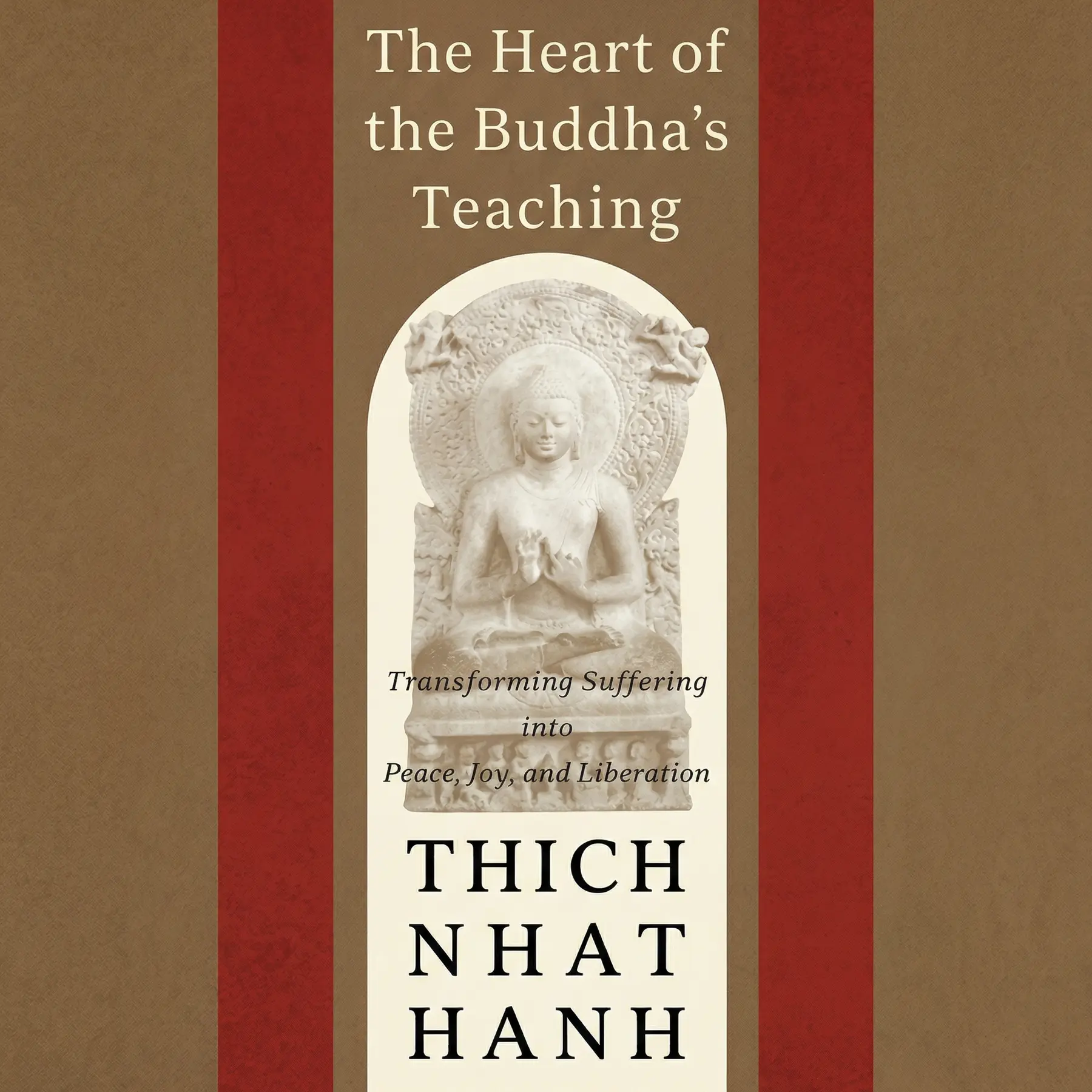
Listeners find this book to be a marvelous, straightforward primer on Buddhism that delivers high-quality recaps of essential tenets. Beyond that, the narrative voice is easy to relate to, and listeners like how the content broadens their viewpoints while opening their minds and hearts. Plus, the guide offers a thorough survey of foundational ideas in a lucid, succinct format, earning its reputation as a top 10 Buddhist book of all time.
Have you ever felt like you're drowning in your own suffering? Thich Nhat Hanh offers a lifeline in this profound yet accessible guide. He takes the Four Noble Truths and makes them feel like practical tools rather than ancient relics. I especially loved his poetic metaphors, like the wave realizing it is actually the ocean. It’s a beautiful way to understand non-self and impermanence without needing a PhD in philosophy. Truth is, most spiritual books are either too airy or too dry, but this strikes a perfect balance. It really helped me reframe my daily anxieties into moments of mindfulness. Even if you aren't looking to 'become' a Buddhist, the wisdom here regarding compassion and presence is universal. It’s a book I’ll keep on my nightstand for years. Definitely a top-tier recommendation for anyone seeking a more peaceful heart.
Show moreThis is probably the most lucid explanation of the Dharma I’ve encountered. Thich Nhat Hanh has a remarkable ability to distill complex concepts into simple, heart-centered truths. I’ve read a few books on meditation, but this one explains exactly why we do what we do. The way he breaks down the Eightfold Path is so clear that it feels like common sense rather than 'religion.' I felt my heart opening as I read about the Four Immeasurable Minds of love, compassion, joy, and equanimity. Frankly, it’s rare to find a book that challenges your intellect while simultaneously soothing your soul. It provides a comprehensive overview that doesn't shy away from the traditional roots of the practice. It helped me see that suffering isn't something to run from, but something to transform. This is essential reading.
Show moreWow, Thich Nhat Hanh has a way of turning complex theology into something you can feel in your bones. I was particularly moved by the chapter on 'Touching the Buddha Within.' It’s not about worshiping a deity; it’s about recognizing the capacity for enlightenment inside your own heart. The author’s writing style is relatable and poetic, especially when he discusses the inter-being of a flower and the sun. He reminds us that the present moment contains all future moments, which is a powerful way to look at life. I found the sections on Right Action very convicting in a good way. It isn't just about sitting on a cushion; it’s about how we treat the gardener, our spouses, and even our enemies. This book is a masterpiece of spiritual literature. It has definitely earned its spot as one of the best introductions to Buddhism ever written.
Show moreFinally got around to reading this staple of Buddhist literature, and I finally understand the hype. It’s a comprehensive overview that manages to be both deep and concise at the same time. I loved how Hanh explains that Nirvana isn't the absence of life, but the extinction of our narrow notions about it. The Twelve Links of Interdependent Co-Arising was a bit heavy, but the author’s metaphors helped bridge the gap. I really appreciated the focus on Right Speech and how our words can either water seeds of anger or seeds of peace. It’s a very personal approach that emphasizes individual responsibility. You don't have to take a leap of faith to see that these principles work. After reading this, I feel like I have a much clearer roadmap for my own spiritual practice. A true 5-star gem.
Show moreThe chapter on 'Transforming Suffering' changed the way I look at my own trauma. Hanh argues that Buddhism is born out of suffering, not academic study, and you can feel that truth on every page. He doesn't ask you to ignore your pain; he asks you to embrace it with mindfulness. I loved the 'man in the mirror' approach—realizing that peace starts with my own thoughts and actions. The writing is incredibly relatable, and the insights are profound without being pretentious. Even the parts that felt a bit 'listy' were worth the effort for the clarity they eventually provided. It’s a wonderful, easy-to-understand introduction that provides a different perspective on what it means to be alive. I can see why people consider this a top 10 book of all time. It’s a life-changer.
Show morePicked this up on a whim after a stressful month at work. While I found the core message incredibly grounding, I’ve got to say, the middle sections can be a bit of a slog. There are so many lists—the Eightfold Path, the Seven Factors of Awakening, the Twelve Links of Interdependent Co-Arising—it gets a bit overwhelming. Sometimes it feels more like an academic textbook than a spiritual guide. However, when Hanh shares personal anecdotes from his time in Vietnam or his community in France, the book really shines. Those stories make the dense theories feel real and applicable. Personally, I found the 'Five Mindfulness Trainings' to be the most helpful part for my actual life. It isn't a quick read, but it is a rewarding one if you have the patience to sit with it.
Show moreAs someone who grew up in a very traditional religious environment, I was fascinated by the distinction between 'secular' and 'cultural' Buddhism mentioned in this text. Thich Nhat Hanh doesn't just give you a westernized version of these truths; he keeps the richness of the tradition intact. I appreciated how he explored the 'store consciousness' and the idea of watering positive seeds in our minds. It’s a very practical technique for working with the universe we actually inhabit. Not gonna lie, some of the more technical sections about the Four Reliances were a bit over my head on the first pass. But the overall tone is so gentle and encouraging that I didn't mind being a little confused. The book feels like a conversation with a very wise, very kind grandfather. It’s definitely a 4-star experience that invites multiple re-readings.
Show moreLooking for a deep dive into the Eightfold Path without getting bogged down in dogma? This book is a fantastic resource. Thich Nhat Hanh handles the religious aspects of Buddhism with a lot of grace, making them accessible to a modern audience. However, be prepared for some dry patches. There are several chapters that feel like a purely academic rundown of major ideas, which can be a bit tedious for those not looking for a theology degree. But then he'll drop a line about how the present moment is the only moment we have, and everything clicks again. I liked his insistence on the inter-dependence of all things. It’s a perspective that really opens your mind and heart to the world around you. To be fair, it's more technical than a lot of other popular mindfulness books, but worth the effort.
Show moreTo be fair, I expected something a bit more narrative-driven based on the title. Instead, what I got was an exhaustive, somewhat dry rundown of Buddhist theology. I really enjoyed the chapters where the author connects the teachings to modern life, but the 'listy' nature of the writing made my eyes glaze over at times. It’s hard to stay engaged when you’re reading about the Fourteen Mindfulness Trainings followed immediately by another dozen categories. That being said, the explanation of the Three Dharma Seals was genuinely enlightening. It helped me understand the concept of Nirvana as something attainable in this life, not just some distant afterlife. If you want something light and breezy, maybe try Pema Chodron instead. But if you want the meat and potatoes of the Dharma, this is it. It’s a solid 3-star read for me, mainly because of the pacing issues.
Show moreThe audiobook narration was a total dealbreaker for me, unfortunately. I tried to listen to this while commuting, but the reader sounded so robotic that I couldn't absorb any of the meaning. It felt like I was being lectured by a computer about the nature of the soul, which is pretty ironic given the subject matter. I ended up switching to the paperback version and had a slightly better experience, but the structure is still a bit disorganized. It jumps from beautiful personal stories to very technical lists of behaviors that are hard to keep track of without taking physical notes. Look, the content is obviously high-level wisdom, but the presentation makes it a difficult slog for a casual reader. I’m giving it 2 stars just to warn people away from the audio version. Buy the physical book so you can go at your own pace.
Show more
Daniel Goleman
Marianne Williamson
Deepak Chopra
Alcoholics Anonymous World Services
Eckhart Tolle
Pico Iyer
AUDIO SUMMARY AVAILABLE
Get the key ideas from The Heart of the Buddha’s Teaching by Thich Nhat Hanh, plus 5,000+ more titles in English and Thai.