
How to Love
Thich Nhat Hanh
A transformative exploration of the shared spiritual foundations between Buddhism and Christianity, demonstrating how mindfulness, compassion, and deep understanding can unite different faith traditions to foster global peace and personal growth.
1 min 51 sec
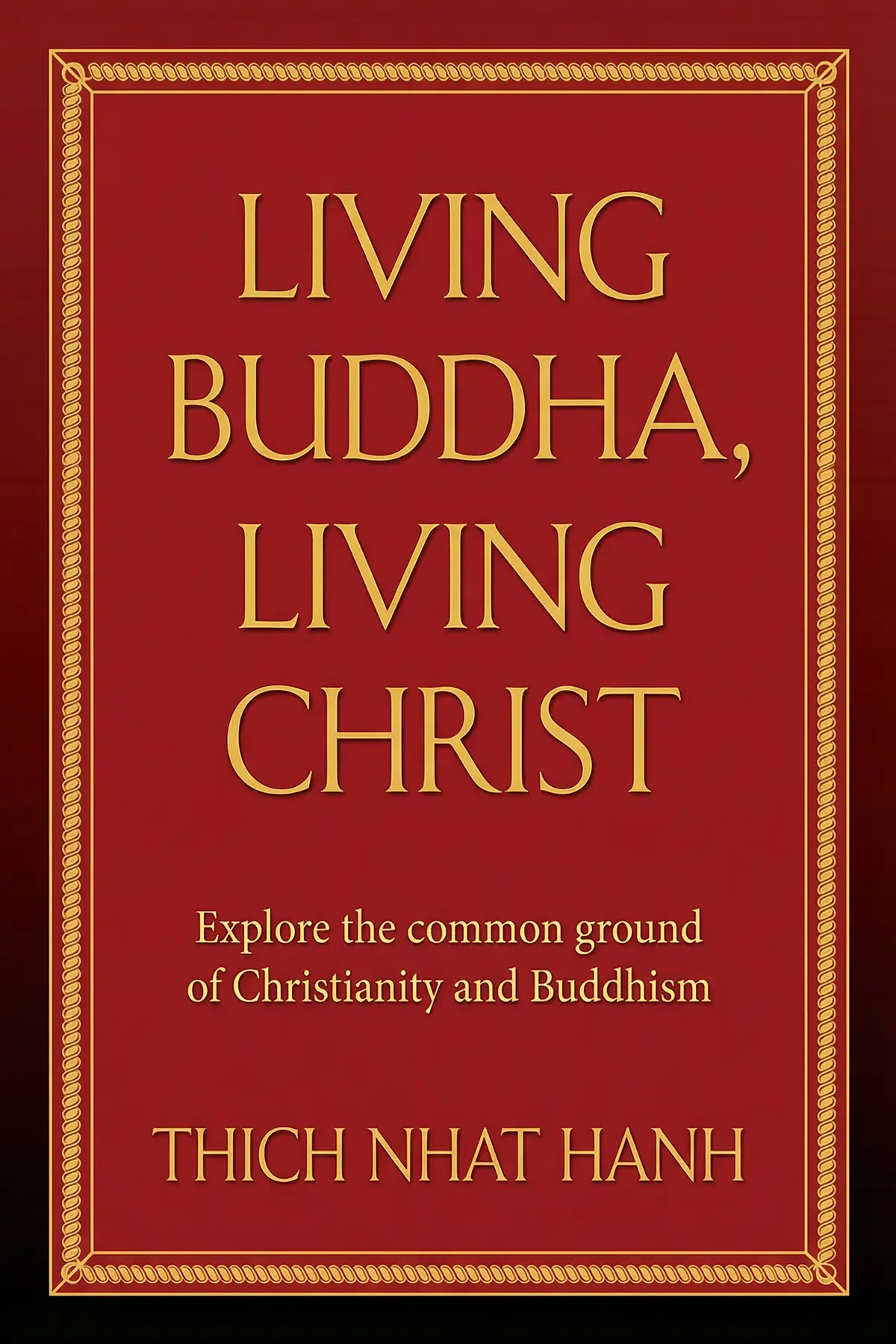
Imagine two of the most influential figures in human history standing side by side. On one hand, you have Gautama Buddha, a prince who walked away from a life of luxury to seek an end to human suffering. On the other, you have Jesus of Nazareth, a carpenter’s son whose message of love and sacrifice transformed the Western world. These two men lived centuries and continents apart, born into vastly different cultures and social structures. At first glance, the religions they founded—Buddhism and Christianity—might seem like polar opposites, moving in entirely different directions. Yet, if we look past the surface-level rituals and theological debates, we find a striking resonance between them.
In the following minutes, we are going to explore the throughline that connects these two great traditions. We aren’t just looking at dusty history books or ancient scrolls. Instead, we are looking at how the ‘Living Buddha’ and the ‘Living Christ’ continue to speak to us today. The central idea we’ll be following is one of ‘interbeing’—the concept that all things are deeply connected and that no tradition exists in a vacuum. By placing these two spiritual giants in dialogue with one another, we can uncover a shared map for living a life of deeper compassion, sharper mindfulness, and more profound peace.
We will examine how faith resembles a carefully tended garden, why the intangible values passed down through generations are more precious than any physical heirloom, and how the vastness of the ocean can help us understand our own existence. Whether you identify as a Christian, a Buddhist, or a seeker of any other stripe, this journey offers a way to see the world—and your own spiritual path—through a more inclusive and nurturing lens. Let’s begin by exploring how opening a door to other faiths actually helps us walk more firmly on our own.
2 min 44 sec
Discover how the diverse branches of faith can function like flowers in a single garden, where looking at other traditions strengthens our own spiritual understanding.
2 min 13 sec
Move beyond the historical facts of Jesus and Buddha to embrace their eternal presence through daily acts of mindfulness and love.
2 min 14 sec
Explore why staying on a spiritual path is nearly impossible alone and how building a ‘Sangha’ or a ‘Body of Christ’ provides essential support.
2 min 28 sec
Learn why the path to global harmony isn’t found in removing weapons, but in transforming the fear and ignorance in our own hearts.
2 min 05 sec
Reflect on how the ethical codes of the past, like the Five Precepts and Ten Commandments, serve as vital tools for navigating modern morality.
2 min 25 sec
Explore the abstract mysteries of existence and find comfort in metaphors that bridge the gap between individual life and the infinite.
2 min 13 sec
See your faith as a living garden that requires the right tools—like prayer and chanting—to stay healthy and vibrant every day.
1 min 23 sec
As we come to the end of our exploration, we can see that the bridge between Buddhism and Christianity is built on a foundation of shared human experience. While their histories and cultures are unique, the core of their messages is remarkably consistent. Both traditions challenge us to look beyond our own narrow interests and to build communities based on love and generosity. Both offer us ethical maps to navigate the complexities of life and metaphors to help us make sense of the great mysteries of existence.
The ultimate lesson of Thich Nhat Hanh’s perspective is that interfaith dialogue isn’t about winning an argument or choosing one side over another. It is about ‘interbeing.’ It is about realizing that by understanding the ‘other,’ we gain a clearer mirror in which to see ourselves. When we embrace the values of mindfulness, compassion, and deep listening, we aren’t just practicing a religion; we are contributing to the healing of the world.
As you move back into your daily life, take a moment to look for the Living Buddha or the Living Christ in the people you encounter. Consider how you can tend to your own spiritual garden, using the tools of prayer or mindfulness to keep your heart open. Whether you find yourself in a cathedral or on a meditation cushion, remember that the path to peace is always right beneath your feet, waiting for you to take the next step with awareness and love.
Living Buddha, Living Christ investigates the surprising and deep-seated parallels between two of the world’s most influential spiritual leaders: Gautama Buddha and Jesus of Nazareth. Written by the late Zen master Thich Nhat Hanh, the book moves beyond the historical facts of their lives to explore the living essence of their teachings. It posits that by engaging in a respectful interfaith dialogue, we can discover common ground in our pursuit of love, mindfulness, and the alleviation of suffering. The book promises a path toward spiritual enrichment that doesn’t require abandoning one's own heritage. Instead, it suggests that by looking deeply into the practices of another tradition, we can revitalize and better understand our own. Through concepts like 'interbeing' and practical examples of daily mindfulness, Hanh provides a framework for how the core values of both Buddhism and Christianity can be applied to modern challenges, from personal stress to global conflict.
Thich Nhat Hanh was a world-renowned spiritual leader, Buddhist monk, and dedicated peace activist. Over his long and impactful life, he authored more than 70 books that brought the concepts of mindfulness and 'engaged Buddhism' to a global audience. His tireless work for peace and reconciliation, particularly during the Vietnam War, led civil-rights icon Martin Luther King Jr. to nominate him for the Nobel Peace Prize.
Thich Nhat Hanh
Thich Nhat Hanh
Thich Nhat Hanh
Thich Nhat Hanh
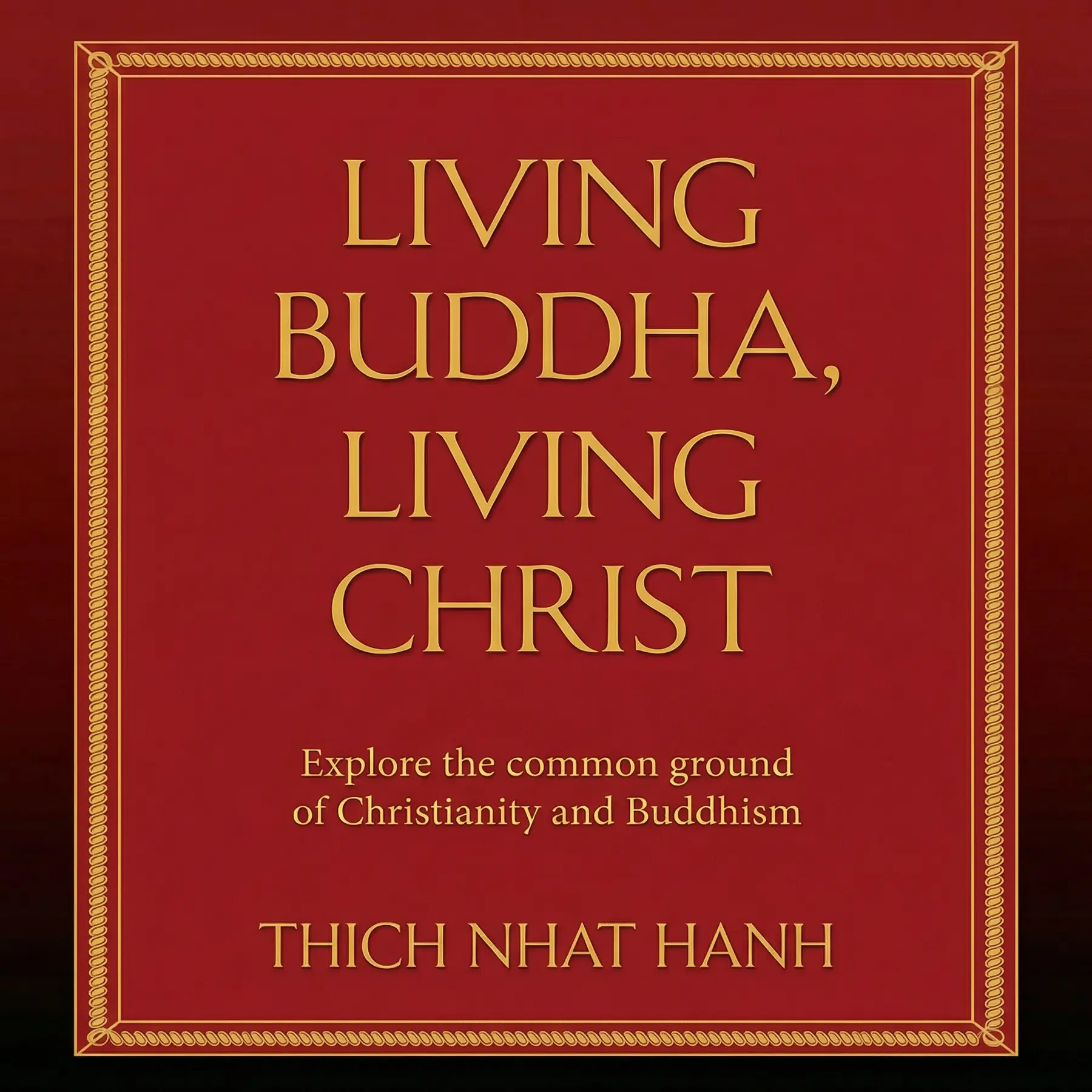
Listeners find this work to be thought-provoking and eloquently composed, admiring the accessible way it bridges Buddhist and Christian tenets. In addition, listeners celebrate the text for its immense spiritual richness, noting how it challenges readers to live out their faith while providing a balanced portrayal of Jesus and Buddha. Moreover, listeners prize the book's message about love being the route to harmony, with one listener specifically mentioning how it provides guidance on self-love and understanding.
Wow, this book is a luminous bridge between two worlds that often feel miles apart. Nhat Hanh writes with a gentleness that makes even the deepest spiritual concepts feel like a warm, inviting conversation. I loved how he framed the Holy Spirit as the Christian equivalent of mindfulness, describing it as an active, living energy. It really challenged me to look at my own faith not as a set of rigid rules, but as a path of constant practice. The emphasis on love as the only true way to peace felt especially relevant in today’s increasingly polarized climate. While some might find his approach a bit too inclusive, I think it’s exactly what the world needs right now. It isn't about converting anyone; it's about finding the common ground where we all breathe and exist together. Truly a life-changing read for anyone seeking a more compassionate perspective.
Show moreFinally got around to this classic, and it’s every bit as profound as people say. Nhat Hanh’s history as a peace activist in Vietnam really shines through in his call for non-violence and deep listening. He doesn't just talk about abstract concepts; he provides a roadmap for self-love and understanding that feels incredibly practical. The way he relates the living Buddha to the living Christ suggests that spirituality should be an active, daily engagement rather than a Sunday-only event. I found the sections on the mantras for relationships to be surprisingly touching and useful for my own life. It’s a book that demands you slow down and breathe while you’re reading it. Even if you don't agree with every parallel he draws, the spirit of the book is undeniably beautiful. This is essential reading for anyone tired of religious imperialism and looking for a way to love their neighbor better.
Show moreAfter hearing about Thich Nhat Hanh’s friendship with Martin Luther King Jr., I knew I had to read this. Their shared vision of a beloved community is the heartbeat of this entire volume. Hanh explains how both the Buddha and Jesus were essentially radicals who preached love in the face of immense suffering. The chapter on mindfulness as the Holy Spirit within us was a total lightbulb moment for me. It makes the concept of God feel much more accessible and less like a distant judge in the sky. I love how he emphasizes that we can’t go far without community, reminding us that our spiritual health is tied to those around us. This book isn't just about theory; it’s a challenge to live out your faith with every breath and step. It’s rare to find a book that feels this peaceful and this convicting at the same time.
Show moreEver wonder why there’s so much conflict in the name of religion? This book offers a stunning alternative. Thich Nhat Hanh shows us that at the center of both traditions is a call to awaken to the present moment. I was particularly struck by his explanation of interbeing and how it relates to the Christian idea of the body of Christ. He argues that we are all interconnected, and our practice should reflect that through acts of love and understanding. The tone is incredibly humble, which makes the message of peace even more powerful. I appreciated the specific mantras he shared for improving relationships; they are simple but truly transformative. For me, the highlights were the sections on deep listening and how to handle anger without violence. It’s a short read, but I’ll be returning to these pages for years to come. Simply a masterpiece of interfaith dialogue.
Show moreThich Nhat Hanh has a way of stripping away the clutter of dogma to reveal the heart of spiritual practice. This book isn't trying to say that Buddhism and Christianity are identical, but that they can nourish one another. I found the discussion on the Holy Spirit as an energy of transformation to be one of the most insightful things I've read in years. It reminds us that God is not an object of our thoughts, but a living experience within us. The book encourages a type of deep listening that we desperately need in our current political and social climate. He manages to be both a teacher and a brother to the reader, offering guidance on everything from self-love to global peace. It’s a beautiful, refreshing look at how to be a better human being through the wisdom of two great masters. Highly recommended for any seeker.
Show moreAs someone who was raised in a very traditional church, I was initially skeptical about how a Buddhist monk would interpret the Gospel. However, Nhat Hanh provides a surprisingly fair look at Jesus, treating him with immense reverence and historical respect. He argues that we shouldn’t get hung up on the exclusivity of Christ but rather focus on the living presence of his teachings. The writing style is simple and direct, which is a hallmark of his work, though it occasionally feels like it’s skipping over complex theological hurdles. I appreciated the insight into interbeing and how it mirrors the idea of being in the world but not of it. My only real gripe is that the Christian side of the comparison sometimes feels a bit thinner than the Buddhist side. Still, it’s a wonderful primer for anyone wanting to broaden their spiritual horizons without feeling like they’re betraying their roots.
Show moreLook, I grew up Baptist and later spent time in Catholic circles, so the idea of mixing traditions always felt a bit taboo. This book helped me realize that finding value in another’s tradition doesn’t have to diminish your own. Hanh’s take on religious imperialism is a necessary wake-up call for anyone who thinks their path is the only one with light. He writes with such a lack of ego that it's hard not to be moved by his message of universal compassion. I did find the structure a bit jumpy, with information delivered in small bullets rather than a long, cohesive narrative. That said, his insights into the non-self were eye-opening, even if they were difficult to fully grasp at first. It’s a solid introduction to his style of engaged Buddhism through a lens that Westerners can easily relate to. Not perfect, but definitely worth the shelf space.
Show moreTo be fair, this is a very gentle and accessible book, but I wish I hadn't gone with the abridged audiobook version first. There’s so much depth here that feels like it might have been trimmed for time. Regardless, Hanh’s message about the living nature of faith is a powerful critique of modern organized religion. He correctly points out that many people support their churches or temples without ever actually practicing mindfulness or prayer. It’s a bit of a wake-up call for those of us who have let our rituals become dry and automatic. While some of the comparisons to Christianity felt a little simplified, the overall spirit of the book is one of profound empathy. I especially liked his take on reincarnation and how we should stop being so hung up on the self. It’s a great primer, even if it jumps around between topics quite a bit.
Show moreThe title suggests a balanced split, but in reality, it feels more like a 70/30 distribution favoring Buddhist philosophy. While Nhat Hanh is clearly a master of his craft, his portrayal of Christianity can sometimes feel a bit reductive or insubstantial. I kept thinking about that famous G.K. Chesterton quote regarding the differences between these two faiths being more fundamental than their similarities. Is it really helpful to treat religions like a fruit salad where you just pick the parts you like? To be fair, his intentions are clearly rooted in peace and reconciliation, which is noble and necessary. But for a practicing Christian, seeing the Eucharist described in purely symbolic, mindfulness-based terms might feel a bit jarring. It’s a beautifully written book, yet I couldn't help but feel he missed the core uniqueness of the Christ figure. It's worth a read for the peaceful vibes, but don't expect a deep dive into serious theology.
Show moreNot what I expected, and frankly, I’m disappointed by how much it glosses over the fundamental differences between the two faiths. As a Christian, I found his participation in the Eucharist without accepting its core tenets to be somewhat condescending. You can't just strip away the divinity of Christ and then claim the two religions are essentially the same thing. This feels like it was written to make Buddhism less scary to a specific era of Westerners rather than to provide a rigorous comparison. The parallels he draws are often the kind of puerile pedantry that critics warned about—generalities that apply to any decent human being. While Hanh is a gifted writer, his picture of Christianity is just too thin to be taken seriously by anyone with a deep theological background. If you’re looking for a feel-good book about peace, this is fine, but it’s not a serious study.
Show more
Eckhart Tolle
Marianne Williamson
Deepak Chopra
Pico Iyer
Alcoholics Anonymous World Services
Daniel Goleman

Beth Moore
Paramahansa Yogananda
AUDIO SUMMARY AVAILABLE
Get the key ideas from Living Buddha, Living Christ by Thich Nhat Hanh, plus 5,000+ more titles in English and Thai.







