
16 min 33 sec
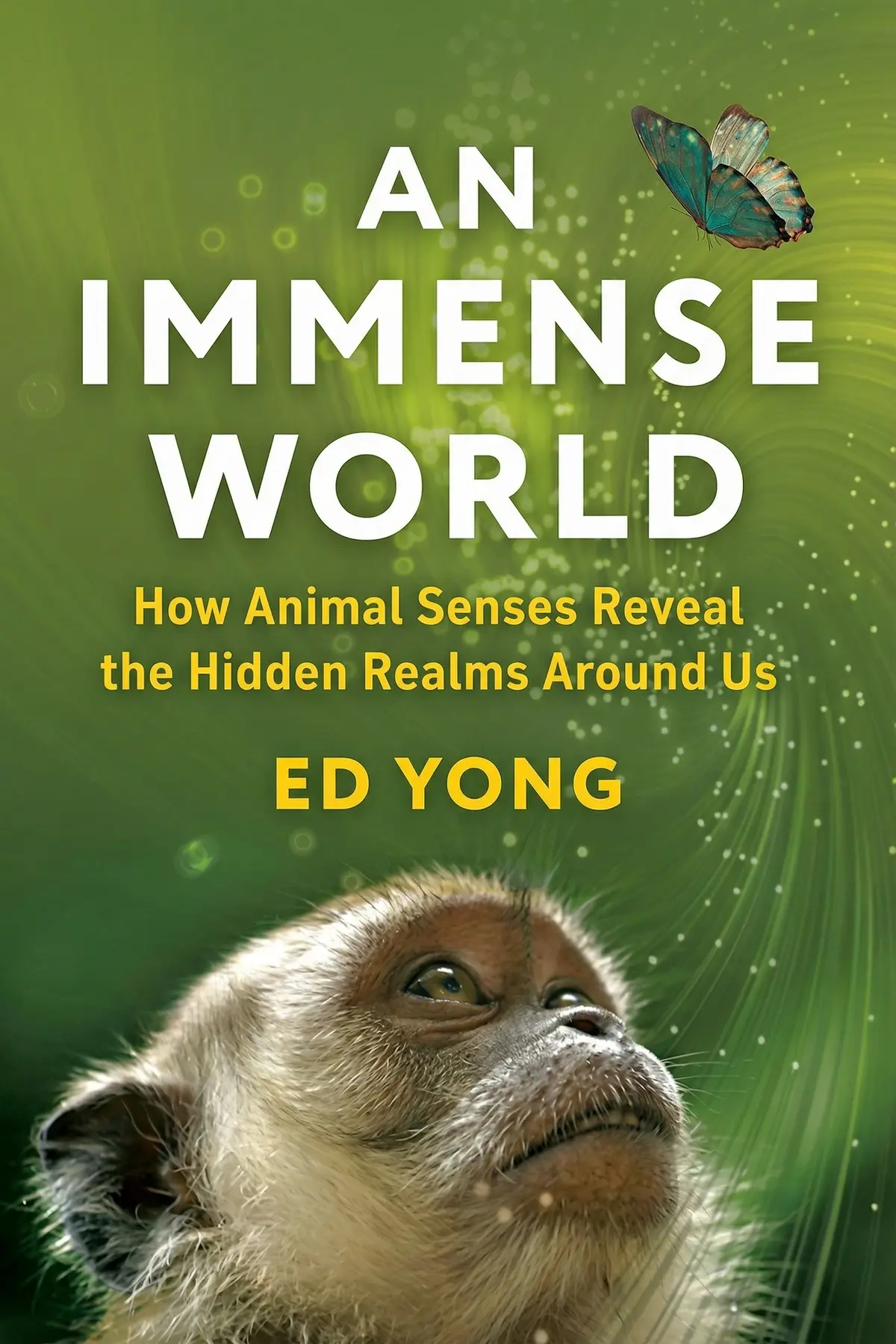
I Contain Multitudes: The Microbes Within Us and a Grander View of Life
By Ed Yong
Explore the hidden world of the microbiome and discover how microscopic organisms shape our evolution, protect our health, and maintain the delicate balance of life on Earth.
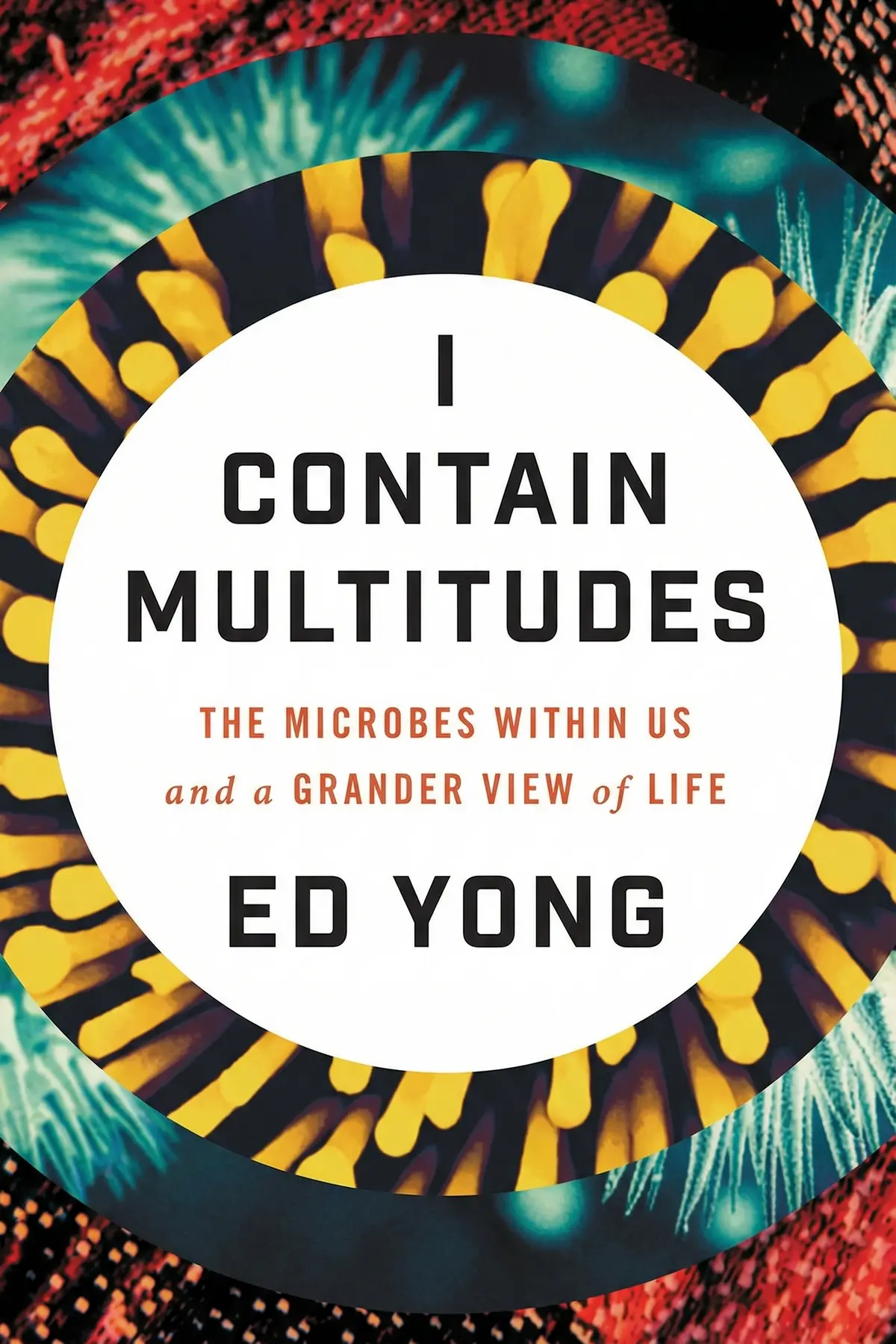
Table of Content
1. Introduction
1 min 50 sec
When most of us think about the word microbe, our minds immediately jump to visions of sickness. We think of the seasonal flu that keeps us shivering under the covers, or the irritating bacteria that force us to stay home from work and sip tea. For a long time, the narrative of human health has been a story of us versus them—a constant battle to scrub away the germs and keep our lives sterile. But what if that perspective is fundamentally backward? What if these tiny organisms are not our enemies, but our most essential collaborators?
In the coming pages, we are going to embark on a journey into the invisible. We are going to look past the surface of our skin and into the teeming, vibrant ecosystems that make up our bodies. The truth is that you are never truly alone. Within you, and on every surface of your body, exist trillions of microscopic entities that have been shaping life on this planet since the very beginning. They are the silent architects of our immune systems and the unseen partners in our evolutionary history.
We will explore how these tiny creatures helped create the very air we breathe and how they continue to manage the environment around us. We’ll look at the strange and beautiful ways animals in the wild use microbes to gain superpowers, like the ability to become invisible or to survive on food that should be indigestible. And finally, we will consider what it means for our future health. By shifting our perspective from seeing microbes as germs to seeing them as part of our own identity, we can begin to understand why a diverse internal ecosystem is the key to a healthy life. It is time to stop looking at microbes as something to be feared and start seeing them as the multitudes that make us who we are.
2. The Ancient Architects of the Planet
2 min 14 sec
Microbes have inhabited Earth long before any other life forms, fundamentally altering the environment to make it habitable for the complex creatures that followed.
3. We Are Walking Ecosystems
2 min 19 sec
Every human body is a vast landscape teeming with trillions of microbial cells that outnumber our own genes and perform essential biological functions.
4. Nature’s Incredible Microbial Partnerships
2 min 23 sec
Across the animal kingdom, microbes provide their hosts with specialized survival tools, from invisibility cloaks to the ability to digest wood.
5. Maintaining the Delicate Inner Balance
2 min 04 sec
The relationship between a host and its microbes requires constant management through physical barriers and the immune system to ensure cooperation doesn’t turn into conflict.
6. The Price of Modern Cleanliness
2 min 07 sec
Our obsession with hygiene and processed living may be unintentionally damaging our internal ecosystems and confusing our immune systems.
7. The Future of Microbial Medicine
2 min 16 sec
New breakthroughs in understanding the microbiome are opening the door to revolutionary treatments that treat the body as a whole ecosystem.
8. Conclusion
1 min 20 sec
The world of the microbiome is a reminder that our traditional view of the individual is an illusion. We are not just single organisms; we are vast, walking communities. This perspective shift changes everything. It changes how we view our history, showing us that we are the product of ancient alliances with tiny life forms that have been perfecting the art of survival for billions of years. It changes how we view our health, reminding us that we are the guardians of a delicate internal garden that requires the right nutrients and a bit of ‘healthy’ dirt to thrive.
As you move forward, try to carry this new awareness with you. When you eat a fiber-rich meal, think of it as feeding the trillions of partners who keep your immune system sharp and your digestion smooth. When you step outside into the natural world, remember that you are exchanging microbes with the environment around you, continuing a conversation that began long before humans ever walked the Earth. By embracing the multitudes within us, we can find new ways to heal, new ways to grow, and a deeper appreciation for the complex, invisible web of life that makes our existence possible. We are never truly alone, and in the company of our microbes, we have everything we need to flourish.
About this book
What is this book about?
This exploration of the microbial world challenges our perception of identity and health. Instead of viewing ourselves as single individuals, we are invited to see the human body as a complex ecosystem inhabited by trillions of bacteria and other tiny life forms. These microbes are not just passengers; they are active participants in our development, from calibrating our immune systems in infancy to helping us process nutrients throughout our lives. The book reveals the extraordinary partnerships found across the animal kingdom, where microbes provide specialized abilities like bioluminescence or the capacity to digest tough plant matter. By understanding these ancient alliances, we can move away from a war on germs and toward a more nuanced appreciation of how maintaining microbial diversity is essential for both human medicine and the health of our planet.
Book Information
About the Author
Ed Yong
Ed Yong is a prominent science journalist and speaker. His writing has been featured in major publications including The Atlantic, Nature, Scientific American, the New York Times, and Wired. He also manages a blog for National Geographic called Not Exactly Rocket Science.
Ratings & Reviews
Ratings at a glance
What people think
Listeners find the work thoroughly researched and easy to follow, praising the clear scientific prose for making complex themes approachable. Furthermore, the content is deeply absorbing and rich with anecdotes, offering an educational adventure through the microscopic realm. Listeners call the experience eye-opening, with one noting it fundamentally shifts their perspective on nature. However, reactions to the pacing are varied, as some stay fully immersed while others suggest the material becomes slightly dense after extended periods.
Top reviews
Joseph
This book is a total game-changer for how I perceive my own body and the world around me. I used to think of myself as a single individual, but Yong convincingly argues that I’m actually a walking, talking ecosystem—a literal zoo enclosed in skin. The prose is sparkling and accessible, making even the most complex symbiotic relationships feel like a high-stakes drama. I was particularly struck by the idea that we’ve evolved alongside these microbes for billions of years; they aren't just guests, they're part of our blueprints. It’s rare to find a science book that feels this profound yet remains so easy to digest. Frankly, I’ll never look at a hand sanitizer bottle the same way again.
Show moreTod
The chapter on the Hawaiian bobtail squid absolutely blew my mind. Yong describes how these creatures have essentially built a specialized light organ for their bacteria, and it reads more like science fiction than a biology textbook. This book is an absolute masterclass in science communication. It shifts the perspective from 'germs are bad' to a much more nuanced understanding of how we are essentially an archipelago of life. I appreciated how he balanced the wonder of discovery with the necessary caution about the limitations of current research. Every page offers a big new look-at-the-world moment that makes you want to stop and share a random fact with whoever is in the room.
Show moreTen
Ever wonder what’s actually going on inside your gut while you’re eating dinner? Ed Yong turns the human body into a fascinating travelogue, showing us that we are never truly alone. The way he describes the composition of breast milk—containing sugars that infants can't even digest, purely to feed specific gut bacteria—is just stunning. It’s a beautiful reminder of how interconnected all life is. The book is filled with these 'aha!' moments that make you reconsider your place in the universe. Yong’s tone is friendly and humored, never making you feel like a dolt for not knowing the difference between a bacterium and an archaeon. It’s simply brilliant and highly recommended.
Show morePaiboon
Wow, I never expected a book about bacteria to be this poetic and deeply philosophical. Yong manages to make the invisible world feel massive and vibrant. He has this incredible ability to take a tiny, microscopic interaction and show how it has shaped the entire history of life on Earth. I was captivated by the descriptions of how we pick up our first partners during birth—it’s such a fundamental part of being human that we rarely talk about. This is the kind of science writing we need more of: clear, engaging, and genuinely transformative. It’s not just about health; it’s about the very definition of what an individual is. Truly a masterpiece of the genre.
Show moreOrawan
After hearing so much buzz about Ed Yong, I finally dove into this exploration of the microbial world. The writing is incredibly well-researched, and Yong has a gift for metaphors that keep you from drowning in jargon. I loved the deep dives into how microbes influence everything from our moods to the survival of coral reefs. However, I found the pacing to be a bit uneven in the latter half of the book. Some chapters felt like an educational romp, while others were a bit heavy and dense, requiring a lot of mental energy to push through. Truth be told, it’s a lot of information to take in at once, but the eye-opening payoff is worth the effort.
Show moreSupranee
As someone who works in healthcare, I found Yong’s discussion on antibiotics and the 'scorched earth' approach to medicine incredibly timely. We spend so much time trying to sanitize our environments, often forgetting that we are destroying our internal allies in the process. The way he explains dysbiosis—a biological version of a collapsing society—helped me conceptualize patient health in a totally new light. My only minor gripe is that I wish he had spent more time on the potential dangers of gene-editing microbes or the darker side of this technology. He touches on the risks, but the ethical Pandora's box feels like it deserved a dedicated chapter. Still, it’s a brilliant, essential read.
Show moreUbolrat
Picked this up on a whim and was immediately sucked into the 'zoo' living within our own skin. The narrative flows like a series of interconnected stories rather than a dry academic lecture, which I really appreciated. I loved learning about how our immune systems are more like park rangers managing a complex ecosystem than soldiers fighting a war. It’s a subtle but powerful shift in thinking. My only criticism is that the pacing occasionally stutters when the focus shifts too far away from humans for too long. While the evolution of insects is cool, I found myself skimming a bit to get back to the human microbiome stuff. A very solid and educational read.
Show moreCharlotte
Personally, I think Yong belongs in the same pantheon as David Attenborough or Mary Roach for his ability to distill complex data into pure wonder. I’ve read a lot of pop-science books lately, and this one stands out for its sheer breadth of research. He covers everything from the deep ocean to the neonatal ward with equal curiosity. To be honest, I did find the sheer number of examples a bit overwhelming at times. It’s a lot of 'and here’s another cool animal,' which is fun but can feel repetitive after a while. Nevertheless, the central thesis—that we are an integrated part of the microbial world—is presented with such clarity that it sticks with you.
Show moreSomporn
To be fair, while the science here is undeniably fascinating, the middle section felt like a bit of a slog for a non-biologist. I really enjoyed the initial premise of containing multitudes and the vivid descriptions of various animal-microbe partnerships. But eventually, the sheer volume of different species and Latin names started to make my eyes glaze over. It's clearly a high-quality piece of journalism, but the density makes it hard to read for long stretches. I was hoping for a bit more focus on human health and practical probiotics, but the book spends a massive amount of time on wasps, bees, and obscure deep-sea worms. Interesting, but perhaps a bit niche for the average reader.
Show moreKatya
Not what I expected, as the focus was much more on animal symbiosis than just human health, which left me wanting more practical advice. I found the sections on the US Navy and mucus weirdly specific and a bit dry compared to the rest of the book. While Yong is clearly an expert writer, the book felt like a collection of long-form articles stitched together rather than a cohesive narrative journey. It’s a bit of a heavy read if you're not already a biology buff, and I struggled to finish the last few chapters. It’s definitely well-researched, but I didn't get that 'Kaboom' feeling that other reviewers mentioned. It's an okay introduction, but perhaps too academic for me.
Show moreReaders also enjoyed
Alien Earths: The New Science of Planet Hunting in the Cosmos
Lisa Kaltenegger
A Life Decoded: My Genome: My Life
J. Craig Venter
A Planet of Viruses
Carl Zimmer
A Short History of Nearly Everything
Bill Bryson
AUDIO SUMMARY AVAILABLE
Listen to I Contain Multitudes in 15 minutes
Get the key ideas from I Contain Multitudes by Ed Yong, plus 5,000+ more titles in English and Thai.
- 5,000+ titles
- Listen as much as you want
- 7-day free trial
- Cancel anytime







