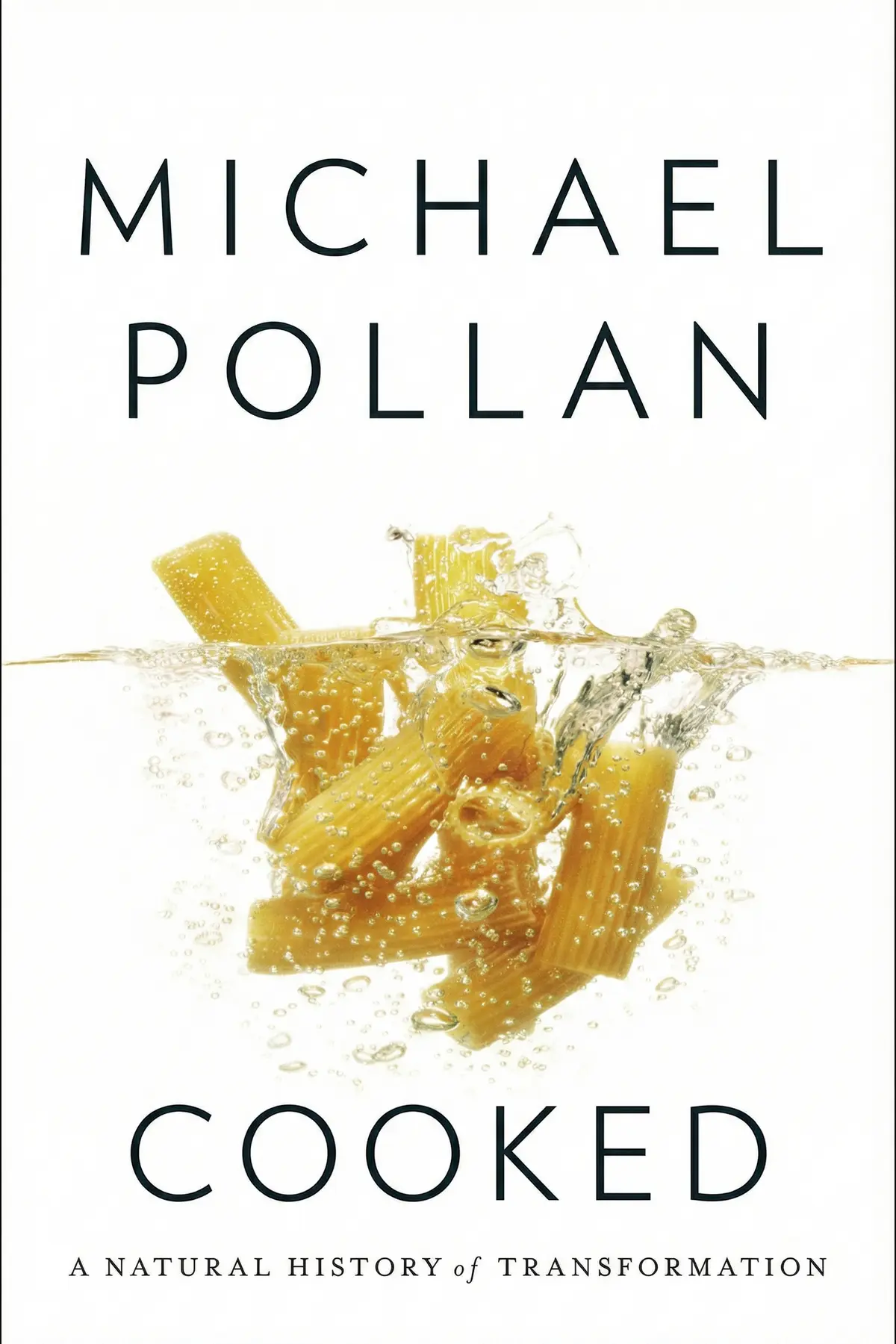
Cooked: A Natural History of Transformation
Michael Pollan
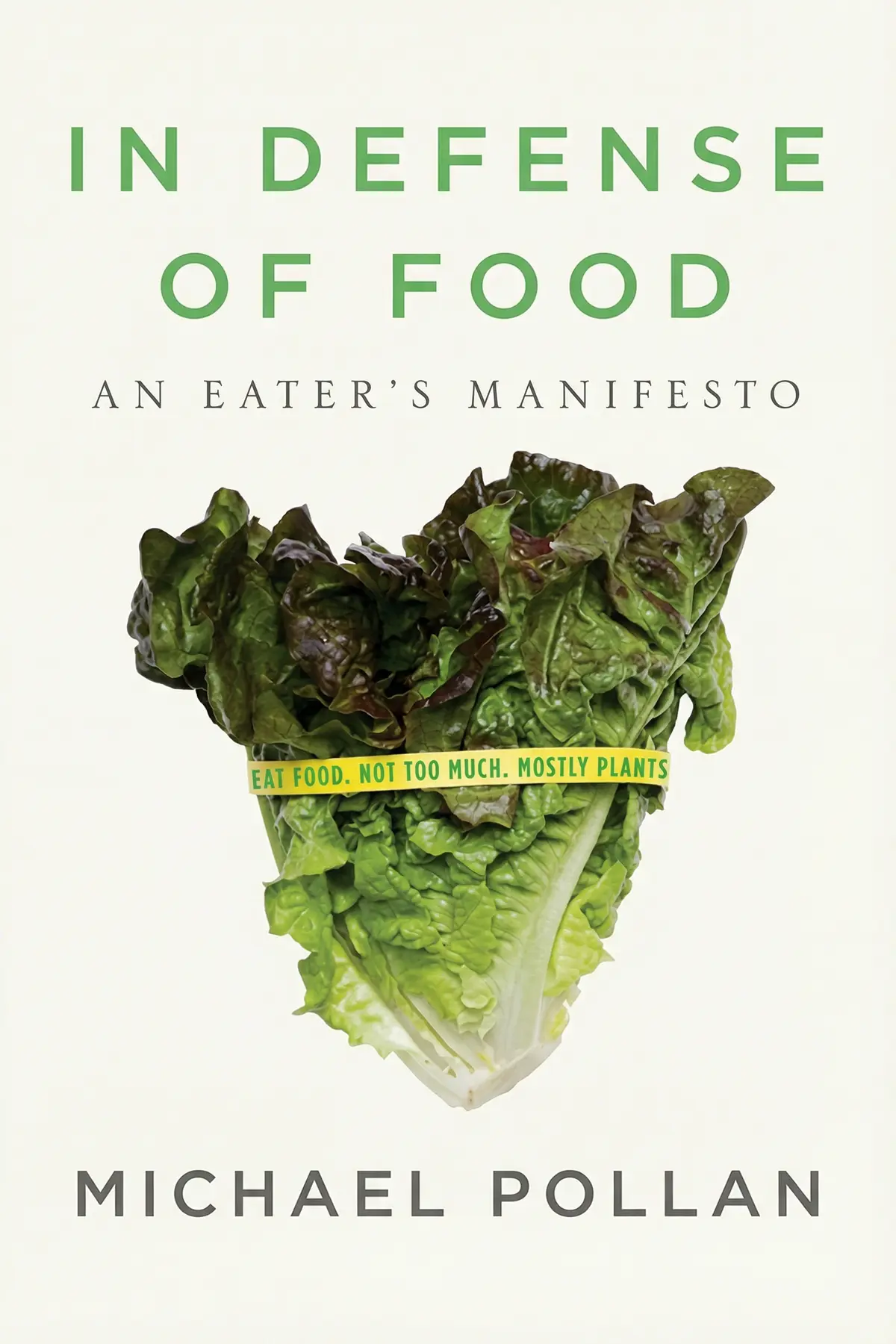
A compelling exploration of the modern food landscape, revealing why focusing on complex nutrients over real food has compromised our health and how to reclaim a more traditional, nourishing way of eating.
2 min 22 sec
In an era where we are bombarded with health advice, calorie counts, and complex ingredient lists, it seems strange that we would need a guide to help us do something as fundamental as eating. After all, humans have been feeding themselves for millennia without the help of a scientist or a government handbook. Yet, as we walk down the aisles of a modern supermarket, we find ourselves increasingly lost. We are surrounded by products that claim to be healthy, low-fat, or fortified with essential vitamins, but the more we focus on these individual components, the more our collective health seems to decline. This brings us to a startling paradox: the more we worry about nutrition, the unhealthier we seem to become.
The core of the issue lies in a shift that occurred over the last half-century. We have moved away from eating actual food and toward consuming nutrients. This isn’t just a change in vocabulary; it’s a fundamental shift in how we relate to the world around us. We’ve traded traditional wisdom for scientific hypotheses, many of which have turned out to be shaky at best. This has given rise to what is known as the Western diet, a way of eating characterized by processed ingredients and a lack of whole, natural foods. The results of this dietary experiment are visible in the rising rates of chronic diseases that were once rare in traditional cultures.
In this exploration, we are going to unpack why this shift happened and how the food industry has benefited from our confusion. We will look at how the language of science has been used to market imitation products as health breakthroughs and why our obsession with isolated nutrients like saturated fat or carbohydrates has missed the bigger picture. Most importantly, we will establish a throughline that leads us back to a simpler, more intuitive way of eating. By the end of this journey, the goal isn’t to give you a new diet plan to follow, but rather a manifesto for reclaimimg the pleasure and the health that comes from real food. We are looking for a way to escape the industrial food system and return to a culture of eating that our ancestors would recognize. It’s about moving past the labels and the hype to rediscover what it truly means to be well-nourished.
3 min 22 sec
Discover how political pressure and scientific theories transformed our dinner plates from a collection of whole foods into a complex delivery system for isolated chemical compounds.
3 min 14 sec
Explore the ideological framework that treats eating as a purely biological necessity and nutritionists as the high priests who must interpret the mysteries of the grocery aisle.
3 min 12 sec
Delve into the hidden costs of our modern food system, where the drive for shelf-life and volume has stripped our soil and our bodies of essential vitality.
3 min 10 sec
Examine the stark contrast between traditional eating habits and the modern Western diet, uncovering why populations that abandon their heritage often see a rapid decline in health.
2 min 54 sec
Ditch the complex labels and confusing health claims with a set of simple, intuitive rules designed to help you identify genuine nourishment in a world of imitations.
3 min 01 sec
Discover why how we eat is just as important as what we eat, as we look at the vital roles of pleasure, social connection, and the art of cooking.
2 min 03 sec
As we reach the end of this exploration, the path forward is remarkably simple, though it requires a conscious rejection of many modern habits. We have seen how the ideology of nutritionism and the rise of the industrial Western diet have led us away from the very things that keep us healthy. By focusing on isolated nutrients and engineered products, we have sacrificed our physical well-being and our cultural traditions. However, the solution doesn’t require us to wait for the next scientific breakthrough or a new government guideline. The answer has been with us all along, preserved in the wisdom of traditional cultures and the common sense of our ancestors.
The throughline of this entire manifesto can be boiled down to a few essential principles: eat food, not too much, and mostly plants. By ‘food,’ we mean the kind of whole, natural nourishment that hasn’t been processed beyond recognition. By ‘not too much,’ we mean reclaiming the social and sensory aspects of eating that help us regulate our appetite naturally. And by ‘mostly plants,’ we mean rooting our diet in the ecological vitality of the earth.
This is more than just a set of dietary rules; it is an invitation to change your relationship with the world. It’s an invitation to stop worrying about the invisible chemistry of your meal and start focusing on the quality, the origin, and the experience of what you eat. When you step away from the confusing labels and the industrial food-like substances, you are doing more than just improving your health; you are reclaiming your autonomy from a system that prioritizes profit over people. Start by finding a local farmer, spending a little more time in your kitchen, and sitting down to a meal with someone you love. In doing so, you are taking the most effective step possible in defense of your health, your pleasure, and the food that truly sustains us.
In this insightful analysis, the focus shifts from the confusing world of nutritional science to the fundamental act of eating. The book identifies a phenomenon called nutritionism, an ideology that treats food merely as a delivery system for nutrients. This shift, driven by the food industry and government policy, has led to the rise of the Western diet—a regime of highly processed, simplified products that have been linked to a surge in chronic health conditions like heart disease and diabetes. The promise of this work is a return to clarity. By examining the ecological relationship between what we eat and how it is grown, the narrative offers a way out of the dietary confusion created by marketing and complex labels. It provides a simple, actionable manifesto: eat real food, mostly plants, and practice moderation. Through this lens, readers learn to distinguish between actual nourishment and the industrial food-like substances that dominate supermarket shelves, ultimately offering a path toward better health and a more meaningful connection to our meals.
Michael Pollan is a highly respected journalist and a professor of journalism at the University of California, Berkeley. He has become a prominent voice in the exploration of food sociology, food science, and evolutionary biology. Pollan is the author of several influential books on the human relationship with the natural world, including The Omnivore’s Dilemma and Food Rules: An Eater’s Manual.
Michael Pollan
Michael Pollan
Michael Pollan
Michael Pollan
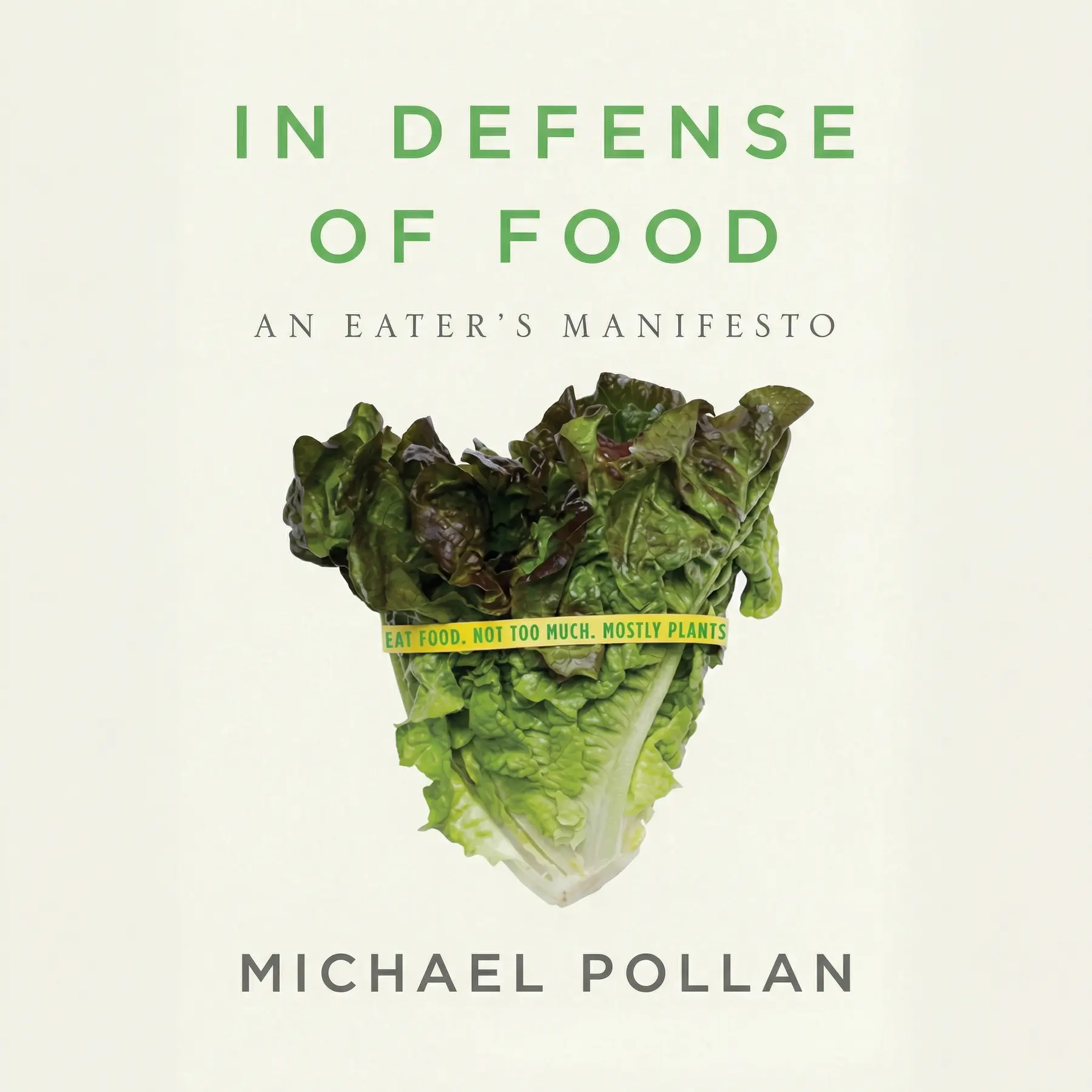
Listeners find this book compelling and articulate, with one noting it has the feel of a magazine article. Moreover, the content is excellently researched and profoundly informative, offering a fantastic guide for how to eat. Listeners appreciate how it shifts their perspective on nutrition, and one listener states it presents truths about diet and food effectively. Additionally, the book is simple to follow, explaining concepts in plain language, and listeners say it encourages them to eat better on a daily basis.
Michael Pollan has a way of cutting through the noise that feels incredibly refreshing in an era of TikTok diet fads. This book reads like a long-form magazine article—engaging, punchy, and deeply researched without being dry or overly academic. I loved the distinction between "real food" and those "edible food-like substances" that dominate our pantry. It made me realize how much of my daily intake is just a chemistry experiment. The mantra "Eat food. Not too much. Mostly plants" is so simple it’s radical. While some critics say he’s too hard on science, I think he’s just highlighting how "nutritionism" has failed the average person. It’s a fast read that completely reframed how I grocery shop. I’m actually cooking from scratch more often now. Truth is, we've overcomplicated something that should be natural. Highly recommended for anyone feeling lost in the supermarket.
Show moreWow. This book should be mandatory reading in every high school health class. Pollan manages to deliver truths about our food system that are both terrifying and empowering. I never realized how much the government and the food industry are in bed together when it comes to dietary recommendations. The way he describes how real food "spoils" because it’s actually nutritious to other living things, like bacteria, was a lightbulb moment for me. If a bug won't eat it, why should I? The writing is incredibly easy to understand, avoiding the dense jargon you usually find in health books. I’ve started shopping the produce corner and avoiding anything with more than five ingredients on the label. It’s been three weeks and I already feel more energetic. It's a total game-changer for my lifestyle.
Show moreNot what I expected at all, but in the best way possible. I thought this would be another boring health book full of charts, but it’s actually a gripping narrative about how we lost our way with food. Pollan’s style is so engaging it feels like you're having a conversation with a very smart friend over a glass of wine. He makes a compelling case for why "nutritionism" is just another form of marketing designed to sell us new products. Truth is, we don't need a PhD to know how to eat. We just need to get back to basics. I’ve stopped reading labels for specific "anti-oxidants" and started looking for actual vegetables. It’s a deeply insightful work that has changed my perspective on every single meal I eat.
Show moreFinally got around to reading this and I’m kicking myself for waiting so long. It’s rare to find a book that is both intellectually stimulating and practically useful for your everyday life. Pollan’s critique of the "Western Diet" is scathing but absolutely necessary. He avoids the "good people vs bad people" trope for the most part, focusing instead on the systemic failures of our food culture and the industry that profits from it. The writing is top-notch—it really does feel like a high-quality magazine piece that you can't put down. It inspired me to start a small herb garden and pay much closer attention to where my calories are coming from. If you want to understand the relationship between what you eat and how you feel, this is the book for you.
Show moreEvery page of this book felt like a revelation to me. I’ve spent years following various "low-fat" or "low-carb" trends, always feeling unsatisfied and frankly confused. Pollan explains why those gimmicks never work: they treat food like a collection of chemicals rather than a relationship with the natural world. His mantra—eat food, not too much, mostly plants—is the most sound advice I’ve ever received. The book is easy to understand and explains things in plain English, making it accessible to anyone regardless of their background. It’s not just a book about health; it’s a book about reclaiming the joy of eating. I’m buying copies for my entire family for the holidays. Truly a must-read for the modern age.
Show moreEver wonder why the more we obsess over vitamins and minerals, the sicker our society seems to get? In Defense of Food tackles this paradox head-on, exposing the deep-seated flaws of the Western diet. Pollan’s prose is lively and accessible, explaining complex biological processes in plain English that anyone can grasp. I found the history of how "nutritionism" took over our dinner plates absolutely fascinating. To be fair, he does lean into a bit of an elitist tone at times, assuming everyone has easy access to a local farmer’s market and the leisure time to cook for hours. Not every family can afford to "spend more, eat less." However, the core advice remains sound and life-changing. It’s a fabulous resource for anyone looking to reclaim their health from corporate food marketers.
Show morePicked this up because I wanted a practical guide to eating better, and it delivered exactly that. Pollan doesn't give you a restrictive, miserable diet plan; he gives you a philosophy. The book is fabulously researched and offers a much-needed defense of real food in an age of lab-grown ingredients. I especially liked the section on "eating like your ancestors." It’s such a common-sense approach that we’ve somehow forgotten in our rush for convenience. The only downside is that it feels a little repetitive toward the end, and he could have spent more time on the environmental ethics of meat production. Still, it’s a great resource that inspires me to eat better every single day. The "mostly plants" part is harder than it looks when you're busy, but I'm trying to make the shift.
Show moreWhen you actually stop to look at the ingredients in a standard loaf of bread, you realize Pollan is onto something big. Much of what we eat today is a Frankenstein variety of what our grandparents called food. I appreciated how he broke down the glucose and triglyceride issues in a way that finally made sense to me. My only gripe is that he's a bit of a "hungry ghost" himself, constantly chasing a perfect, Neolithic ideal that isn't always realistic for a modern working parent. Gotta say though, the advice to eat at a table instead of in the car is something my family really needed to hear. It's a short, punchy book that packs a heavy punch. If you care about your long-term health, you should probably read this sooner rather than later.
Show moreAs someone who works in the health field, I found myself nodding along and shaking my head in equal measure while reading this manifesto. Pollan is absolutely right that the modern American diet is a disaster and that hyper-processed junk is a primary driver of chronic disease. His critique of nutrition science's reductionist tendencies is sharp and largely accurate. But, he often plays fast and loose with the data to support his own narrative. He critiques scientists for correlation-causation fallacies then immediately does the same with his Aboriginal Australian example. Personally, I think he’s a bit too dismissive of legitimate life-saving discoveries in nutrition. It’s an engaging read, but don’t take every "scientific" claim here as gospel. It’s more of a cultural critique than a rigorous textbook, so take the specific advice with a grain of salt.
Show moreFrankly, I found the amount of misinformation in this book to be completely alarming, despite Pollan’s obvious talent for prose. While he is right that nutrition research is often flawed, his own reasoning is incredibly unsophisticated and relies on weak animal studies to support his biases. He tells us to shop the perimeter of the grocery store, yet that’s where the high-fat dairy is, while the healthy beans and grains are in the middle! His rule about avoiding products with more than five ingredients is equally ridiculous; it dismisses perfectly healthy foods like fortified soy milk or jarred salsa. To be fair, he wants us to cook more, but his tone is so elitist it’s hard to swallow. He barely mentions the ethics of animal suffering, which is shocking given his previous work. For me, the snippets of good advice were overwhelmed by faulty logic and dangerous misinformation.
Show moreAUDIO SUMMARY AVAILABLE
Get the key ideas from In Defense of Food by Michael Pollan, plus 5,000+ more titles in English and Thai.