Energy: A Beginner's Guide
Vaclav Smil
Explore the reality of technological progress through history's most ambitious breakthroughs. This summary reveals why some inventions succeed, others cause unforeseen disasters, and many transformational promises remain perpetually just out of reach.
1 min 49 sec
We live in an era of constant technological buzz. Every week, it seems there is a new announcement about a breakthrough that will change the world forever—whether it is a new form of clean energy, a faster way to travel across continents, or an artificial intelligence that will solve our most complex problems. This narrative of non-stop, exponential progress is seductive. It suggests that human ingenuity is an unstoppable force, and that every problem has a technical solution waiting just around the corner.
But if we take a step back and look at the actual history of technology, a much more complicated picture emerges. The story of human invention is not a smooth climb; it is a landscape filled with peaks of genuine genius, but also deep valleys of unintended consequences, stalled ideas, and outright mistakes. Often, the very technologies we celebrate as miracles today become the environmental or social crises of tomorrow. Furthermore, many of the most revolutionary changes we were promised decades ago are still nowhere to be found.
In this summary, we are going to look at the reality behind the hype. We will explore how and why some inventions, despite their initial brilliance, ended up doing more harm than good. We will examine why certain technologies that once seemed destined to dominate the world eventually faded into the background, overtaken by more practical alternatives. We will also look at the ‘mirage’ technologies—those dreams that have been ‘just twenty years away’ for over a century. By the end, you will have a clearer understanding of the true pace of innovation and why the most important breakthroughs might not be the most futuristic ones, but the ones that solve basic needs for the greatest number of people.
2 min 09 sec
Discover how a solution to engine noise became a global health crisis, revealing the dangers of prioritizing patents over public safety.
2 min 09 sec
A Nobel Prize-winning discovery saved millions of lives before becoming a symbol of environmental destruction and evolutionary resistance.
1 min 49 sec
Explore why the majestic giants of the sky were grounded not just by tragedy, but by the relentless speed of rival technology.
1 min 54 sec
Nuclear energy was once predicted to be ‘too cheap to meter.’ Discover why this revolutionary power source hit a wall of cost and fear.
1 min 53 sec
Some inventions seem to be perpetually ‘just around the corner.’ Learn why fusion and vacuum travel have remained dreams for centuries.
1 min 59 sec
Why the rapid pace of the computer world has given us a false sense of how fast the rest of the world can actually change.
1 min 38 sec
The history of invention is often told as a series of triumphs, but as we have seen, it is actually a complex tapestry of high-stakes gambles and hard-won incremental gains. The most important lesson is that we cannot simply ‘invent’ our way out of every problem on a deadline. From the toxicity of leaded gas to the stalled dreams of nuclear fusion, the path of progress is rarely as fast or as clean as we want it to be.
However, this realization shouldn’t lead to despair. Instead, it should lead to a more disciplined and practical approach to innovation. We must learn to distinguish between the ‘digital hype’ of exponential growth and the ‘physical reality’ of slow, steady improvement. We must also be more vigilant about the unintended consequences of our new tools, recognizing that a solution in one area can easily create a catastrophe in another.
Ultimately, the most meaningful innovation in the coming years might not be the flashiest or the most futuristic. It might simply be the work of bringing the proven, existing technologies of the twentieth century to the parts of the world that still lack them. By balancing our pursuit of the next big breakthrough with the patient work of improving and deploying what we already have, we can build a future that is not just more advanced, but more sustainable and equitable for everyone. As you look at the next big technological promise in the headlines, remember to ask: is this a genuine path forward, or just another beautiful mirage?
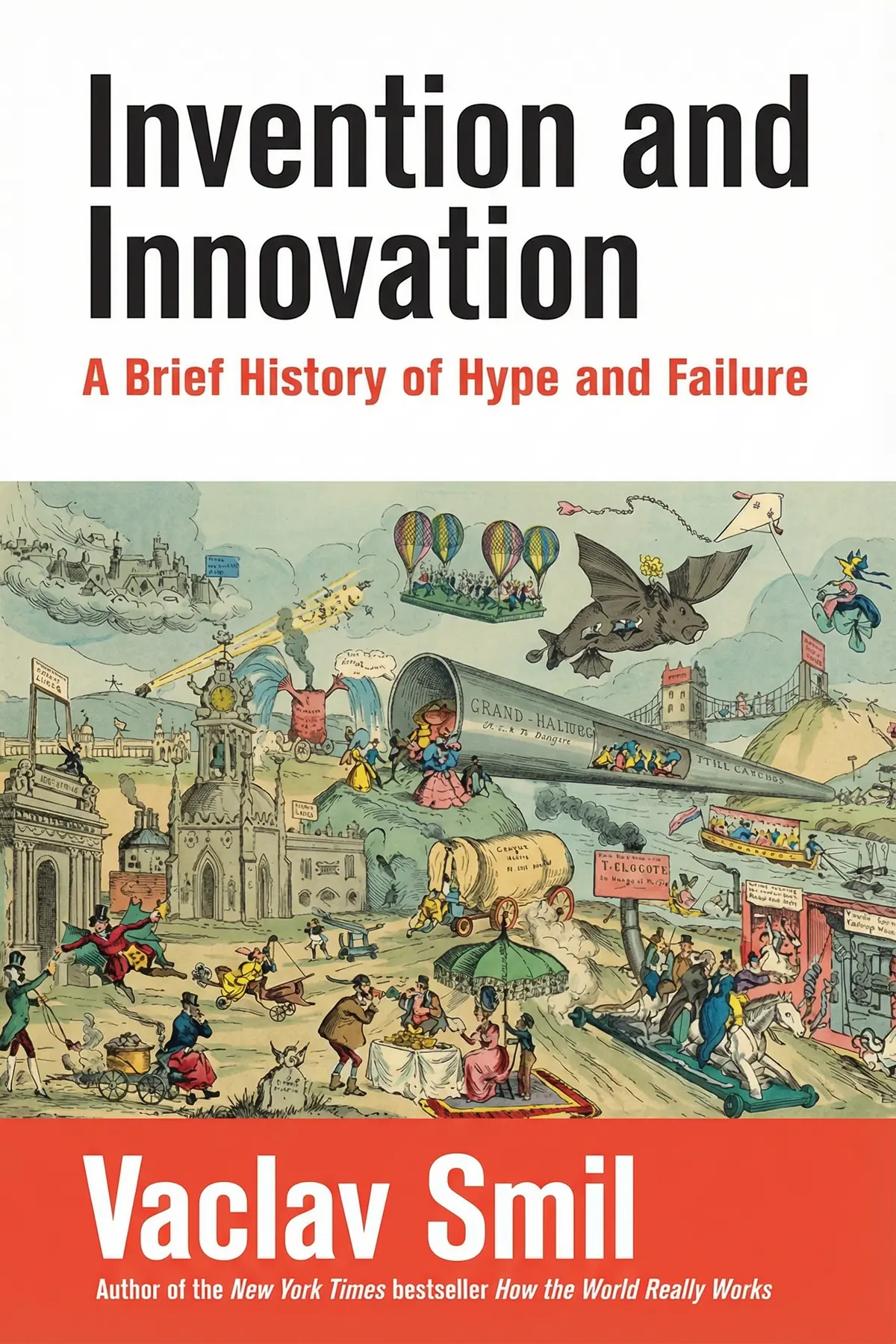
Many people view history as a straight line of technological progress, moving from one brilliant breakthrough to the next. In reality, the path of human invention is paved with forgotten failures, dangerous side effects, and persistent hype that rarely matches reality. This exploration of our mechanical and scientific journey challenges the assumption that innovation is always beneficial or rapidly accelerating. From the toxic legacy of leaded gasoline to the unfulfilled promises of nuclear energy and the futuristic mirages of vacuum-tube transportation, you will see how complex societal, economic, and biological factors dictate which technologies take root and which wither away. The book distinguishes between the rapid growth of the digital world and the much slower, more resistant progress of the physical world. Ultimately, it offers a sobering yet practical framework for understanding which innovations truly matter and why our most urgent global challenges might require applying existing tools rather than waiting for a scientific miracle.
Vaclav Smil is a Distinguished Professor Emeritus at the University of Manitoba. He is a highly respected interdisciplinary researcher who specializes in the intersection of energy, environmental science, and the history of technological change. Smil is well known for his rigorous, data-driven methodology when analyzing complex global issues. His work has gained a wide following, including high-profile readers like Bill Gates. He is the author of several influential books, including Energy and Civilization: A History, Numbers Don’t Lie, and How the World Really Works.
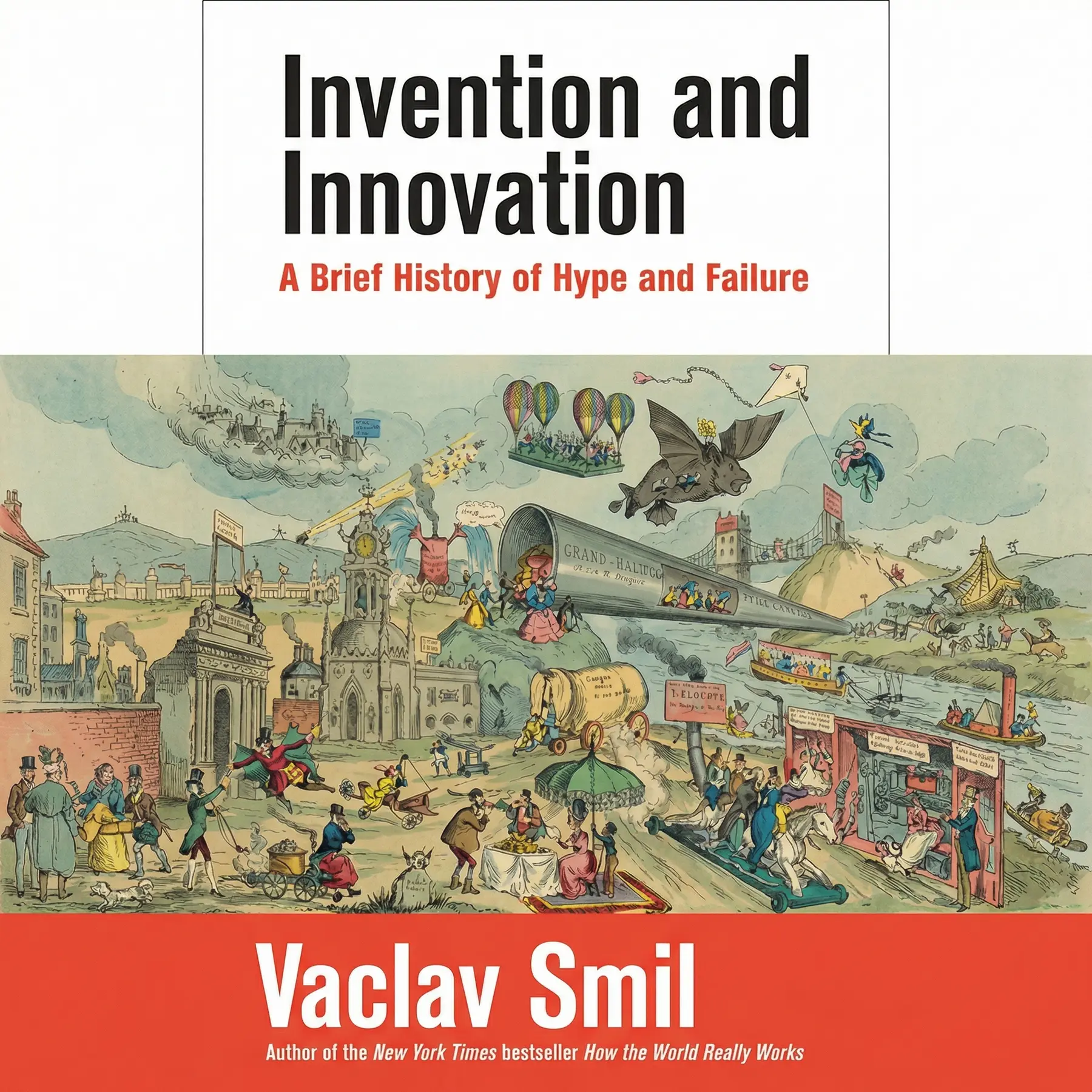
Listeners find the material to be engaging and thoroughly documented, offering an informative perspective on the way inventions are processed. One listener suggests it is mandatory reading for students.
Vaclav Smil is essentially the antidote to the Silicon Valley hype machine. In this book, he meticulously dismantles the notion that we are living in an era of unprecedented, accelerating innovation. By categorizing failures into distinct groups—like those that became undesirable (DDT, leaded gas) and those that simply never launched (Hyperloop)—he provides a sobering historical groundedness. To be fair, his reliance on the metric system might annoy some American readers, but the technical precision is what makes the arguments so airtight. The chapter on the Concorde and the physical limits of supersonic travel was a particular highlight for me. It’s a dense read, packed with data and chemistry, yet it feels vital for anyone tired of tech-bro optimism. This is a brilliant, if slightly grumpy, reality check on what it actually takes to change the world through hardware rather than just software.
Show moreAs an engineering student, I found this to be mandatory reading for anyone interested in the actual mechanics of progress rather than the marketing. Smil isn't interested in selling you a dream; he’s interested in what the data says about energy density and material costs. His breakdown of the Boeing 707 versus the Concorde explains more about the economics of travel in ten pages than most business books do in three hundred. I love that he doesn't sugarcoat the challenges of climate change or the limitations of our current green technologies. Some call him a pessimist, but I think he’s just a realist who understands that you can’t wish your way past the second law of thermodynamics. The book is dense and requires focus, but the clarity it provides on why certain technologies fail is well worth the effort. It’s a profound look at the friction inherent in true innovation.
Show moreFinally got around to reading a full Smil book rather than just excerpts, and the depth of research is staggering. He manages to connect the dots between 19th-century vacuum tube experiments and modern-day boondoggles with incredible ease. What I found most valuable was his distinction between 'invention' (the idea) and 'innovation' (the successful widespread adoption). Most books conflate the two, but Smil shows that the gap between a patent and a world-changing product is usually filled with decades of failure. His sections on the 'war on cancer' and the incremental nature of medical progress were particularly moving in their own clinical way. It’s a refreshing change of pace from the typical 'the future is now' narratives that dominate the bestseller lists. He might be a bit of a contrarian, but in a world of endless hype, we desperately need a voice like his to keep us tethered to the ground.
Show morePicked this up after seeing Bill Gates recommend Smil for years, and I finally see why he’s so enamored with the author’s work. This isn't your typical 'future is great' airport read; it’s a deep dive into the thermodynamics and material realities that constrain human ambition. Smil’s takedown of the Hyperloop is particularly brutal and effective, pointing out the engineering hurdles that hype-men conveniently ignore. My only real gripe is that the author’s skepticism sometimes crosses into a sort of reflexively bitter pessimism that can be exhausting. He seems to relish pointing out how wrong everyone else is, which can make the chapters feel a bit repetitive after a while. Still, the level of detail regarding things like CFCs and the history of aviation is unparalleled. It’s an essential read for anyone who wants to understand the 'how' behind our current technological stagnation.
Show moreThe chapter on leaded gasoline and CFCs was a masterclass in explaining how yesterday's 'miracle' solutions morph into tomorrow's ecological catastrophes. Smil has this unique ability to use hard numbers to slice through corporate PR and political promises. I found his analysis of why we are still waiting for a revolution in battery energy density to be incredibly eye-opening. We are so used to the speed of Moore’s Law that we forget physics doesn't work the same way for physical infrastructure as it does for microchips. Truth is, this book will make you much more skeptical of the next big 'breakthrough' headline you see on social media. It loses a star only because the writing can be quite repetitive, following a predictable 'hype vs. reality' formula for every single topic. Regardless, the educational value here is massive for anyone interested in environmental science or engineering history.
Show moreAfter hearing so much about the Hyperloop, it was refreshing to read a grounded, technical takedown of why it’s mostly just expensive fantasy. Smil excels when he is comparing the energy efficiency of various modes of transport or explaining the chemical nuances of refrigerants. He provides a much-needed historical perspective, reminding us that 'failed' inventions like airships were once seen as the absolute future of humanity. Personally, I found the section on nuclear fusion to be the most sobering, as it highlights just how far we are from a commercial reality. The book does feel a bit disconnected in the final chapter, where he pivots to wealth distribution and antibiotic abuse, but the core chapters are excellent. It’s a solid 4-star read for anyone who wants to peer behind the curtain of modern tech journalism and see the messy, difficult reality of invention.
Show moreTruth is, we live in an era where everyone wants to believe the next big breakthrough is just six months away. Smil uses this book to throw a big bucket of cold water on those expectations, and frankly, it's necessary. His analysis of why the Concorde failed—not just because of noise, but because of the fundamental trade-offs between speed, cabin size, and fuel—is brilliant. I also appreciated his look at the unintended consequences of inventions like DDT, which reminds us that progress is never a straight line. The writing style is definitely more academic than popular science, so don't expect a fast-paced narrative. There are a few moments where his grumpiness about modern culture feels a bit like a 'get off my lawn' rant, but the core scientific arguments are so well-supported that you can overlook it. This is a thoughtful, dense, and ultimately rewarding look at the limits of human ingenuity.
Show moreEver wonder why we aren't all flying in supersonic jets or commuting via vacuum tubes by now? Smil answers these questions with an overwhelming amount of data, though his delivery is often as dry as a textbook. While the research into why inventions like nuclear fission stalled is fascinating, the prose lacks any real literary flair or attempt to engage a casual reader. At times, the tone feels overly condescending toward anyone who has ever dared to be optimistic about future breakthroughs. The technical sections on nitrogen-fixing grains and atmospheric chemistry are quite dense and may lose those without a science background. It is an educational experience, certainly, but it feels more like a long series of debunking lectures than a cohesive narrative. I appreciated the realism, but I found myself checking how many pages were left more often than I’d like to admit.
Show moreLook, the data here is undeniably impressive, but the delivery is about as dry as a desert. Vaclav Smil clearly knows more about nitrogen fertilizers and nuclear fission than almost anyone alive, but he lacks the ability to make that knowledge truly engaging. The book reads like a series of technical white papers stitched together with a grumpy editorial voice. I appreciated the debunking of 'techno-optimism,' especially regarding the Hyperloop, but the author’s 'I’m never wrong' attitude gets old very fast. He also seems to have a strange distain for anything invented after 1980, which makes his conclusions feel a bit dated at times. It’s a good reference book to have on the shelf for specific facts, but as a cover-to-cover read, it was a bit of a slog. If you aren't already a fan of Smil’s specific brand of data-heavy realism, this probably won't win you over.
Show moreNot what I expected from such a highly-regarded author, to be frank. The entire book is written in a very clinical, faux-academic tone that seems designed to belittle any perspective that isn't Smil's. He sets up very specific, almost arbitrary criteria for success just so he can find every modern innovation lacking. The manifest anger directed at anonymous 'optimists' is weirdly distracting when you just want to learn about the history of the airplane or the diesel engine. Furthermore, he almost entirely ignores the benefits of solid-state electronics and the internet, which feels like a massive omission for a book about innovation. It felt less like a balanced investigation and more like a collection of grievances from someone who refuses to carry a smartphone. If you enjoy being told that everything in the last forty years is a failure, you might like this, but I found it narrow-minded and incredibly biased.
Show more

James Shapiro

Charles C. Mann

Pankaj Mishra
Andrew Ross Sorkin

Ben Macintyre

Fay Bound Alberti
Ron Chernow
AUDIO SUMMARY AVAILABLE
Get the key ideas from Invention and Innovation by Vaclav Smil, plus 5,000+ more titles in English and Thai.