Energy: A Beginner's Guide
Vaclav Smil
Vaclav Smil explores the fundamental physical realities of our world, focusing on the essential systems of energy and food production that sustain modern civilization despite our increasing disconnect from them.
2 min 23 sec
Imagine for a moment that you could go back to the year 1500. If you were lucky, you might cross paths with a true Renaissance man, someone like Leonardo da Vinci. In that era, it was actually possible for a single person to hold a comprehensive grasp of almost all human knowledge. Da Vinci wasn’t just an artist; he was a master of anatomy, a visionary in aviation, and a genius in hydraulics. Back then, the sum of what humanity knew could fit, more or less, inside one very brilliant mind.
But as we moved into the eighteenth century, that became impossible. When the great thinkers of France attempted to compile an encyclopedia of all useful knowledge, they realized the task was too big for any individual. It required a massive collective effort. Fast forward to today, and the explosion of information has reached a point where even a thousand-volume encyclopedia couldn’t capture the nuances of our world. Knowledge has become so incredibly specialized that mastering a single niche can take an entire lifetime. A world-class historian might look at a research paper on viral immunology and find it as indecipherable as a foreign language.
This specialization is a sign of progress, but Vaclav Smil argues that it has created a dangerous side effect: a profound ignorance of the basic systems that keep us alive. We might not need to understand neurobiology to function, but Smil believes we absolutely must understand the fundamentals of how our world operates. This isn’t just about curiosity; it’s a requirement for a functioning democracy. Without a grasp of how energy is produced or how food reaches our tables, we can’t make informed decisions about the future of our planet or our societies.
In this exploration of How the World Really Works, we are going to focus on two of the most critical pillars Smil identifies: energy and food. We’ll look at how the very history of life is a story of energy conversion, why fossil fuels are the hidden ingredient in every meal you eat, and why electricity—despite being only a fraction of our energy use—is the pulse of modern civilization. By the end, you’ll have a clearer picture of the physical reality that underpins everything from the light in your room to the bread on your plate.
3 min 07 sec
Every living thing on Earth is defined by its ability to transform energy, a process that began in the sea billions of years ago and continues to shape our history today.
2 min 40 sec
Energy is more than a utility; it is a fundamental physical constant that determines the success of every organism and society on Earth.
2 min 47 sec
The modern miracle of feeding eight billion people is not just a triumph of biology, but a massive application of fossil fuels to our global food systems.
2 min 41 sec
The mechanization of agriculture has triggered a massive shift in human labor, moving billions of people from the fields to the cities in just two centuries.
3 min 03 sec
Electricity is the most versatile and essential tool in our energy toolkit, yet it represents only a small portion of our total global consumption.
1 min 47 sec
In the end, Vaclav Smil’s exploration of how the world really works serves as a powerful reality check. We live in a society that is increasingly digital, specialized, and disconnected from the physical earth. It’s easy to get caught up in the latest app or the newest financial trend and forget that everything we do rests on a foundation of energy and food. The bread you bought today is the result of a chain of energy conversions that spans from the ancient sun to modern natural gas fields. The light you turn on tonight is the product of an electrical grid that is as vital as it is vulnerable.
Human history has been a long journey of mastering these conversions. We have moved from the limited power of our own muscles to the strength of animals, and finally to the immense power of fossil fuels and electricity. This progress has allowed us to feed billions, build massive cities, and free the vast majority of people from the backbreaking labor of the fields. But it has also made us dependent on complex systems that many of us no longer understand.
Smil isn’t necessarily arguing for a return to the past, but he is arguing for a more grounded understanding of our present. As we face the challenges of the future—from climate change to the transition to new energy sources—we cannot afford to be scientifically illiterate. We need to understand the physical costs and the material realities of the world we’ve built. The next time you take a bite of food or flip a light switch, take a second to consider the incredible journey of energy that made that moment possible. By recognizing these invisible systems, we can begin to make more informed, realistic choices about the future of our global society.
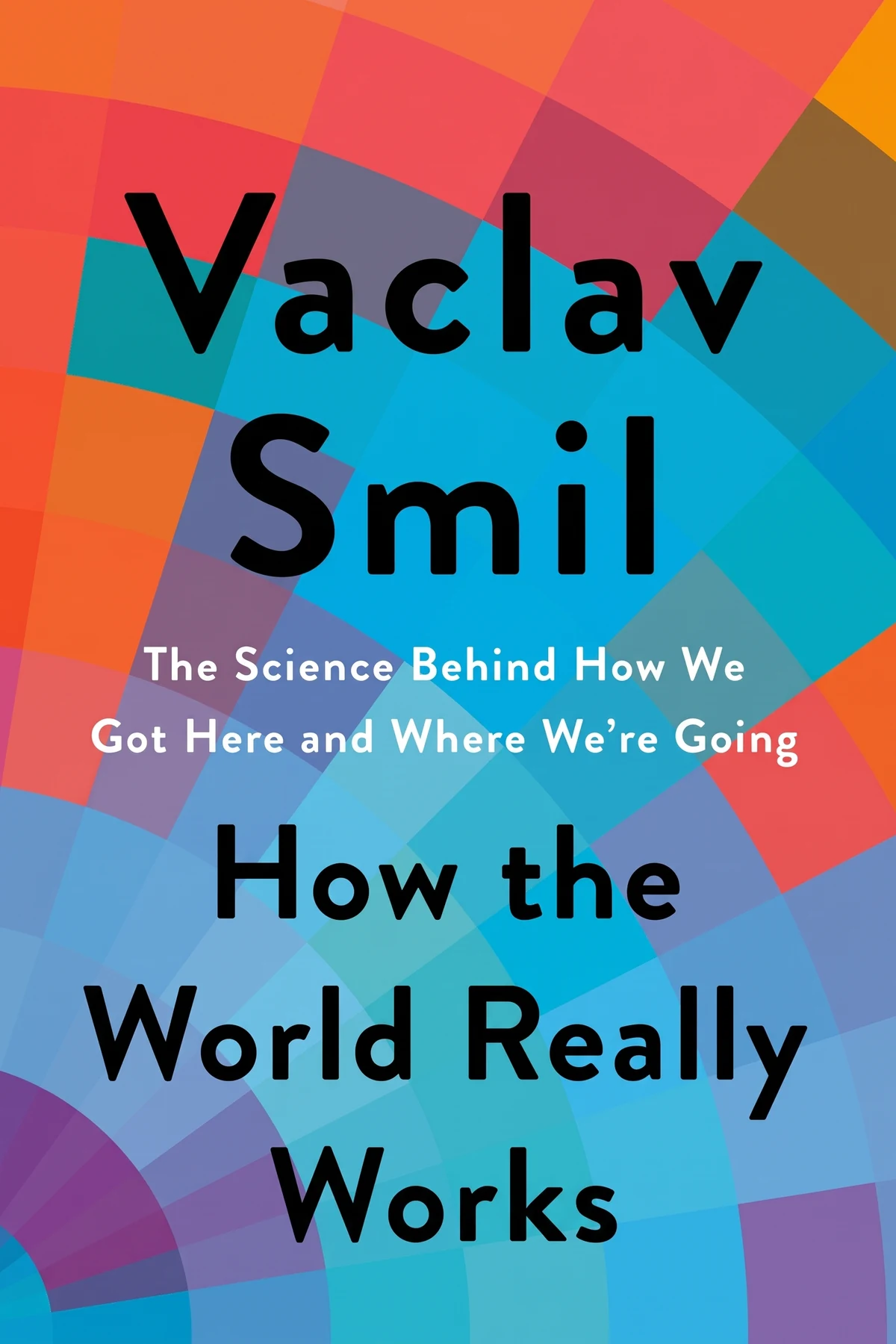
In an era of hyper-specialization, many of us have lost touch with the basic mechanisms that keep society functioning. How the World Really Works serves as a necessary bridge between modern life and the physical realities of energy and agriculture. Vaclav Smil strips away the jargon and the political noise to examine the foundational pillars of our existence, specifically how we harness power and how we feed a global population of billions. The book promises a grounded, data-driven perspective on the past, present, and future. It moves beyond abstract economics or digital hype to focus on the material world: the fuels we burn, the nitrogen we fix into the soil, and the electricity that powers our cities. By understanding these core systems, readers gain a clearer view of the challenges and opportunities facing humanity as we navigate environmental shifts and technological transitions. It is an invitation to look behind the curtain of modern convenience and appreciate the complex energy conversions that make every aspect of our daily lives possible.
Vaclav Smil is a Czech-Canadian natural scientist and distinguished professor in the faculty of environment at the University of Manitoba in Winnipeg, Canada. He completed his graduate studies at Carolinum University in Prague and Pennsylvania State University. His research interests include energy, the environment, food, population, and economics.
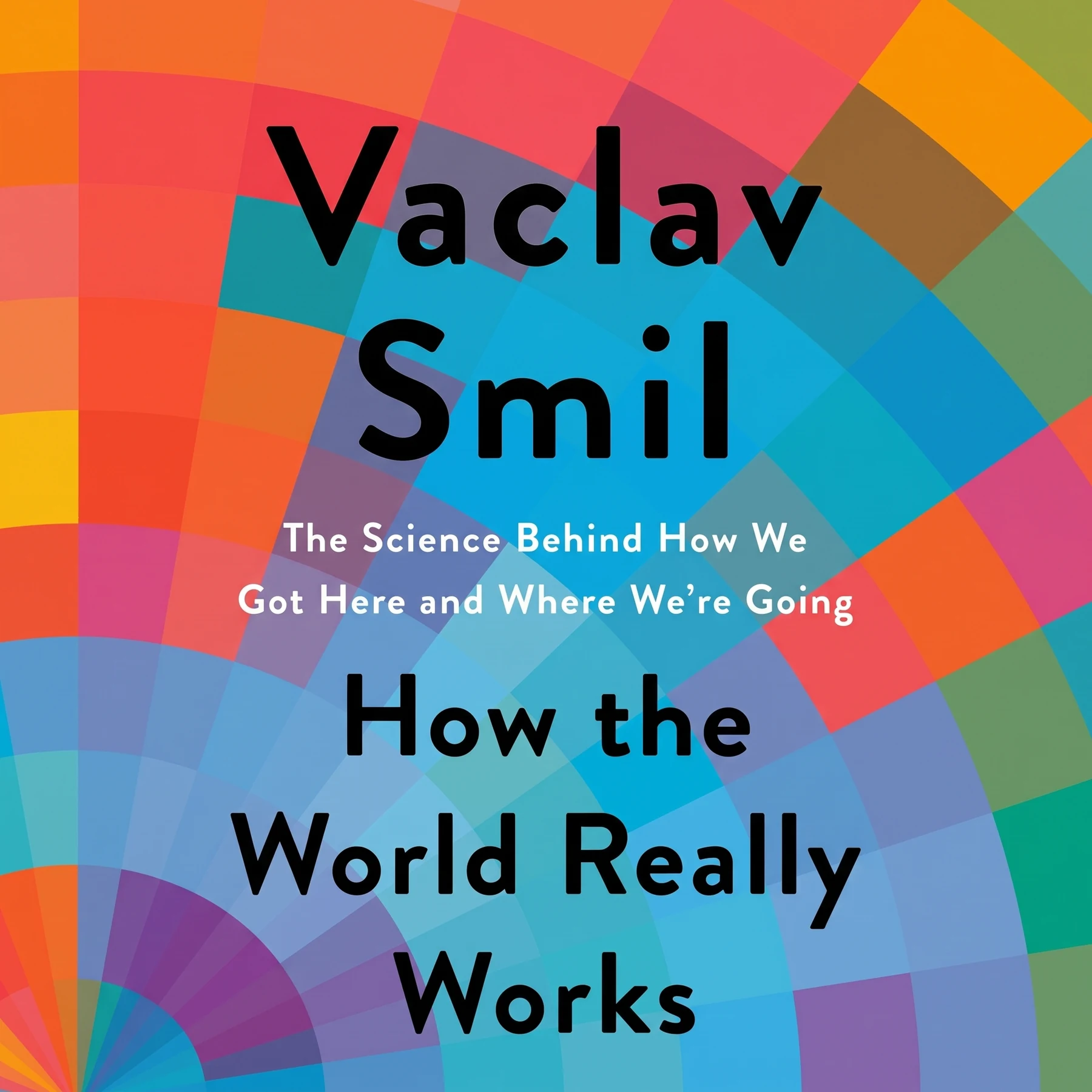
Listeners describe the book as extremely educational, offering systematic factual data and new viewpoints on a variety of topics. Additionally, the prose is organized and easy to follow, as the author excels at clarifying complicated ideas. They value its grounded perspective and stimulating material, with one listener mentioning that it forces people to examine their ideological convictions. On the other hand, responses to the tempo are varied, as several listeners point out that it lacks a narrative-heavy style.
Picked this up after seeing it on several 'must-read' lists, and it certainly delivers on the promise of explaining the physical foundations of our civilization. Smil breaks down the 'four pillars'—ammonia, steel, plastics, and concrete—in a way that makes you realize how fragile and fossil-fuel-dependent our modern life truly is. To be fair, he can come across as a bit condescending toward anyone who isn't a scientist, but the data is so compelling that it's hard to look away. I appreciated the deep dive into nitrogen and why organic farming simply cannot feed 8 billion people without massive starvation. It isn't a page-turner in the traditional sense, and some sections on energy transitions feel repetitive if you've read his previous work. However, the sheer density of facts makes it an essential reference. If you want to move beyond slogans and understand the actual energy cost of a loaf of bread, start here.
Show moreThis book is a masterclass in scientific literacy. Smil addresses the 'comprehension deficit' that most of us have regarding the industrial processes that keep us alive. I was particularly struck by the sections on ammonia production; it’s wild to think that half the world’s population depends on synthetic fertilizers for their very existence. The writing is dense but remarkably accessible if you're willing to pay attention to the numbers. Look, he isn't trying to be your friend or give you hope; he’s trying to give you the facts. The way he connects energy to food production changed how I look at my local grocery store entirely. It’s a thought-provoking piece of work that forces you to confront your own biases about how fast the world can actually change. Highly recommended for anyone who values reality over rhetoric.
Show moreVaclav Smil has written the ultimate reality check for the 21st century. In a world of polarized takes, he stakes out a 'rational middle ground' that is both refreshing and slightly terrifying. He doesn't offer a vision of utopia or apocalypse, just a very detailed explanation of why energy transitions take generations, not years. The chapter on the environment is particularly strong, as it avoids the usual hyperbole to look at actual rates of change. Sentence by sentence, the book is packed with information that challenges conventional wisdom. I particularly enjoyed the focus on concrete and steel—the unsexy materials that actually build our world. It’s a dense read, and Smil’s tone can be quite blunt, but that’s exactly what we need right now. This is a book that rewards slow, careful reading.
Show moreThe chapter on food production alone is worth the price of admission. It is mind-blowing to see the sheer amount of fossil fuels 'hidden' in the food we eat every day. Smil avoids the 'techno-optimist' trap and stays grounded in the laws of physics. His writing is structured and logical, providing a clear-eyed view of why net-zero targets are so incredibly difficult to hit. Got to say, I actually appreciated his 'snarky' tone; it feels like the frustration of a man who has been saying the same things for forty years while no one listens. It’s an extraordinary job of explaining complex concepts without oversimplifying them. If you’re tired of the shouting matches on the news and want to understand the actual mechanics of our existence, this is the book for you.
Show moreEver wonder why the world hasn't just 'switched' to green energy yet? Smil explains the 'how' with brutal, mathematical efficiency. He focuses heavily on the material realities—things like the massive amounts of diesel required to move cargo ships and the carbon footprint of the very wind turbines we hope will save us. Frankly, it’s a sobering read that challenges both the techno-optimists who think AI will solve everything and the doomers who think the world ends in ten years. My only real gripe is that the pacing is quite uneven. Some chapters, like the one on globalization, are fascinating and move quickly, while others feel like wading through a textbook. Still, the systematic way he builds his case is impressive. It’s an antidote to the shallow takes we see on social media every day.
Show moreFinally got around to reading this and I'm glad I did, though it's definitely not a light 'beach read.' Smil’s strength lies in his ability to show the sheer scale of our material world. We talk about 'decarbonization' like it’s a software update, but Smil reminds us that it’s more like rebuilding the entire physical foundation of the planet. I liked the chapter on risk perception—how we fear things that are involuntary, like nuclear power, while ignoring much larger voluntary risks. The truth is, the book is a bit dry and isn't story-driven at all, which might bore some readers. But the information is too important to ignore. It’s a systematic dismantling of the idea that there are easy, 'magic' solutions to our global problems. It might leave you feeling a bit pessimistic, but at least you'll be better informed.
Show moreJust finished this and my brain feels like it’s been through a gym session. Smil’s ability to synthesize massive amounts of data into a coherent narrative about energy and materials is second to none. I especially liked the section on globalization and how it has evolved from spice trades to the complex, just-in-time shipping we have today. Personally, I found the chapter on diet a bit contentious, as he seems to hand-wave away some very legitimate nutrition studies. However, the core of the book—the energy stuff—is rock solid. It’s not a fun read, but it’s a necessary one. It forces you to reflect on your own ideological beliefs about the environment and see the hard physical limits of what we can achieve. A must-read for anyone interested in policy or engineering.
Show moreAs someone who spends way too much time on environmental Twitter, reading Smil was like a splash of cold water to the face. On one hand, he provides a necessary reality check regarding the scale of the energy transition, correctly identifying that electricity is only a small part of the total energy puzzle. On the other hand, his tone is often insufferable. He frequently uses snide asides and exclamation marks to mock 'catastrophists' without always engaging with their strongest arguments. Truth is, his dismissal of certain dietary shifts felt poorly researched, especially when he suggests that meat consumption is the primary driver of life expectancy without accounting for other variables. The book is well-structured but lacks a narrative heart, making it feel more like a series of lectures than a cohesive book. It's informative, yes, but you have to ignore the author's apparent arrogance to get through it.
Show moreNot what I expected from the 'favorite author' of so many billionaires. The book is essentially a long lecture on why we shouldn't get our hopes up. While I appreciate the focus on materialism and the 'four pillars,' I found his dismissal of the digital world a bit short-sighted. He views things like AI and data as 'disembodied information' that doesn't really impact material reality, but surely the efficiencies gained through better software are part of how the world works now? The pacing is a real issue here; it feels like the book could have been half as long and still made the same points. To be fair, his breakdown of why globalization isn't going anywhere was quite insightful. It’s a solid 3-star read for the data, but it didn't quite live up to the hype for me.
Show moreI frankly expected a more balanced approach given the title, but this felt more like a defense of the status quo. Smil’s dismissal of veganism and organic agriculture is particularly weak. He claims we can't get enough nitrogen from organic sources, yet he ignores a wealth of ecological research showing how high-intensity organic systems can actually work at scale. Also, his advocacy for nuclear energy, while acknowledging the waste and depletion issues, feels like a massive contradiction. He calls for more milk consumption in Africa despite widespread lactose intolerance, which just feels like he's out of touch with global realities. The book is essentially a collection of statistics used to justify a very specific, fossil-fuel-heavy worldview. If you're looking for an objective look at the future, keep looking. This is mostly just an exercise in scientific elitism.
Show more
Bill Bryson
Jeff Hawkins
Lisa Kaltenegger

AUDIO SUMMARY AVAILABLE
Get the key ideas from How the World Really Works by Vaclav Smil, plus 5,000+ more titles in English and Thai.