Energy: A Beginner's Guide
Vaclav Smil
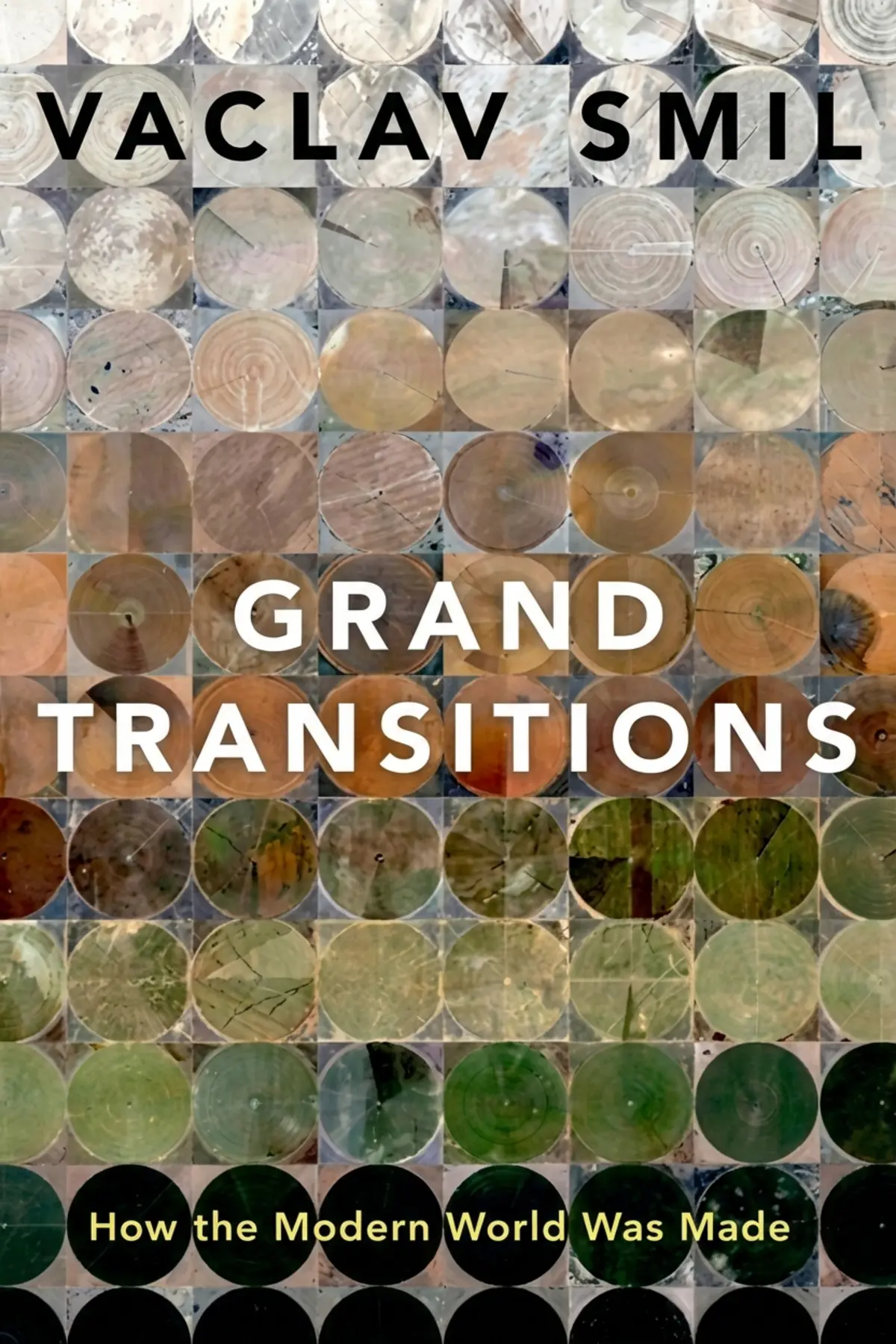
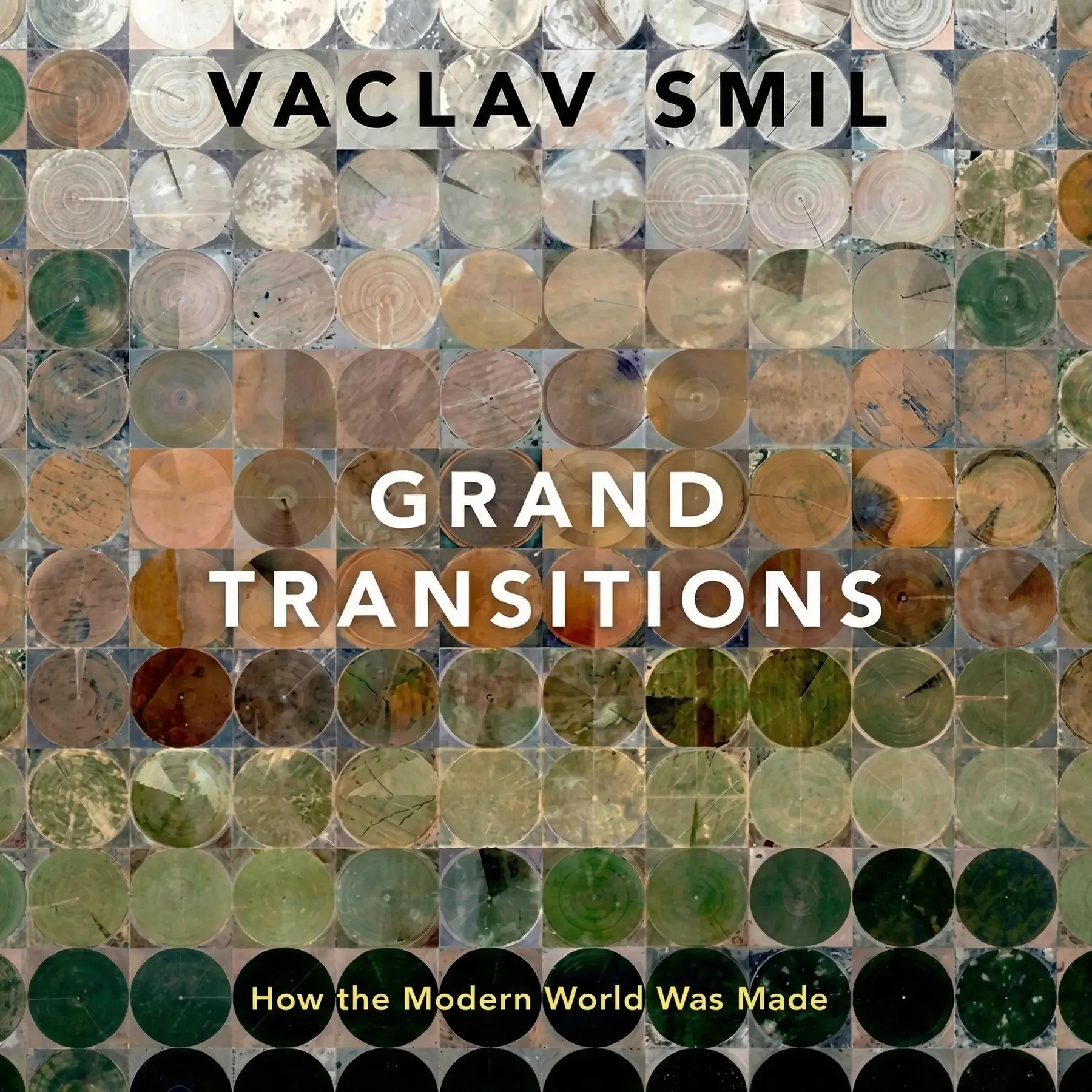
Grand Transitions offers a sweeping look at the fundamental shifts in population, energy, and economics that have shaped the modern world, while analyzing the complex challenges we face in a rapidly changing future.
1 min 33 sec
Human history is a series of incredible survival stories. When we look back at the obstacles our ancestors faced—from devastating famines and widespread disease to the sheer physical toll of manual labor—it is nothing short of miraculous that we have reached our current state of global development. Today, the average person enjoys a standard of living that would have been the envy of royalty just a few centuries ago. We have more information at our fingertips, more food on our tables, and more years in our lives than ever before.
However, this upward trajectory is not without its complications. As we have transitioned from a world of wood-burning and animal power to one of silicon chips and global markets, we have traded one set of problems for another. The very systems that allowed us to thrive are now presenting us with unprecedented challenges, from the stabilization of our climate to the management of shrinking populations.
In this exploration of Grand Transitions, we are going to walk through the major milestones of human progress. We will see how individual lives have been transformed by macro-level shifts in demographics and technology. We will also examine the sobering costs of our rapid advancement and why the transitions of the future will likely move much slower than we might expect. By the end of this journey, you will have a new perspective on why we are simultaneously the creators of our greatest problems and the only ones capable of solving them. It is a macro tour of history designed to help you decode the complexities of the modern world and prepare for the transitions yet to come.
2 min 07 sec
Explore how rapid societal shifts can lift a family from extreme poverty to immense wealth in just two generations, while simultaneously creating new global risks.
2 min 23 sec
A look at why the global population explosion is ending and what happens when nations begin to shrink and age simultaneously.
1 min 59 sec
Trace the transition from monotonous, grain-based diets to a world of global food variety, and discover the hidden environmental price of our dinner.
2 min 08 sec
Understand why switching from fossil fuels to renewables is a decades-long process rather than an overnight fix, despite our urgent need for change.
2 min 10 sec
Analyze the shift toward a consumer-driven society and why our ever-increasing wealth isn’t necessarily translating into greater human happiness.
2 min 08 sec
Discover why there is virtually no wilderness left on the planet and how human activity has fundamentally altered the earth’s biological history.
1 min 57 sec
Learn to spot the flaws in both doomsday prophecies and techno-utopian dreams as we seek a balanced approach to the challenges ahead.
1 min 23 sec
As we look back at the grand transitions that have brought us to this moment, the throughline is clear: we are a species defined by our ability to reshape our environment, our societies, and our very lives. We have moved from the fragility of the natural world to the complexity of a global, high-tech civilization. We have conquered many of the ancient fears of our ancestors—hunger, cold, and isolation—only to face new, more abstract fears about the sustainability of the systems we’ve built.
There is no going back to a simpler time, nor is there a quick fix for the challenges of the future. The demographic, agricultural, energy, and economic shifts we are living through are massive, slow-moving processes that require patience and a deep respect for physical reality. We must work to close the gap between the affluent and the impoverished without pushing the planet past its breaking point. This is the great balancing act of our time.
If there is one lesson to take away, it is that the future is not yet written. It will be shaped by the cumulative effect of the choices we make now—about how we use energy, how we grow our food, and how we value our connection to the biosphere. By approaching these transitions with a sense of realism, grounded in the data of our past, we can move forward with a steady hand. We have survived transitions before, and with a commitment to adaptability and balance, we can navigate the grand transitions yet to come.
Have you ever wondered how humanity moved from the discovery of fire to the age of global internet connectivity in what seems like a blink of geological time? This exploration delves into the massive shifts—or grand transitions—that have redefined our species. It examines the intricate dance between population growth, dietary changes, energy consumption, and economic expansion. By looking at these historical patterns, we can better understand the current state of our global civilization and the hurdles that lie ahead. While we often view progress as a straight line upward, the reality is far more nuanced. We are currently navigating a world of aging populations, environmental strain, and a digital revolution that brings both connection and isolation. This narrative provides a framework for understanding how we got here and what the next phase of human history might look like. It promises a realistic, data-driven perspective on our collective journey, moving past simple optimism or doomsday predictions to find a balanced path forward.
Vaclav Smil is a Distinguished Professor Emeritus in the Faculty of Environment at the University of Manitoba in Canada. His interdisciplinary research covers a vast array of subjects, establishing him as a preeminent thinker on global systems. He has authored more than 40 books and was once recognized as one of the Top 100 Global Thinkers by Foreign Policy magazine.
Listeners find the work highly educational, with one individual highlighting its extensive supporting evidence and another pointing out the comprehensive look at significant shifts. The material is also well-regarded for being accessible and easy to read.
Vaclav Smil's 'Grand Transitions' is a masterclass in quantitative history that puts almost every other contemporary analyst to shame. By focusing on the material substrate of our civilization—population, agriculture, energy, and economics—Smil provides a rigorous framework for understanding how we actually got here. I found it impossible to look at a simple light switch or a loaf of bread the same way after reading his breakdowns of electrification and cereal production. The depth of evidence is staggering, and his refusal to lean into doomsday narratives or over-optimistic tech-utopianism is refreshing. Truth is, the world is complex, and Smil is one of the few authors who respects that complexity enough to avoid easy answers. It is a dense read, and you might find yourself rereading chapters just to absorb the sheer volume of data, but the clarity it provides regarding our global trajectory is worth every second of effort.
Show moreThis book is a stellar contribution to the field of material history. Smil is astonishingly prolific, and 'Grand Transitions' feels like a summation of his life’s work, synthesizing decades of research into a single, cohesive volume. The chapter on population was particularly striking, especially the revelation that life expectancy is likely closing in on its peak. It’s fascinating to see the data on how mortality rates and fertility choices are linked to urban development and economic survival. Personally, I loved the 'complexifying minimalist' approach he advocates for in the conclusion. We shouldn't be looking for single, perfect solutions to global problems, but rather a multitude of flexible approaches. The sheer scale of the research—ranging from the history of shipping to the environmental impact of single-use plastics—is mind-boggling. It is an essential read for anyone who wants to understand the physical reality of the 21st century.
Show moreWow, the sheer volume of research here is staggering. Smil tracks numerous transition trajectories, ranging from those unfolding across centuries to those accomplished within a single generation, and the result is a beautifully laid out map of human progress. I found his thoughts on the 'war on plastics' vs 'single-use plastics' to be particularly insightful, as it moves the conversation toward more practical solutions. The book is definitely not for the faint of heart; the density of information is high, and you need to be in the right headspace to tackle it. But for those willing to put in the work, it offers a grander view of the world that feels both fresh and grounded in reality. He avoids the ideological purity that plagues so much modern writing about the environment and energy. It’s a 5-star achievement for anyone interested in the technical history of humanity.
Show moreHonestly, Smil is the only author I know who can compete with Bill Bryson for sheer volume of citations, but he keeps the focus much more on the material facts of our existence. 'Grand Transitions' is an essential guide to the five pillars that built our modern world. I was particularly impressed by his realism regarding renewables and the Paris agreements; he points out the futility of certain forecasts by showing how the realities have consistently shifted in the opposite direction. He doesn't sugarcoat the challenges of deforestation or the acidity levels of our land masses, but he also doesn't fall into doomsday hysteria. It’s a book about 'complexifying' our understanding rather than simplifying it. If you want a book that will make you think harder and deeper about the energy that powers your life and the food that sustains it, this is it.
Show moreIf you are coming into this expecting a narrative-driven journey like 'Sapiens,' you might find yourself struggling with the sheer density of data presented here. Smil is a realist who prioritizes hard numbers over storytelling, which makes for a book that is phenomenally thorough but occasionally dry. I was particularly fascinated by the section on energy transitions, specifically how long it actually takes for a new technology like electricity to reach 99% penetration—spoiler: it’s decades, not years. My only real gripe is that I sorely missed Smil's own take on some of these shifts; he provides the 'what' in incredible detail, but sometimes leaves the 'why' and 'how' as secondary concerns. Still, as a piece of big history writing, it is incredibly solid and eye-opening. It definitely changes the way you view global growth and the massive energy requirements of modern society.
Show moreTo be fair, the level of detail Smil provides regarding the shift from animate labor to machine-driven industry is unparalleled. He illustrates beautifully how our modern high-energy societies have revolutionized food production, allowing us to employ fewer people in the fields while producing more than ever before. The interconnectedness of these transitions—how energy leads to better machines, which leads to better agriculture, which shifts population dynamics—is the book's strongest point. I did feel that some sections meandered a bit, and the author occasionally falls into the trap of 'reading you a chart' rather than synthesizing the information for the reader. However, the realism here is a breath of fresh air. He doesn't give you unproven scenarios; he just gives you the cold hard facts about things like nitrogen fertilizer and the reality of the Paris agreements. It’s a 4-star read for anyone who values data over dogma.
Show moreNot many authors can make the history of nitrogen fertilizer and phosphorus depletion feel like a high-stakes drama, but Smil manages it through sheer empirical weight. The agricultural section was a standout for me, specifically how it highlights that even with fewer farmers, our capacity is higher than ever due to energy transitions. I also appreciated his take on China—he’s a bit of a hater, perhaps, but his points about the 'floating population' and the inequality of the hukou system are well-researched and hard to argue with. The book is very informative and will completely change your perspective on what 'growth' actually means for a planet with finite resources. It is a bit dense, and the author's tendency to cite himself can be a little much at times, but the information is too valuable to ignore. Solid 4 stars for a deep, realistic look at our material world.
Show moreThe section on global urbanization and China's 'floating population' offered some of the most eye-opening insights I’ve encountered this year. Smil explains how the household registration system ties families to their birthplaces, creating a massive class of second-class citizens who built the very cities they are technically outsiders in. This kind of hard-hitting, fact-based analysis is where the book shines. I also found the discussion on life expectancy hitting a peak by 2050 to be a fascinating counter-point to the usual 'immortality' talk we hear from tech moguls. While the book is certainly a bit of an 'overdose of statistics' at times, the reality it paints is far more useful than a hopeful but unproven scenario. It’s a bit of a challenge to get through, but the information is so dense that it feels like reading three books at once.
Show moreFinally got around to reading Smil after hearing so much about him, but I have mixed feelings about this one. On one hand, the information is top-tier; you won't find a more thorough account of how energy and population dynamics have shaped our world. On the other hand, the writing style is incredibly dense and he often avoids making a hard stand on the implications of his data. He tells you 'what' happened in great detail, but the 'how' and 'why' often feel secondary. This makes it a bit harder to establish if his conclusions are right unless you already have a broad knowledge base in these areas. There were moments, like his discussion on urbanization in China, where I felt he missed some of the more complex social mechanisms at play. It's a decent read, but it didn't quite hit the 5-star mark for me because of the lack of analytical engagement.
Show moreFrankly, this felt less like a book and more like a massive, 400-page spreadsheet without the convenient sorting features. I picked this up hoping for a grand view of the modern world, but I found myself drowning in an overdose of statistics that often lacked a clear narrative purpose. Smil is clearly a genius with numbers, but he underemphasizes analysis in favor of listing eye-opening but ultimately dull numeric breakdowns. There are sections where he just lists facts about coal consumption or tractor efficiency for pages on end without providing the 'why' that makes history actually interesting to read. I found it very difficult to stay engaged, and the meandering style made it hard to track his overall point. It’s informative, sure, but it lacks the 'engagement' factor that writers like Bill Bryson bring to similar topics. If you love raw data, you'll love this, but for the average reader, it’s a slog.
Show more


James Shapiro
Pankaj Mishra
Charles C. Mann

Ben Macintyre

Fay Bound Alberti
Ron Chernow
Andrew Ross Sorkin
AUDIO SUMMARY AVAILABLE
Get the key ideas from Grand Transitions by Vaclav Smil, plus 5,000+ more titles in English and Thai.