
26 min 38 sec
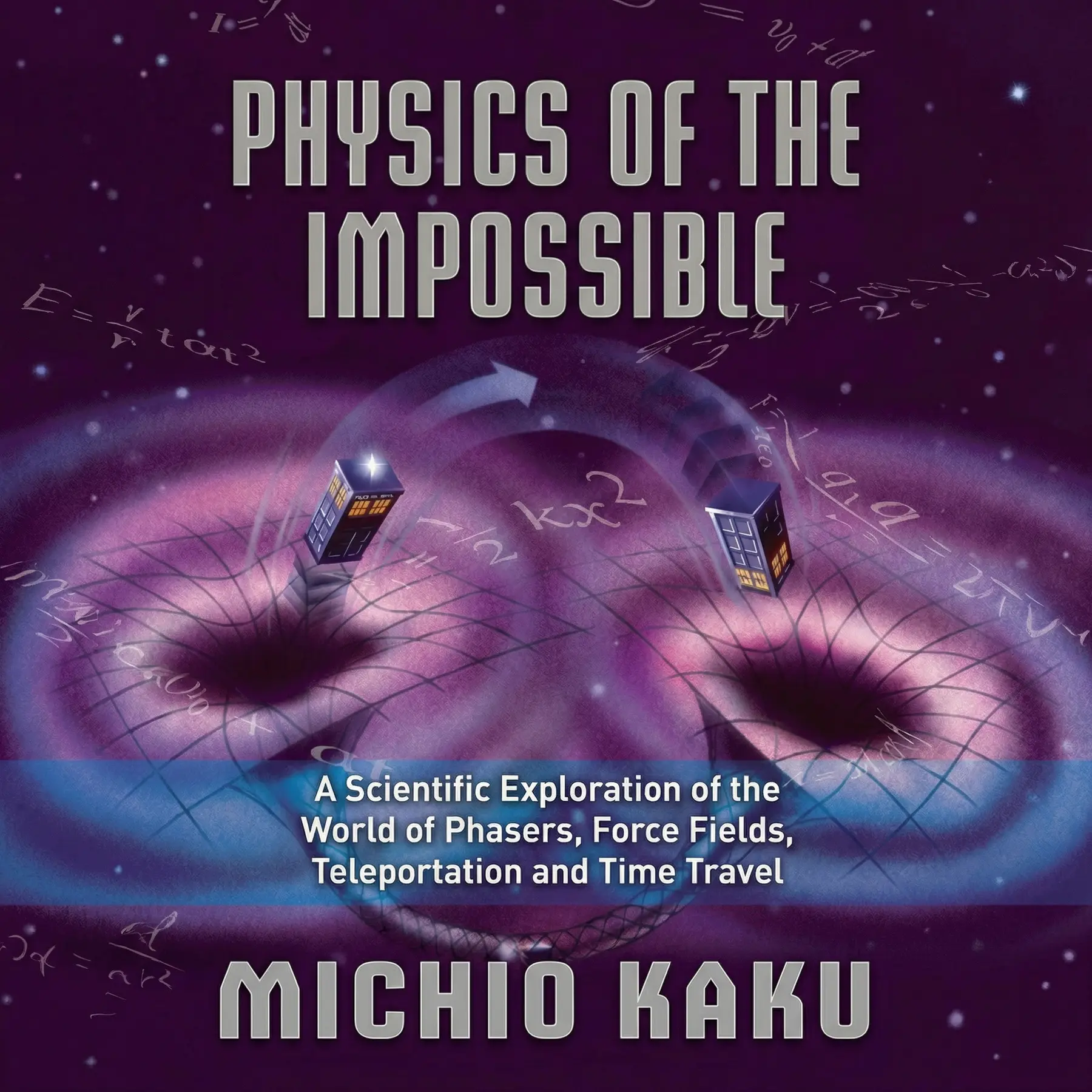
Physics of the Impossible: A Scientific Exploration of the World of Phasers, Force Fields, Teleportation and Time Travel
By Michio Kaku
Explore the boundary between science fiction and reality. This summary examines how today's impossibilities, from teleportation to time travel, might actually be realized using the fundamental laws of physics.
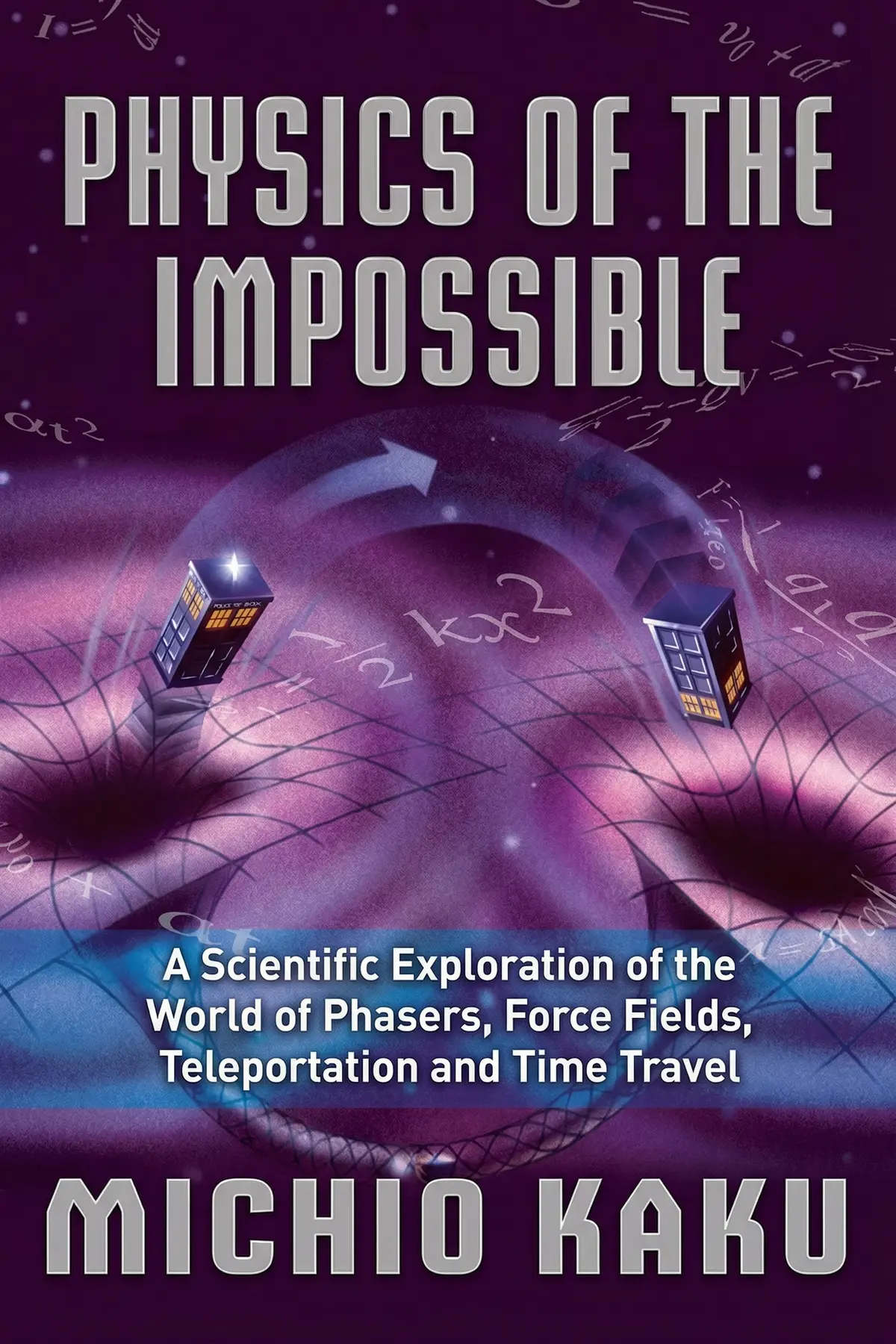
Table of Content
1. Introduction
1 min 59 sec
Imagine standing on a street corner in the mid-1800s and telling a passerby that within a century, humans would fly to the moon in a giant metal cylinder, or that a person in London could instantly send a written document to someone in New York. To the people of that era, these ideas weren’t just unlikely—they were fundamentally impossible. Yet, the famous science fiction writer Jules Verne was already dreaming of these things. He envisioned fax machines, global communication networks, and lunar rockets long before the technology existed to build them. While the leading scientists of his day often dismissed these visions as pure fantasy, history has proven Verne right. We now live in the world he imagined, taking for granted the very things that were once considered laughed at.
This brings us to a compelling question: What about the ‘impossibilities’ of our own time? When we watch movies featuring starships with protective shields, teleporters that beam people across planets, or robots with human-like intelligence, are we looking at mere entertainment, or are we glimpsing our own future? In this exploration of the physics of the impossible, we are going to look at the scientific foundations of these fantastical ideas. We will see that many of the feats we see on screen don’t actually violate the laws of physics; they simply require a level of engineering that we haven’t mastered yet.
By the end of this journey, you will have a new perspective on the limits of human achievement. We will cover everything from the mechanics of invisibility to the paradoxes of traveling through time. You’ll discover why mind-reading might be closer than you think, what it would really take to power a laser weapon, and how we might eventually find a way to skip across the vast distances of the galaxy. The throughline of our discussion is simple: what we call ‘impossible’ is often just a matter of time and the continued evolution of our scientific understanding. So, let’s pull back the curtain on the future and see what the universe might eventually allow us to do.
2. Shielding and the Art of Disappearing
2 min 23 sec
Discover how scientists are using plasma and metamaterials to create real-world versions of the defensive force fields and invisibility cloaks seen in science fiction.
3. The Reality of High-Energy Beam Weapons
2 min 09 sec
While handheld phasers and planet-sized lasers remain difficult to build, the laws of physics suggest they are theoretically possible with the right power source.
4. Beaming Information Through the Quantum Realm
2 min 13 sec
Teleportation isn’t just for sci-fi characters anymore; quantum physics shows that moving information instantaneously across space is already happening in labs.
5. Reading Minds and Controlling Matter
2 min 04 sec
Technology is beginning to bridge the gap between thought and action, turning telepathy and psychokinesis into scientific fields of study.
6. The Quest for Truly Intelligent Machines
2 min 01 sec
Creating AI that truly understands the world is harder than it looks. Explore why common sense is the ultimate hurdle for modern robotics.
7. Searching for Neighbors Among the Stars
1 min 57 sec
Is anyone else out there? Learn how astronomers use the requirements for life, like water and stable orbits, to hunt for extraterrestrial civilizations.
8. Engineering the Future of Interstellar Travel
2 min 05 sec
Leaving our solar system will require more than just bigger rockets. Explore the radical new propulsion systems that could carry us to distant galaxies.
9. Breaking the Cosmic Speed Limit
2 min 03 sec
Einstein said nothing can go faster than light, but physicists have found potential loopholes involving warped space and negative energy.
10. Navigating the Paradoxes of Time Travel
2 min 04 sec
Time travel isn’t just a fantasy; it’s a reality for astronauts. Explore how gravity and speed warp time and the mind-bending paradoxes that follow.
11. The Search for Limitless Energy Sources
2 min 01 sec
Inventors have dreamed of ‘perpetual motion’ for centuries. While the laws of thermodynamics say no, ‘dark energy’ might offer a new way forward.
12. Seeking the Final Theory of the Universe
1 min 58 sec
Is there one single law that explains everything? Learn how string theory aims to unite the worlds of the very big and the very small.
13. Conclusion
1 min 41 sec
As we reflect on the journey from the dreams of Jules Verne to the complex mathematics of string theory, a clear pattern emerges. What we once deemed ‘impossible’ is often just a milestone we haven’t reached yet. Science isn’t a static collection of facts; it is a dynamic process of pushing boundaries. By studying the physics of the impossible, we see that the universe is far more flexible and strange than our daily experience suggests.
We’ve seen that force fields and invisibility are already being explored in high-tech laboratories. We’ve learned that teleportation and mind-reading are transitioning from the realm of the psychic to the realm of the digital. Even the most mind-bending concepts, like traveling faster than light or slipping through the cracks of time, have a basis in the equations that describe our reality. While many of these technologies might take centuries or even millennia to perfect, they aren’t ‘off-limits’—they are simply waiting for us to develop the tools and the energy sources required to master them.
The throughline of this entire exploration is one of hope and curiosity. It reminds us that humanity’s greatest strength is our ability to imagine something that doesn’t exist and then work to uncover the rules that could make it real. As you look at the world around you, remember that the screen you are using and the network you are connected to would have been considered impossible just a few generations ago. The next time you see a fantastic feat in a science fiction story, don’t just dismiss it. Instead, ask yourself: what part of the universe’s secret code are we still waiting to crack to make this a reality? The future is not a wall; it’s a horizon, and we are constantly moving toward it.
About this book
What is this book about?
Have you ever wondered if the gadgets and feats seen in your favorite sci-fi movies could ever exist? Physics of the Impossible takes us on a journey through the cutting edge of theoretical physics to see which 'impossible' technologies are actually within our reach. It challenges our perception of what is achievable by breaking down complex concepts into three categories of possibility. The promise of this exploration is a deeper understanding of the universe. By looking at things like force fields, invisibility cloaks, and faster-than-light travel, we learn about the rules that govern our reality. It turns out that many things we once thought were purely magical—like sending a message across the world in an instant—are now mundane. This summary provides a roadmap for the next few centuries of human innovation, explaining the science that might one day allow us to inhabit the stars and manipulate the fabric of space and time.
Book Information
About the Author
Michio Kaku
Michio Kaku is a world-renowned physicist who holds the Henry Semat Chair in Theoretical Physics at the City University of New York. Beyond his academic work, he is a celebrated science communicator, having presented the popular BBC series Time and Visions of the Future. He is also the best-selling author of acclaimed books such as Hyperspace and Parallel Worlds, known for making high-level physics accessible to the general public.
Ratings & Reviews
Ratings at a glance
What people think
Listeners consider the work highly readable and accessible for the general public, as complicated theories are broken down using common language. Additionally, they value the way the writer weaves historical context and references to popular culture throughout the text, rendering it an excellent choice for both science fiction fans and non-experts. The material is engaging, utilizing a sense of humor that makes scientific details feel less daunting, and listeners describe the experience as stimulating and packed with incredible concepts.
Top reviews
Layla
Ever wonder if we'll ever actually build a Death Star? Kaku takes that nerdy curiosity and turns it into a serious lesson on the frontiers of physics. He breaks things down into three 'classes' of impossibility, which really helped me categorize what's just an engineering hurdle versus what actually breaks the laws of nature. The way he references Star Trek and Star Wars makes the heavy stuff like anti-matter and force fields feel less like a textbook and more like a conversation at a convention. It’s light, fast-paced, and genuinely funny in spots. If you want to know the 'how' behind your favorite sci-fi gadgets without needing a PhD in math, this is the perfect place to start. My only small gripe is that some sections on string theory felt a little rushed, but overall, it's an absolute blast for any dreamer.
Show moreWeera
Wow, this was a wild ride through the future of technology. I’ve always been curious about wormholes and time travel, but usually, books on this stuff are either too dry or too much like fantasy. Kaku finds the sweet spot. He explains that things we think are impossible today, like certain forms of faster-than-light travel, might just require a massive amount of energy rather than a change in the laws of physics. That distinction is huge! It gave me a lot of hope for what our descendants might accomplish. The writing is clear and the chapters are short enough to keep you moving through the 'Classes' of impossibility. It’s the kind of book that makes you want to look up at the stars and wonder 'what if' all over again. Absolutely worth the read for any science buff.
Show moreMan
The chapter on invisibility alone is worth the price of admission. I had no idea we were already making such progress with metamaterials! Kaku does a great job of showing how what was once the domain of Harry Potter is slowly becoming a reality in the lab. This book is a wonderful bridge between the impossible and the achievable. He writes with such clarity that even the sections on quantum entanglement didn't leave me feeling lost. It’s also quite thought-provoking regarding the ethics of things like telepathy and AI. Are we ready for these things? Probably not, but it’s exciting to read about the potential. This is easily one of the most entertaining science books I’ve picked up in years. Truly mind-blowing stuff on every page.
Show moreKae
Truth is, we need more scientists who can communicate like this. Kaku doesn't just explain physics; he sells the wonder of the universe. I found the discussion on Gödel's incompleteness theorem and how it applies to a 'Theory of Everything' to be especially fascinating. It adds a layer of philosophical depth that I wasn't expecting from a book that also talks about lightsabers. He treats his readers like intelligent adults who are simply curious about the world. Whether he's discussing the feasibility of perpetual motion or the potential for alien contact, his tone is always balanced and engaging. It’s a masterclass in science communication. After finishing it, I felt smarter and more excited about the future of our species. A must-read for any curious mind.
Show moreNan
Picked this up because I’m a massive Star Trek fan, but I don't have a science degree. I was worried it would be over my head, but Kaku is a master at keeping things accessible. His breakdown of Type I, II, and III civilizations really shifted my perspective on where humanity stands in the grand scheme of the cosmos—spoiler alert, we’re still at Type 0! The book moves quickly through topics like telepathy and time travel, using history to show how many 'impossible' things are now mundane. Truth is, it’s a bit dated since it was written in 2008, so some of the tech predictions feel a little off now. Regardless, the enthusiasm he has for the subject is infectious. It’s less about what we can’t do and more about the incredible things we might achieve in a thousand years.
Show moreJune
Michio Kaku has a rare gift for taking the most mind-bending concepts of the universe and grounding them in things we actually recognize from pop culture. I loved how he didn't just dismiss things like teleportation or invisibility as 'magic,' but actually looked at the quantum mechanics that might make them real one day. The tone is very encouraging and he uses a lot of humor to keep the technical parts from becoming a slog. Look, it’s definitely written for a general audience, so if you already have a background in theoretical physics, you might find it a bit basic. But for the rest of us? It’s a thought-provoking journey that makes the future feel much closer than it did before. I especially liked the bit about the Vogon poetry—a nice nod to Douglas Adams that gave me a good laugh.
Show morePiyanart
Finally got around to reading this classic and it definitely lives up to the hype for laypeople. I’ve always been intimidated by physics, but Kaku makes it feel like an adventure story. He uses examples from films like Back to the Future and The Invisible Man to anchor his explanations, which helped me visualize things like warped space-time and bending light. The three-tier system for impossibility is a brilliant way to structure the book. It’s not just a random list of cool tech; it’s a roadmap for the next few millennia of human progress. I did think some of the chapters towards the end got a bit repetitive, and the talk about the 'Theory of Everything' went slightly over my head. Still, it’s a fantastic read that manages to be educational without feeling like homework.
Show moreSienna
As someone who struggled through high school physics, I was pleasantly surprised by how much I actually understood here. There is absolutely no math involved, which was a huge relief for me! Instead, Kaku focuses on the big ideas and the historical context of how our understanding of the universe has changed. From Newton to Einstein, he shows that the 'impossible' is a moving target. I really enjoyed the sections on 'Class 1' impossibilities like teleportation—knowing that we’ve already teleported photons across a room makes the future feel much more real. My only complaint is that the book is a bit optimistic about how long these things will take to develop. But hey, it's nice to read something positive for a change. It’s a great gift for anyone who likes to dream big.
Show moreGrace
To be fair, while the science is fascinating, Kaku’s optimism occasionally feels a bit like wishful thinking. He spends a lot of time explaining how things could work if we had the energy of a star, but he doesn't spend enough time on the practical economics or the sheer scale of the engineering challenges involved. It’s fun to think about lightsabers, but the reality of powering one is so far beyond our current reach that it almost feels like science fiction anyway. The writing is definitely smooth and easy to follow, which I appreciated. However, I found myself wanting a bit more skepticism mixed in with the 'gee-whiz' attitude. It’s a great introductory text for a teenager or a casual fan, but if you’re looking for a deep dive into the 'why not,' you might come away feeling it's a bit superficial.
Show morePrim
Frankly, I found this a bit too repetitive if you’ve already watched Kaku's various TV specials or read his other books. He covers a lot of the same ground here—string theory, parallel universes, the Kaku signature optimism—and it starts to feel a bit like a greatest hits album. The references to Star Wars and Star Trek were cute at first, but after the tenth time, it felt like he was leaning too hard on pop culture tropes to fill the pages. For someone totally new to the genre, this is probably a five-star book. But if you’ve been following pop-science for a while, there isn’t much new information here. It’s very 'Physics 101' disguised as something more provocative. The prose is fine, just didn't find it particularly challenging or deep.
Show moreReaders also enjoyed

A Life Decoded: My Genome: My Life
J. Craig Venter
A Planet of Viruses
Carl Zimmer
A Short History of Nearly Everything
Bill Bryson
A Thousand Brains: A New Theory of Intelligence
Jeff Hawkins


Alien Earths: The New Science of Planet Hunting in the Cosmos
Lisa Kaltenegger

AUDIO SUMMARY AVAILABLE
Listen to Physics of the Impossible in 15 minutes
Get the key ideas from Physics of the Impossible by Michio Kaku, plus 5,000+ more titles in English and Thai.
- 5,000+ titles
- Listen as much as you want
- 7-day free trial
- Cancel anytime







