
14 min 10 sec
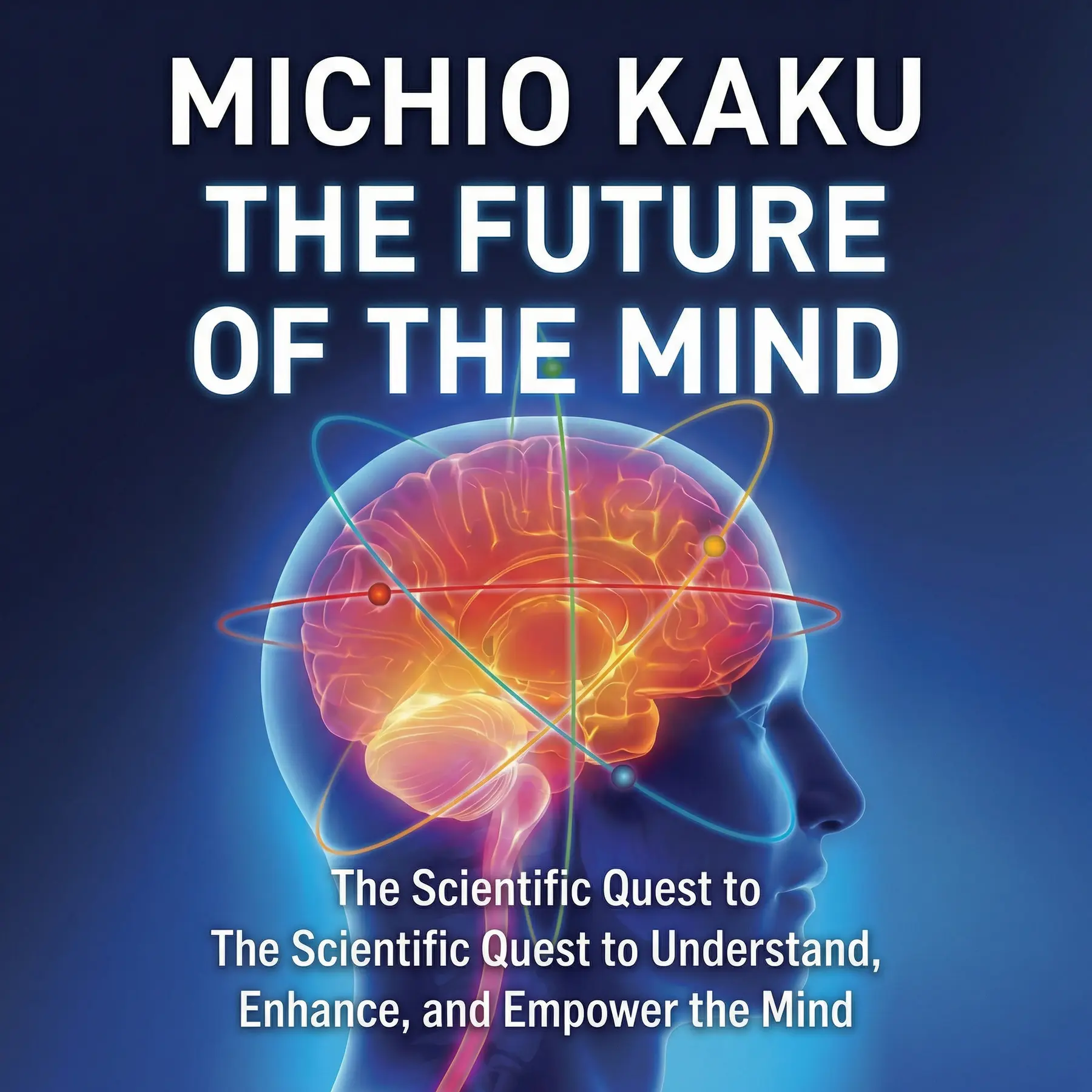
The Future of the Mind: The Scientific Quest to Understand, Enhance, and Empower the Mind
By Michio Kaku
Explore the convergence of physics and neuroscience as Michio Kaku reveals how emerging technologies are unlocking the brain’s secrets, enabling telepathy, memory enhancement, and the potential to upload human consciousness into machines.
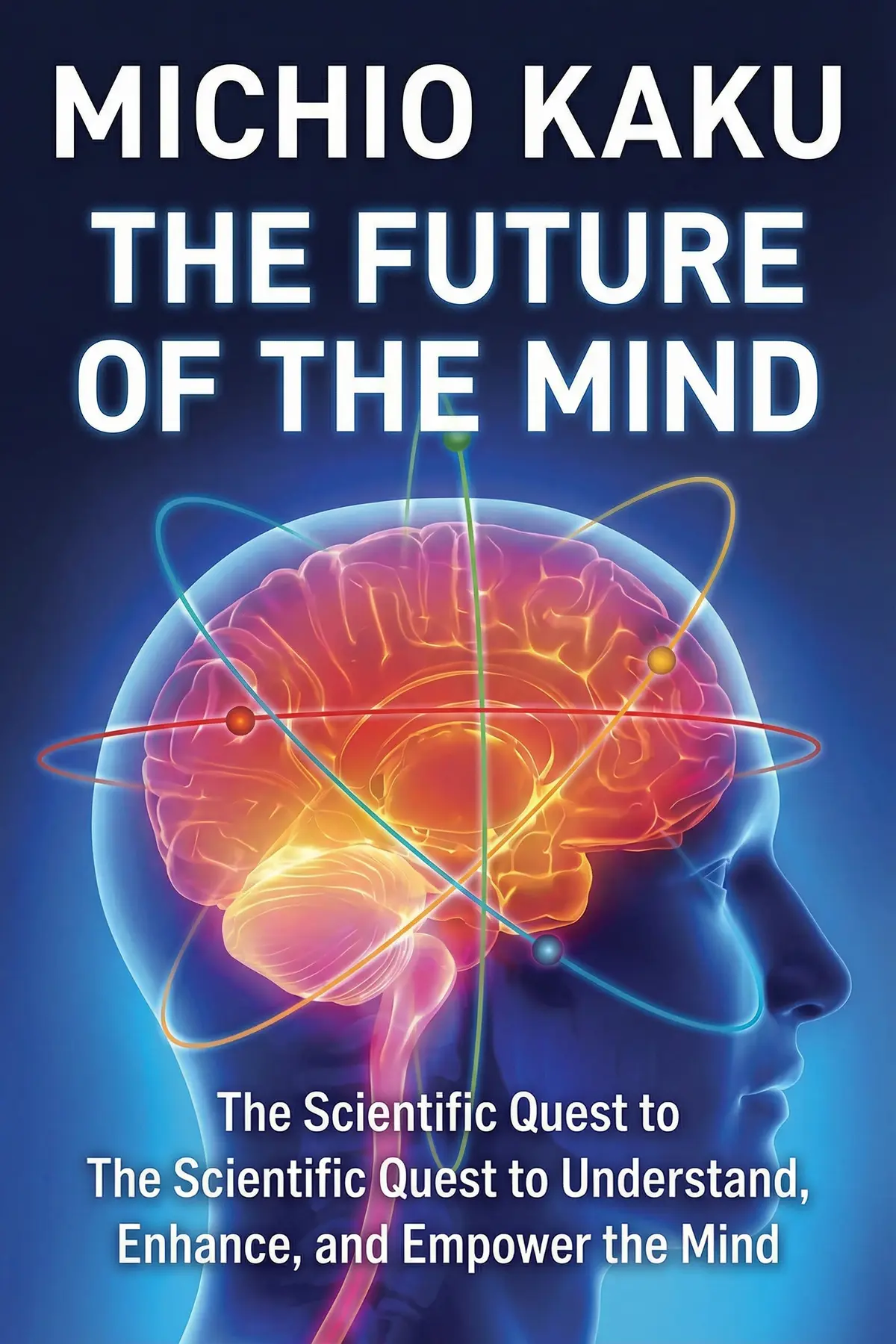
Table of Content
1. Introduction
1 min 44 sec
For centuries, the human mind was a locked vault, a private sanctuary of thoughts and dreams that no outsider could ever hope to access. We looked at the stars and understood the mechanics of distant galaxies before we even began to understand the three-pound organ sitting between our ears. But we are currently living through a monumental shift in history. The tools of physics are finally being turned inward, allowing us to peer into the living brain and decode the very language of thought.
This isn’t just about medicine or psychology; it’s about a fundamental transformation of the human experience. We are moving toward a period where the limitations of our biological bodies no longer dictate the boundaries of our existence. Imagine a world where you can share a feeling or a complex idea with another person without speaking a single word. Imagine a future where a person paralyzed by injury can move robotic limbs with the power of their intent, or where a person’s entire personality and memory can be backed up onto a computer, granting a form of digital life that persists long after the body is gone.
In this summary, we are going to explore the throughline that Michio Kaku establishes: the idea that consciousness is not a mystical essence, but a physical process that can be measured, mapped, and ultimately mastered. By viewing the brain through the lens of a physicist, we can see the trajectory of our species—from biological organisms to beings of pure information and energy. We’ll look at how we define consciousness, how we are learning to manipulate it, and what the ultimate destiny of the human mind might be in a vast and growing universe.
2. Mapping the Landscape of Consciousness
1 min 43 sec
Discover a new way to categorize intelligence by looking at how organisms navigate space and time to achieve their survival goals.
3. The Revolution in Brain Imaging
1 min 33 sec
See how modern technology is finally making the invisible visible, turning the once-hidden world of thought into observable data.
4. Digital Telepathy and the Power of Thought
1 min 24 sec
Explore a future where communication happens directly from brain to brain, removing the slow and often inaccurate medium of language.
5. Mind Over Matter through Telekinesis
1 min 34 sec
Witness the transition from biological movement to mechanical mastery as we learn to control the physical world with our intentions.
6. The Ethics and Reality of Memory Manipulation
1 min 35 sec
Learn how we are beginning to record and upload memories, opening the door to cognitive enhancement and the preservation of experience.
7. Artificial Intelligence and the Quest for Consciousness
1 min 32 sec
Examine the divide between human intuition and machine logic, and whether a computer can ever truly ‘feel’ its own existence.
8. The Final Frontier: Digital Immortality and Starships of the Mind
1 min 38 sec
Envision a future where the mind is freed from the body, traveling the cosmos at the speed of light as pure information.
9. Conclusion
1 min 27 sec
As we look back at the journey from the basic biology of neurons to the potential of light-speed consciousness, one thing becomes clear: we are at the beginning of the greatest adventure in human history. The barriers that have defined our existence—our isolation from each other’s thoughts, the physical limitations of our bodies, and the finite nature of our lives—are all being challenged by the progress of science.
What this really means is that we must start thinking deeply about the kind of future we want to build. When we have the power to read minds, edit memories, and live forever in digital form, our technology will only be as good as the wisdom we use to guide it. We must ensure that these tools are used to expand human freedom and understanding rather than to create new forms of control.
The throughline of our exploration is that the mind is the ultimate frontier. By understanding the physics of the brain, we aren’t just learning about an organ; we are learning about the nature of reality itself. We are moving toward a state of being where our imagination is the only limit to what we can achieve. As you move forward from here, remember that the future of the mind is not just something that will happen to us—it is something we are actively creating. We have the opportunity to take the reins of our own evolution and steer our species toward a future of infinite potential. The mind is waking up, and the universe is waiting.
About this book
What is this book about?
The human mind has long been considered one of the greatest mysteries in the known universe, a complex landscape that scientists are only now beginning to navigate. In this exploration, the narrative bridges the gap between theoretical physics and the intricate workings of our neural pathways. By examining the latest breakthroughs in brain imaging and neuro-engineering, the text reveals a future that once existed only in the realm of science fiction. The promise of this journey is a fundamental shift in how we perceive ourselves and our capabilities. It moves beyond simple biological understanding to showcase a world where telepathy, telekinesis, and digital immortality are no longer impossibilities but inevitable milestones. You will discover how mapping the brain’s architecture allows us to record memories, enhance intelligence, and even project our consciousness across the stars. This summary provides a roadmap for the next stage of human evolution, where the boundaries between biology and technology finally dissolve.
Book Information
About the Author
Michio Kaku
Michio Kaku is a highly respected professor of theoretical physics at the City College of New York. Beyond his academic contributions, he is a celebrated communicator of science, known for making complex concepts accessible to a global audience. He has authored several influential books, including the best-selling Physics of the Future, where he applies his scientific expertise to predict the long-term trajectory of human technological progress.
Ratings & Reviews
Ratings at a glance
What people think
Listeners consider this work an essential read for science fans, noting its deep research and intriguing portrayals of modern neuroscience. The prose is friendly and accessible, and listeners describe the book as a staggering voyage through the latest in neurotechnology and brain science. They value the forward-looking material, with one listener highlighting how it delves into the many mysteries of the human mind.
Top reviews
Sienna
Few authors can make complex physics feel as accessible as Michio Kaku does in this exhilarating exploration of the human brain. This book is a total trip for anyone obsessed with the intersection of technology and biology, taking us from the basic mechanics of neurons to the wild possibilities of telekinesis. I found his 'space-time theory of consciousness' particularly intriguing because it provides a tangible framework for something usually left to philosophers. While he certainly leans into his geeky side with constant references to Star Trek and The Matrix, it helps ground the high-level concepts in something relatable. The way he describes the prefrontal cortex as a 'CEO' managing feedback loops made so much sense to me. Some might find the speculation extreme, but I think that's the point. It is a mind-boggling journey through cutting-edge neurotechnology that left me questioning what it actually means to be human. If you want a book that expands your horizons, this is it.
Show moreJiraporn
Kaku is at his best when he bridges the gap between the microscopic firing of neurons and the vastness of the cosmos. This book is a must-read for those interested in science who want to see where we might be headed in the next few centuries. I loved the breakdown of the three levels of consciousness; it finally gave me a way to categorize the differences between animal instinct and human foresight. The discussion on 'Homo evolutis' and the potential for artificial intelligence to develop its own goals was genuinely thought-provoking. Some critics say he’s too optimistic, but frankly, we need more scientists who aren't afraid to dream big. His personable tone makes you feel like you’re having a conversation with a very brilliant, very excited friend. The research is extensive, covering everything from the BRAIN initiative to the chemistry of dreams. It is an absolute page-turner that I couldn't put down.
Show morePornpimon
Wow. I’ve always been a fan of Michio Kaku’s TV specials, but this book really allows him to stretch his legs and dive into the details. The way he explores the many mysteries of the human mind—from how we dream to how we might one day control robots with a thought—is simply fascinating. I particularly enjoyed the sections comparing our brains to those of other animals, like reptiles and mammals, to show our evolutionary path. It makes the concept of Level III consciousness feel like a logical progression rather than a random fluke. His writing is light-hearted and fast-paced, which is impressive given the heavy subject matter. It’s a feel-good book about science that leaves you feeling incredibly optimistic about the future of our species. For anyone who grew up on Star Wars or Isaac Asimov, this feels like seeing those worlds finally start to come true.
Show moreElan
Finally got around to reading this, and Kaku’s geeky side really shines through in the best way possible. This is a brilliant, mind-boggling journey through cutting-edge neuroscience that feels both deeply researched and wildly imaginative. He covers an immense amount of ground: telepathy, memory enhancement, and even the possibility of immortality through robotic bodies. What I found most impressive was how he uses the laws of physics to determine what is actually possible versus what is just a pipe dream. Even the most speculative parts, like the alien brain, are rooted in logic about how intelligence might evolve in different environments. It’s an educational and stimulating read that I’ll definitely be recommending to my book club. Kaku proves once again that reality is often much stranger and more exciting than fiction.
Show moreSurasit
Ever wonder if we'll eventually upload our brains to the cloud like a backup drive? Kaku dives headfirst into these questions, blending hard science with a healthy dose of speculative 'what-if' scenarios. As someone who follows medical tech closely, the sections on deep brain stimulation and optogenetics were the highlights for me, as they show how close we are to treating devastating disorders. The writing style is personable and easy to understand, even when he's explaining the difference between MRI and PET scans. Truth is, some parts feel a bit like a special-edition science magazine—broad but not always deep. He occasionally brushes past the massive engineering hurdles required to achieve things like 'downloadable memories.' However, his enthusiasm is infectious. It’s a fascinating, fast-paced read that manages to make the daunting world of neuroscience feel like an approachable adventure for the average reader. Definitely worth the time.
Show moreKru
Picked this up during a long flight and it was exactly the kind of intellectual stimulant I needed to pass the time. The structure—moving from the basic biology of the mind to the wild possibilities of 'Mind Over Matter'—is incredibly effective. I was particularly fascinated by the chapter on mental illness, where Kaku uses his feedback loop theory to explain disorders like schizophrenia. It’s a refreshing take that moves away from purely chemical explanations. My only real gripe is that he peppers the text with so many 'maybe this could happen' statements that it starts to feel repetitive after a while. One day, if we solve the engineering... we get it. Still, the descriptions of current fMRI technology and how we can now 'see' thoughts forming are incredible. It’s a great blend of modern culture and hard science that stays engaging throughout.
Show moreOmar
After hearing so much about the BRAIN initiative, I wanted a guide that could explain the stakes, and Kaku delivered. He has a gift for taking dense topics like the electromagnetic force and explaining how they allow us to map the human mind. The book is divided into three parts, and while the third part about alien minds and transhumanism gets a bit 'out there,' the first two parts are grounded in fascinating research. I appreciated the mention of the CREB gene and its role in memory—it's those little scientific nuggets that keep the book from becoming purely speculative. Look, it’s not a textbook, and it doesn't try to be. It’s an accessible gateway for people who want to understand the potential of neurotechnology without needing a PhD. A few more diagrams would have been nice, but the prose is descriptive enough to paint a clear picture.
Show morePichaya
The truth is, this book sits in a weird middle ground between a science journal and a sci-fi novel. Kaku’s personality carries the narrative, and his ability to explain the 'how' behind technologies like MRI is top-notch. I was especially drawn to the 'Mind Over Matter' section; the idea of learning a new skill Matrix-style is a staple of fiction, but Kaku makes it feel like an impending reality. I do think he’s a bit too dismissive of the ethical concerns that come with 'reverse-engineering' the brain, which deserved more than a few passing pages. However, the sheer breadth of topics is impressive. From the historical case of Phineas Gage to the future of AI, he covers it all with a sense of wonder that is hard to resist. It’s a great read if you want to see the big picture of where neuroscience is headed.
Show morePongpan
While I appreciate Kaku's enthusiasm for the subject, I found myself frequently rolling my eyes at the 'futurism' on display here. The book starts strong with a solid history of neuroanatomy, touching on cases like Phineas Gage, but it quickly devolves into what I can only call science fiction lite. He has a habit of hand-waving away the Herculean engineering challenges that stand between us and things like beaming consciousness across the solar system. To be fair, he’s a theoretical physicist, so his 'space-time theory' is an interesting intellectual exercise, but it lacks the nuance a dedicated neuroscientist might provide. The analogies—like comparing the brain to a corporate office with a CEO—are helpful for beginners but feel a bit shallow for anyone looking for serious analysis. It is an interesting intro to neuroscience for the casual reader, but it lacks the technical rigor I was hoping for.
Show moreKwame
Not what I expected from a scientist of Kaku's caliber, to be quite honest. The title, 'The Future of the Mind,' should have been a warning that this was more about fantasy than reality. He spends far too much time on 'beaming consciousness to the stars' and not nearly enough time on the actual biological constraints of the human brain. I found his attempt to define consciousness as a physicist to be particularly frustrating; he dismisses the work of experts who have studied this for decades in favor of a simplistic 'CEO' analogy that doesn't actually explain much. It feels like he’s making extravagant predictions while ignoring the very real technical issues that exist today. If you're looking for depth and analysis, this is not the book for you. It’s a lot of breathless wonder with very little grounding in what is actually possible in our lifetime.
Show moreReaders also enjoyed


A Life Decoded: My Genome: My Life
J. Craig Venter
21 Lessons for the 21st Century
Yuval Noah Harari
A Planet of Viruses
Carl Zimmer

A Short History of Nearly Everything
Bill Bryson
A Thousand Brains: A New Theory of Intelligence
Jeff Hawkins
AUDIO SUMMARY AVAILABLE
Listen to The Future of the Mind in 15 minutes
Get the key ideas from The Future of the Mind by Michio Kaku, plus 5,000+ more titles in English and Thai.
- 5,000+ titles
- Listen as much as you want
- 7-day free trial
- Cancel anytime







