
21 min 18 sec
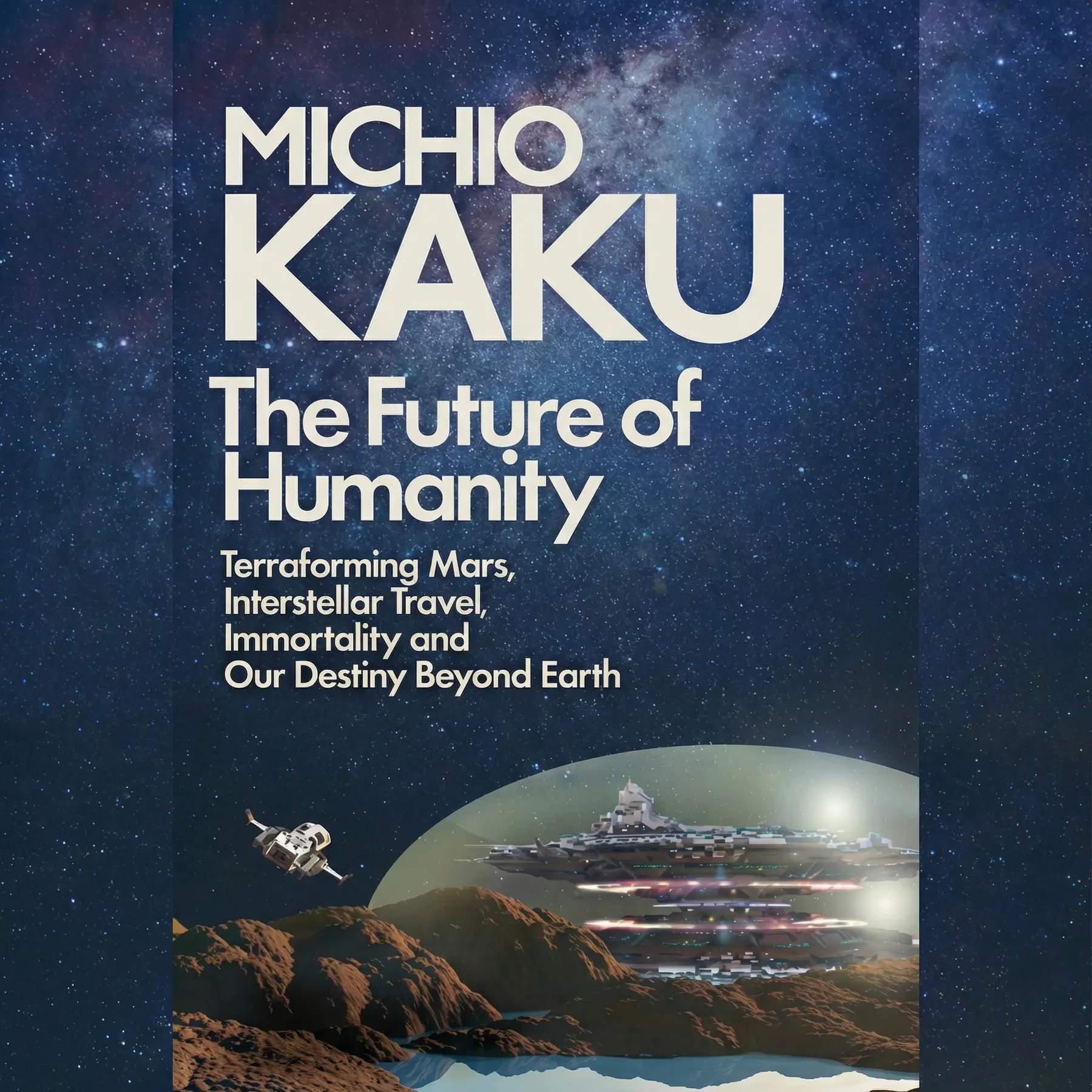
The Future of Humanity: Terraforming Mars, Interstellar Travel, Immortality, and Our Destiny Beyond Earth
By Michio Kaku
Explore the scientific roadmap for humanity's expansion into the cosmos. Michio Kaku details the technology needed to colonize Mars, reach distant stars, and potentially achieve biological immortality through advanced physics and engineering.
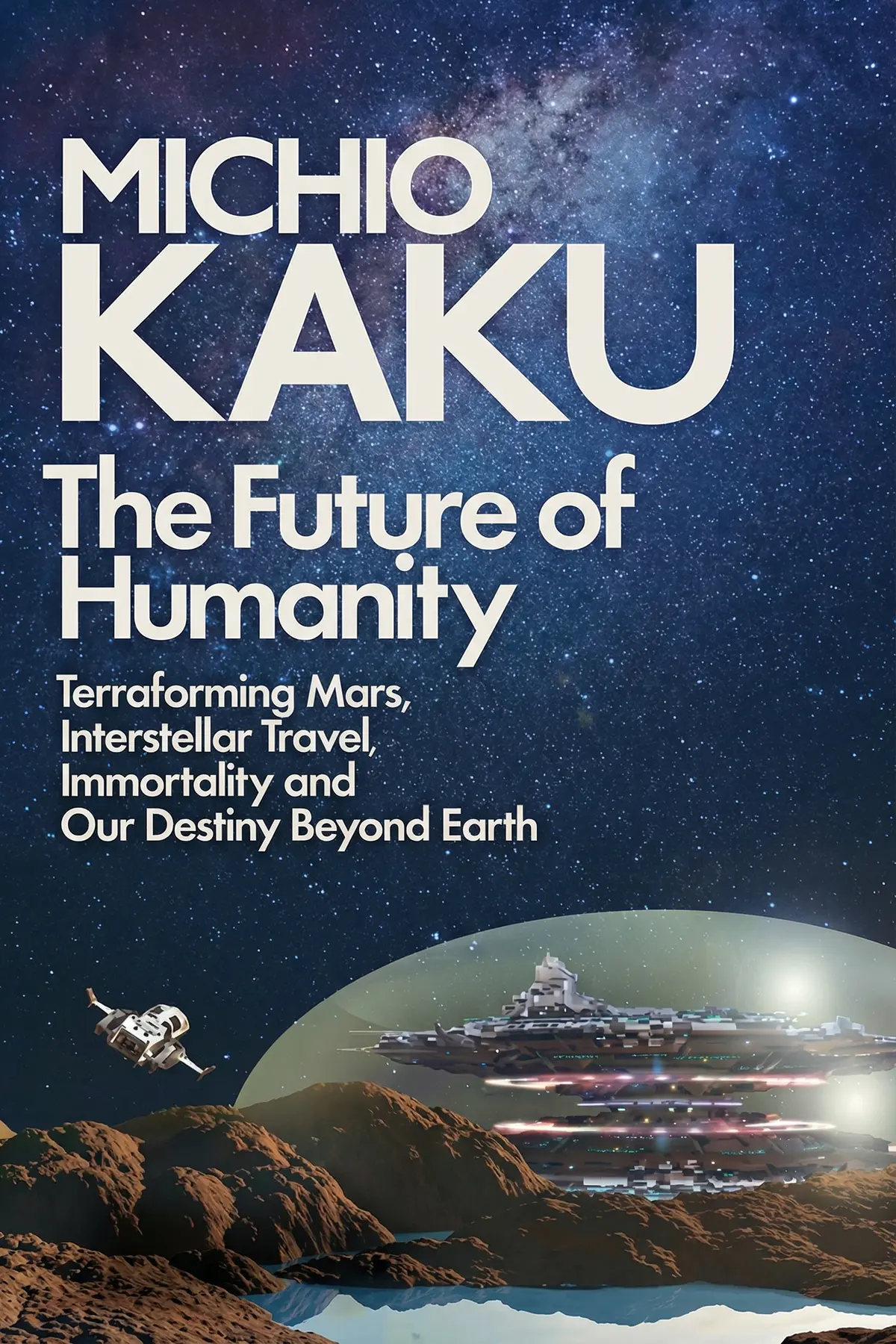
Table of Content
1. Introduction
1 min 37 sec
Imagine looking up at the night sky and seeing not just distant points of light, but potential homes for our children and grandchildren. For most of human history, the idea of leaving Earth was the stuff of myth and legend. In the twentieth century, it became a matter of national pride and cold-war competition. Today, however, we are entering a third era of space exploration—one driven by visionary science and private enterprise.
The central question isn’t just whether we can go, but how we will survive once we get there. Our planet, while beautiful, is a fragile cradle. To ensure the long-term survival of the human race, we may eventually have to look beyond our own atmosphere. But space is a hostile environment, filled with radiation, vacuum, and vast distances that defy our current understanding of travel.
In this exploration of our destiny, we will look at the roadmap laid out by theoretical physicist Michio Kaku. We will move from the early mathematical breakthroughs that made the first rockets possible to the cutting-edge nanotechnology that might allow us to build cities on the Red Planet. We’ll investigate how we might harness the power of light itself to travel to other star systems and even consider how our own biology might need to change to adapt to the cosmos. This is a story of human ingenuity and the relentless drive to explore the unknown. It’s about the shift from being a civilization confined to one world to becoming a species that calls the galaxy home.
2. The Mathematical and Engineering Roots of Rocketry
2 min 31 sec
Discover how early pioneers transformed the dream of space flight into a mathematical reality and paved the way for modern exploration.
3. The New Era of Commercial Space Exploration
2 min 20 sec
Explore why the moon is back in the spotlight and how billionaires are reinventing the business of reaching orbit.
4. Solving the Survival Puzzle on the Moon
2 min 14 sec
Living on the moon requires more than just oxygen; it demands a total redesign of how we handle radiation and resources.
5. Mars and the Biological Cost of Multiplanetary Life
2 min 26 sec
Elon Musk wants to make us a multi-planetary species, but the Red Planet poses unique threats to our very biology.
6. Building the Future with Nanotechnology and AI
2 min 10 sec
Standard construction won’t work in space, but graphene and intelligent robots might build our extraterrestrial homes for us.
7. Interstellar Aspirations and the Power of Light
2 min 08 sec
How tiny ships propelled by lasers could reach the nearest stars in a single human lifetime.
8. The Biological Marathon of Deep Space
2 min 04 sec
When a journey takes centuries, we must either build ships that support generations or find a way to stop aging altogether.
9. Predicting the Nature of Alien Intelligence
2 min 16 sec
Science suggests that if we meet aliens, they will likely share certain evolutionary traits with us, regardless of their planet.
10. Conclusion
1 min 32 sec
The journey of humanity from a group of wandering tribes on the African savannah to a potential space-faring civilization is one of the most remarkable stories in the universe. As Michio Kaku points out, we are currently at a crossroads. We have the mathematical foundations and the burgeoning technology to begin our expansion, but the window of opportunity may not stay open forever. Between the threats of environmental collapse on Earth and the technical challenges of reaching other worlds, our success is far from guaranteed.
However, the progress we’ve seen in the last few decades—the rise of reusable rockets, the discovery of water on the Moon, and the birth of nanotechnology—gives us a reason for profound optimism. We are no longer limited to just dreaming about the stars; we are drafting the blueprints to reach them. The transition to becoming a multi-planetary species will likely be the most difficult thing we have ever done, requiring us to rethink our biology, our economics, and our very identity.
Ultimately, the future of humanity lies in our ability to keep pushing the boundaries of what is possible. Whether it’s through building subterranean cities in Martian lava tubes or sending tiny light-driven scouts to Alpha Centauri, our destiny is tied to the cosmos. By investing in the science of today, we are securing the survival of our species for thousands of years to come. The stars are no longer just points of light; they are our future home.
About this book
What is this book about?
The Future of Humanity takes us on a journey from our earliest attempts at rocketry to a future where humans are a multi-planetary species. It addresses the immediate logistical hurdles of establishing a base on the Moon and the long-term biological challenges of traveling to Mars. The book outlines how private enterprise is currently revolutionizing space travel, slashing costs, and setting the stage for a new era of exploration. Beyond our immediate solar system, the book examines the possibilities of interstellar travel using breakthrough technologies like nanoships and light sails. It also dives into the potential for human evolution, exploring how genetic engineering and artificial intelligence might allow us to survive the harsh conditions of deep space. Ultimately, it offers a scientific vision of how our descendants might live among the stars, encountering alien civilizations and overcoming the limitations of the human body.
Book Information
About the Author
Michio Kaku
Michio Kaku is a world-renowned futurist and professor of theoretical physics at City University in New York. He is currently a science correspondent at CBS and the host of several radio and TV programs on science. He is also the author of several popular science books including The Future of the Mind (2014) and Physics of the Future (2011).
Ratings & Reviews
Ratings at a glance
What people think
Listeners find the material absorbing and straightforward, praising the high-quality prose that clarifies dense scientific subjects. They admire the author’s skill in revitalizing challenging themes, and one listener highlights how he distills elaborate theories. This narrative guides them through potential futures, instilling a sense of optimism, with listeners calling the result mind-blowing and entertaining.
Top reviews
Sombat
Dr. Kaku has a rare gift for making the most mind-bending concepts of astrophysics feel like a casual conversation over coffee. While some science books bury you in jargon, this one floats on a cloud of infectious optimism about where we are headed as a species. I was particularly gripped by the discussion on the Kardashev Scale and the idea of us becoming a Type I civilization within a couple of centuries. The way he bridges the gap between current NASA projects and the wilder shores of science fiction—like laser-propelled nanoships—is nothing short of masterful. You don't need a PhD to appreciate his vision of terraforming Mars or building cities on the moon. It’s a hopeful, sweeping journey that reminds us that our problems on Earth are just the beginning of a much larger story. If you’ve ever looked at the stars and wondered 'what if,' this is the roadmap you’ve been waiting for.
Show moreBrooklyn
Ever wonder what it would actually take to leave our solar system and find a new home among the stars? Kaku takes that question and runs with it, exploring everything from antimatter engines to the possibility of leaving our universe entirely if it ever faces a 'Big Crunch.' This isn't just a book about rockets; it's a philosophical inquiry into what it means to be human as we transition from a Type 0 to a Type I civilization. The chapters on bioengineering humans to survive on acid-resistant worlds were particularly thought-provoking, even if they felt a bit like a fever dream. Personally, I love how he weaves in references to pop culture and sci-fi to ground these astronomical concepts. He paints a future where we aren't just survivors, but masters of our own cosmic destiny. It’s an exhilarating read that left me feeling genuinely excited about the next few hundred years.
Show moreOmar
Wow, this book totally changed the way I look at the night sky. Kaku has this amazing ability to take something as dense as String Theory and make it feel as simple as a piece of twine. I was particularly blown away by the section on laser sails and how we could send tiny nanoships to Alpha Centauri within our lifetime. It’s rare to find a science book that is this entertaining while still being deeply informative. The vision he presents is one of ultimate hope—that humanity has the potential to outlive the Earth and even the sun itself. I especially liked the breakdown of the different types of civilizations and where we currently stand on that scale. Not gonna lie, some of the stuff about multi-dimensional travel hurt my brain a little, but Kaku’s enthusiasm is so contagious that I kept pushing through. This is a must-read for any dreamer.
Show moreNim
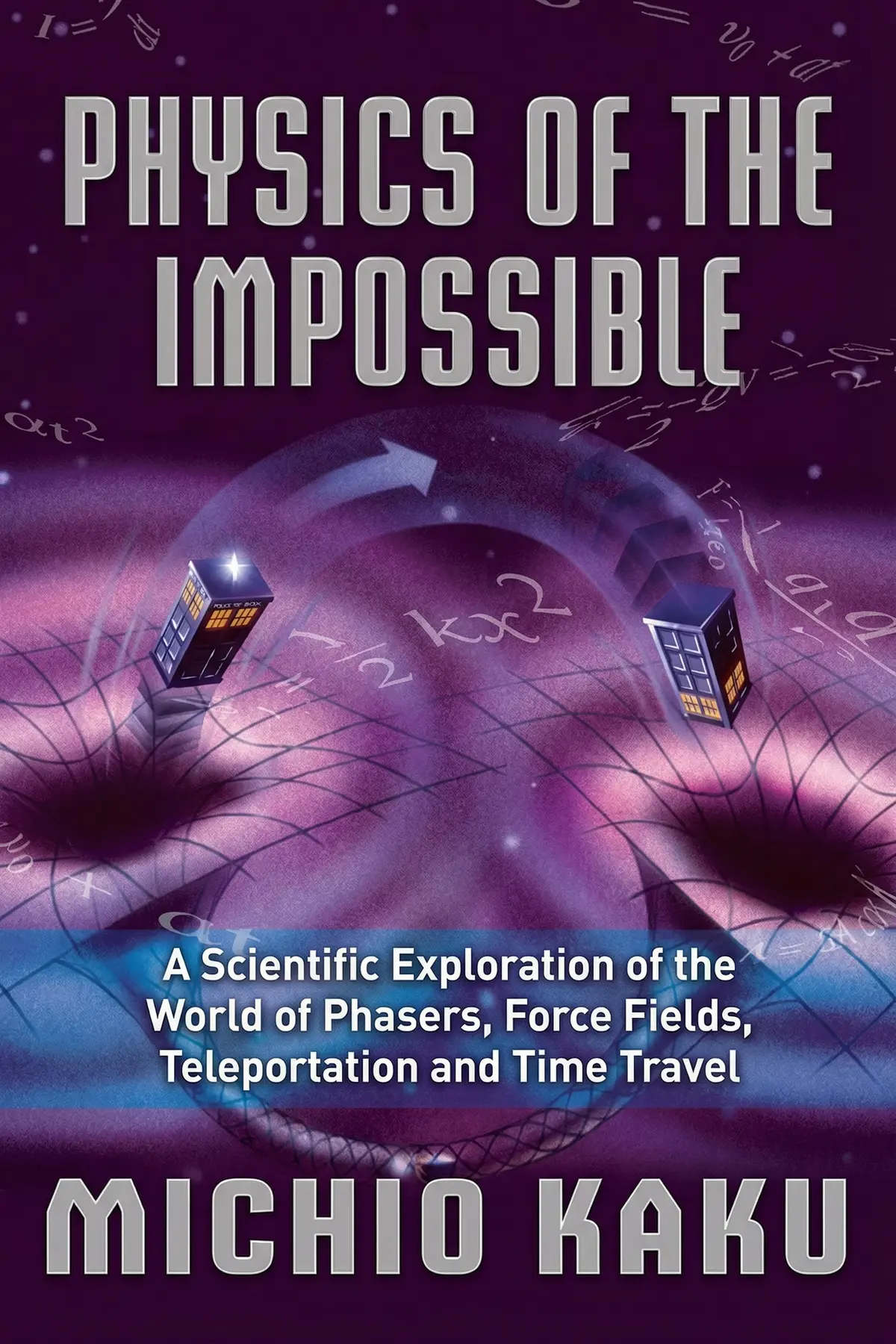
Finally got around to reading this, and it’s easily one of the most accessible books on astrophysics I’ve ever encountered. Michio Kaku doesn’t talk down to his readers; instead, he invites them on a journey to the ends of the universe. I loved the way he categorized the book into leaving Earth, voyaging to the stars, and finally, life in the universe. It felt like a natural progression of our species' growth. The concept that we might one day become 'the gods we once feared' is a powerful recurring theme that gives the book a lot of weight. Whether he’s talking about the composition of moon rocks or the mechanics of a black hole, his prose remains clear and vibrant. This is exactly the kind of book that inspires the next generation of scientists. I’ll definitely be checking out his other works like 'Physics of the Impossible' after this.
Show moreJom
The chapter on terraforming Mars alone is worth the price of admission. Kaku does a brilliant job explaining how AI, nanotechnology, and biotechnology—the 'fourth wave' of science—will be the keys to our survival. I’ve always been fascinated by the idea of making the Red Planet habitable, and this book provides the most lucid explanation of how we might actually do it. He doesn't shy away from the immense challenges, but his focus is always on the solutions. Frankly, it’s refreshing to read someone who believes in our potential to solve the biggest problems imaginable. From the chemistry of the moon’s interior to the physics of warp drives, every page offers a new 'wow' moment. It’s an informative, mind-blowing, and ultimately very human book. If you're looking for a reason to be hopeful about the future of our species, look no further than Kaku’s vision.
Show moreSai
Picked this up on a whim after seeing Kaku on a documentary, and I'm glad I did. The text is incredibly easy to follow, even when he dives into the nitty-gritty of String Theory and the potential for a multiverse. Truth is, some of the earlier chapters on Mars felt a bit like retreading old ground if you’ve already read about Elon Musk's plans, but Kaku adds a layer of theoretical physics that makes it feel fresh. He makes the 'impossible' seem like a simple matter of engineering and time. My only real gripe is that he occasionally repeats himself to drive a point home, which can slow the pace down for faster readers. Still, the section on transhumanism and modifying our DNA to survive the rigors of deep space was absolutely fascinating. It’s a solid 4-star read for anyone who wants a digestible look at our cosmic destiny.
Show moreSoontorn
After hearing Kaku speak on a podcast, I decided to dive into his latest work, and it didn’t disappoint. He starts with the practicalities—mining asteroids and establishing a permanent moon base—before launching into the truly wild possibilities of the far future. My background is in biology, so I found the parts about genetic adaptation to new worlds to be the most compelling section of the whole book. The idea of 'methane-metabolizing' humans is wild, but Kaku provides enough scientific context to make it feel plausible. Look, it’s a very optimistic book, and he does gloss over some of the political and social barriers to these advancements. But as a purely scientific and visionary exercise, it is incredibly well-written. The chapters are short and punchy, making it easy to digest in small sittings. If you want a break from the doom and gloom of the daily news, this is the perfect antidote.
Show moreScarlett
Not what I expected from a theoretical physicist, but in a good way! I thought this would be a dry textbook, but it reads more like a high-speed tour of the future. The details are what make it—like the explanation of why you’d suffocate and your blood would boil if you stepped onto the moon without a suit. It’s those visceral examples that make the science stick in your mind. While the later chapters on immortality and digital consciousness felt a little speculative, the foundation is solid. The truth is, Kaku is a master at simplifying complex ideas without making them feel watered down. I did feel like the transition from Mars to interstellar travel happened a bit too fast, but that’s a minor complaint in an otherwise stellar book. It’s an engaging, fast-paced read that leaves you with plenty to think about.
Show moreWit
As someone who loves hard science, I had mixed feelings about how much speculation is packed into these pages. Kaku is a brilliant communicator, and his explanation of the history of the moon and its composition was top-notch. However, once he moves into the distant future with dimensional portals and 'energy beings,' the book starts to feel more like a screenplay for a movie than a science text. To be fair, he does distinguish between what is possible now and what might be possible in a thousand years, but the line gets blurry. It’s an entertaining read, but I wish there had been a bit more focus on the immediate technological hurdles we face today. The writing is punchy and accessible, which I appreciated, but the 'gee-whiz' tone got a bit exhausting by the final third. It’s a decent overview, just be prepared for a heavy dose of 'what if' rather than 'how to.'
Show moreMint
Maybe it’s just me, but I found the writing style here to be incredibly repetitive and almost too simplistic for an adult audience. I went in expecting deep scientific insights, but many of the 'grand ideas' presented felt like tired tropes from 1950s sci-fi novels rather than cutting-edge physics. He spends pages explaining basic concepts like why our blood would boil on the moon, which is fine for a middle-schooler but felt a bit patronizing here. I’m not saying the information is wrong—Kaku clearly knows his stuff—but the tone just didn't click with me at all. It felt more like a collection of optimistic TED Talks than a cohesive scientific exploration of our future. If you’re already well-versed in space exploration, you might find yourself skimming through most of the chapters out of boredom. It’s certainly accessible, but for me, it lacked the intellectual weight I was looking for.
Show moreReaders also enjoyed
Alien Earths: The New Science of Planet Hunting in the Cosmos
Lisa Kaltenegger
21 Lessons for the 21st Century
Yuval Noah Harari
AUDIO SUMMARY AVAILABLE
Listen to The Future of Humanity in 15 minutes
Get the key ideas from The Future of Humanity by Michio Kaku, plus 5,000+ more titles in English and Thai.
- 5,000+ titles
- Listen as much as you want
- 7-day free trial
- Cancel anytime







