
16 min 29 sec
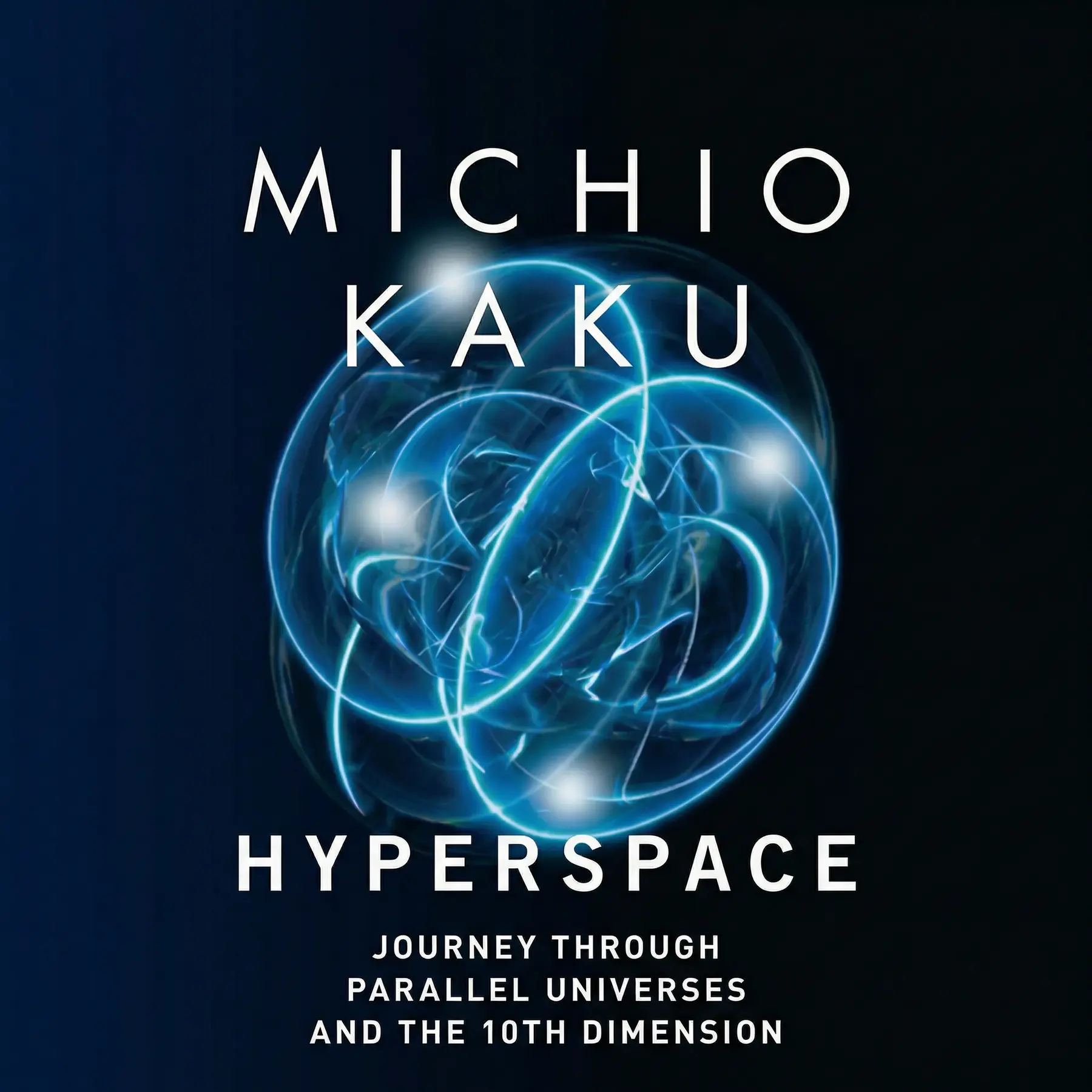
Hyperspace: Journey Through Parallel Universes and the 10th Dimension
By Michio Kaku
Hyperspace explores the revolutionary idea that our universe contains hidden dimensions. Theoretical physicist Michio Kaku explains how these extra-spatial realms could unify the laws of physics and unlock the secrets of parallel universes.
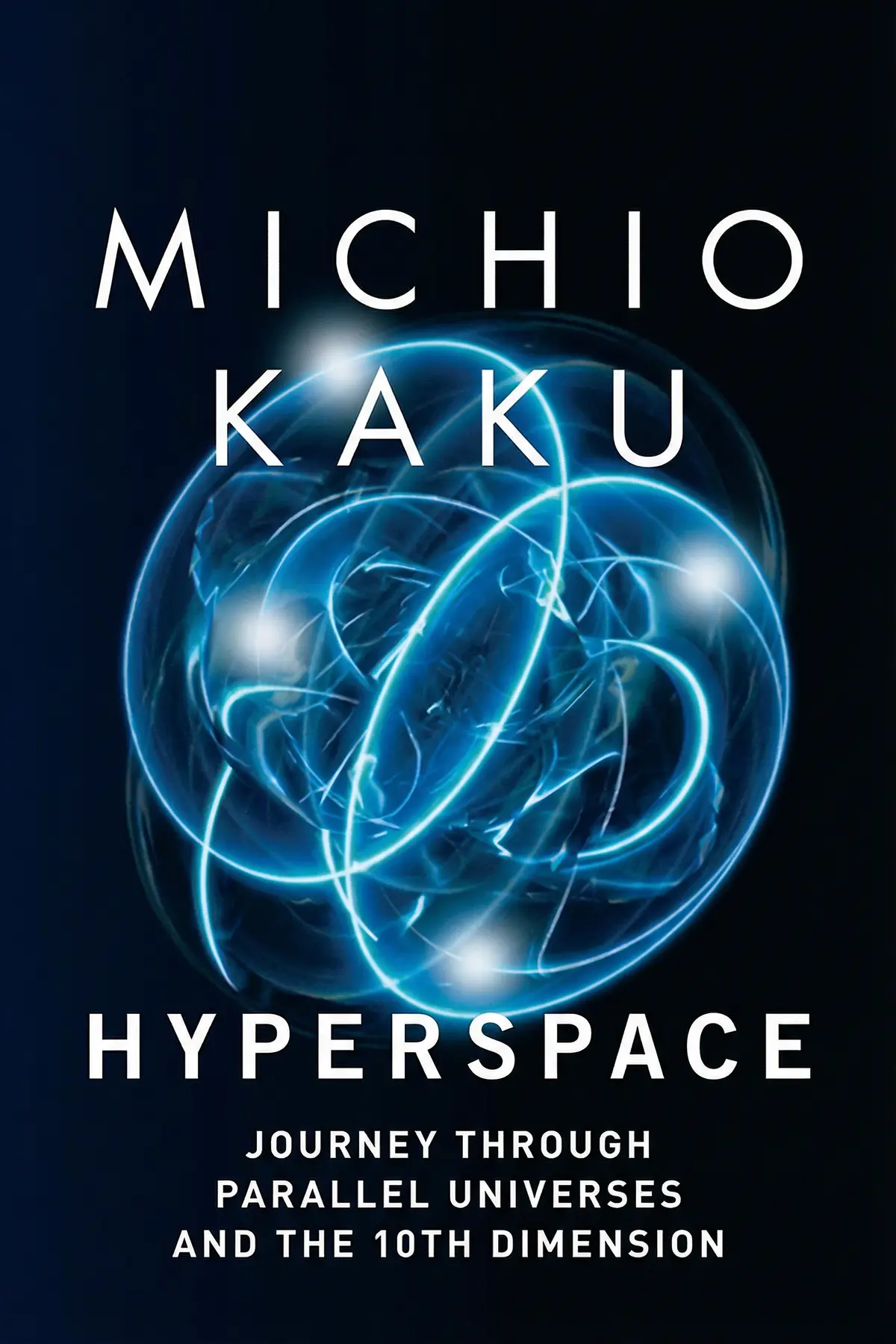
Table of Content
1. Introduction
1 min 30 sec
Have you ever looked at the world around you and felt like you were only seeing part of the picture? For centuries, humans have navigated a reality defined by three spatial dimensions—up and down, left and right, back and forth—along with the steady march of time. We assume this is the totality of existence. But what if our familiar world is just a small slice of a much grander, multi-dimensional masterpiece?
In our exploration of Hyperspace, we are diving into the mind-bending work of physicist Michio Kaku to uncover the possibility that our universe actually consists of ten dimensions, most of which are hidden from our view. The throughline of this journey is the quest for “unification”—the search for a single, elegant theory that can explain every force in the cosmos, from the gravity that keeps our feet on the ground to the subatomic energy inside an atom.
As we move through these ideas, we’ll see how the concept of higher dimensions isn’t just a fantasy for science fiction writers. Instead, it is a vital tool for physicists trying to solve the deepest mysteries of reality. We will look at how moving into hyperspace allows the messy, fragmented laws of physics to snap together into a beautiful, coherent whole. By the end, you may never look at the empty space around you the same way again. It isn’t just a void; it’s a vast, unseen arena where the true secrets of the universe are written.
2. The Geometry of the Unseen
2 min 30 sec
Discover why our three-dimensional world might be a restricted view of reality and how adding higher dimensions makes the complex laws of nature suddenly appear simple and elegant.
3. The First Glimpse of the Fifth Dimension
2 min 36 sec
Follow the historical breakthrough that suggested a fifth dimension could unite light and gravity, a discovery that laid the groundwork for modern theoretical physics.
4. The Universal Symphony of Strings
2 min 32 sec
Learn how string theory replaces the idea of point-like particles with tiny vibrating loops, requiring a ten-dimensional universe to create the music of matter.
5. The Barriers of Math and Energy
2 min 51 sec
Understand why string theory remains unproven and the incredible technological and intellectual hurdles we must overcome to confirm its existence.
6. Gateways Across the Multiverse
2 min 50 sec
Explore the mind-bending possibilities of black holes and wormholes, which could act as tunnels between different points in space or even entirely different universes.
7. Conclusion
1 min 40 sec
As we conclude our journey through Hyperspace, it’s clear that we are standing at the threshold of a scientific revolution. We’ve seen how moving beyond our four-dimensional comfort zone allows us to envision a universe where the disparate forces of nature finally harmonize. From the early dreams of Einstein and Kaluza to the modern, vibrating loops of string theory, the push toward higher dimensions represents our best effort to read the ultimate blueprints of creation.
The core takeaway is that the universe is likely far more vast and complex than what our senses can detect. While we currently lack the mathematical tools and the immense energy required to prove the existence of ten dimensions or to navigate wormholes, the theoretical framework remains our most promising path toward a “Theory of Everything.” It reminds us that humanity has a long history of being wrong about the limits of reality—from thinking the Earth was flat to believing the sun revolved around us. Each time we’ve expanded our perspective, we’ve discovered a more magnificent world.
So, what does this mean for you? It’s a call to keep an open mind and a sense of wonder. The world you see every day is just the surface of a deep, multi-dimensional ocean. Even if we can’t yet touch those hidden dimensions, understanding that they might exist gives us a new way to appreciate the profound order and beauty of the cosmos. As science continues to advance, we may one day find that the bridge to the stars isn’t a distance to be crossed, but a dimension to be unlocked. Until then, we continue to look up, to calculate, and to dream of the secrets hidden in the folds of hyperspace.
About this book
What is this book about?
This exploration delves into the complex world of theoretical physics, specifically focusing on the concept of higher dimensions and string theory. It promises to demystify the "Theory of Everything" by showing how extra dimensions simplify our understanding of nature's fundamental forces. The journey moves from Einstein’s early frustrations to the cutting-edge potential of 10-dimensional space-time, revealing a universe that is far more intricate than our three-dimensional perspective suggests. Readers will discover the history of these ideas, the mathematical hurdles facing modern scientists, and the mind-bending possibilities of wormholes and time travel.
Book Information
About the Author
Michio Kaku
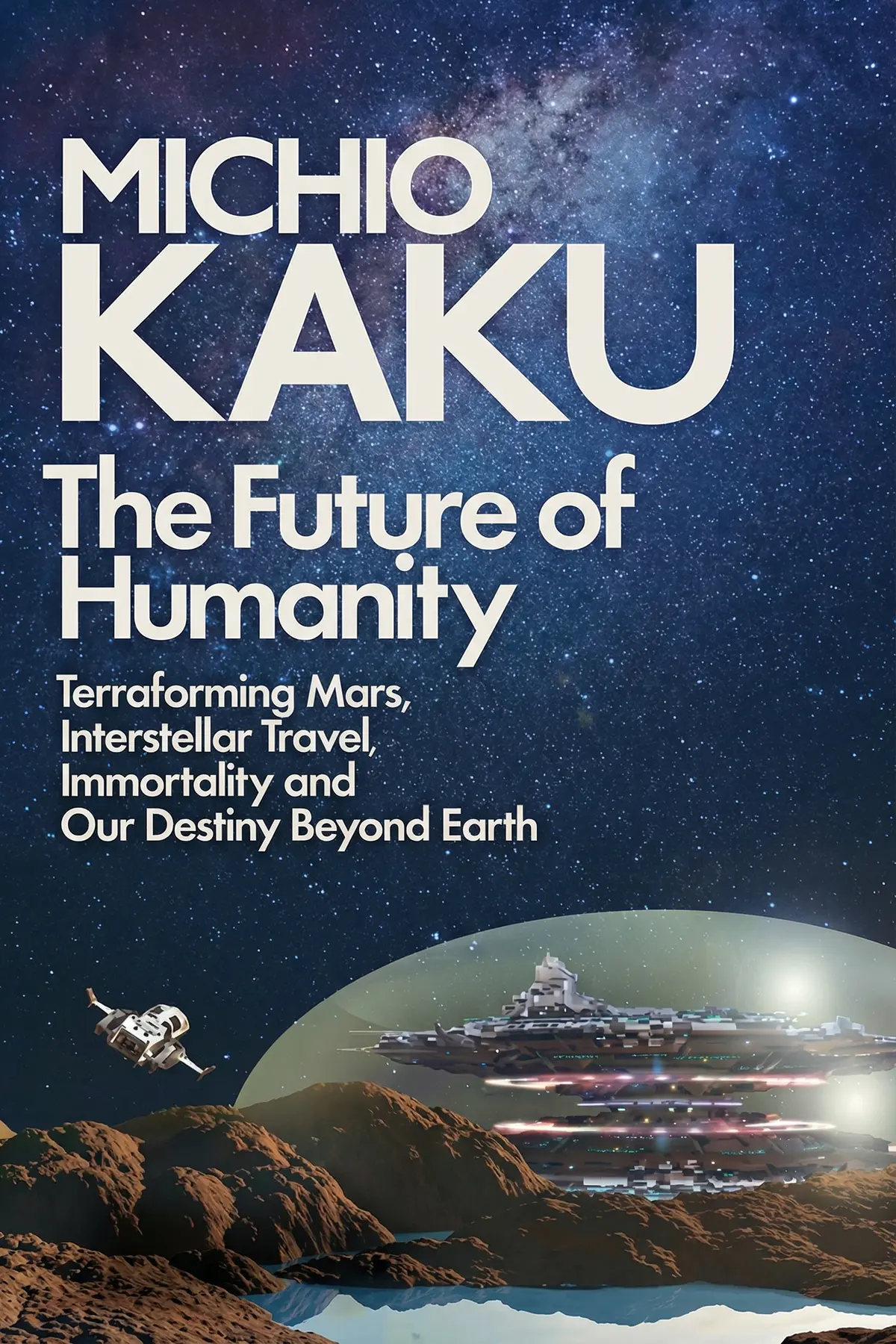
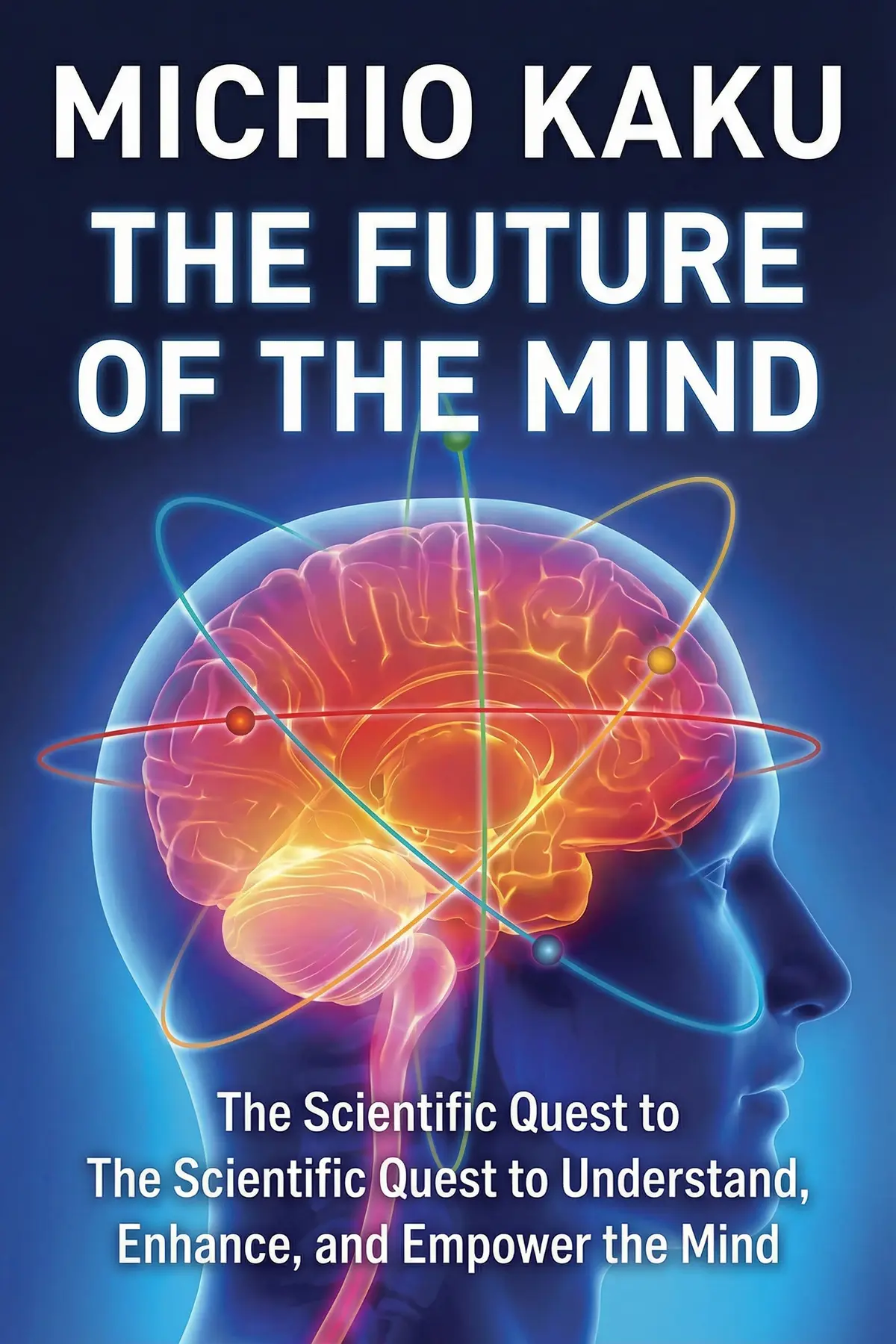
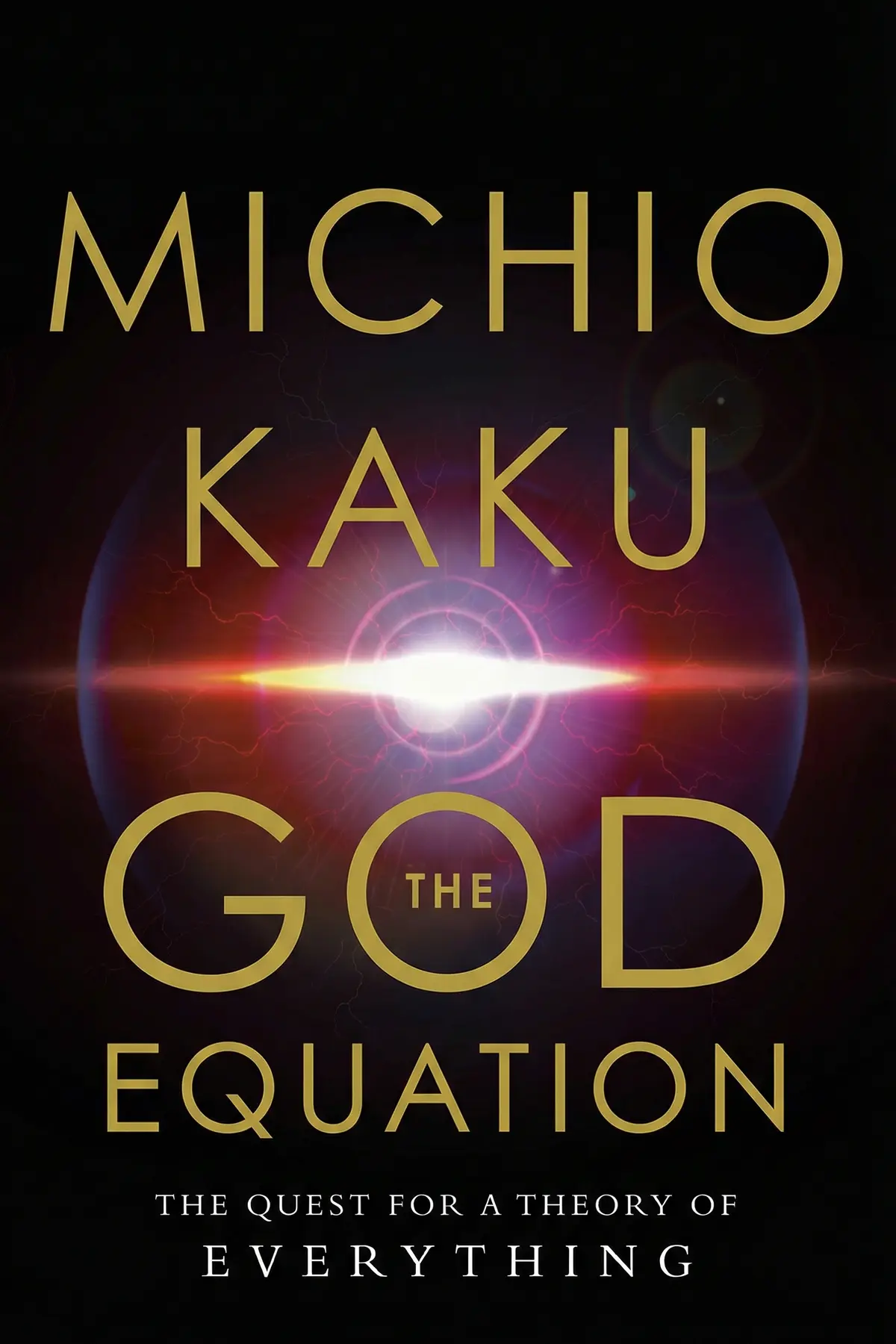
Michio Kaku is a professor of theoretical physics and the author of several best-selling science books, including The Future of the Mind, The God Equation, and Quantum Supremacy.
Ratings & Reviews
Ratings at a glance
What people think
Listeners find this science book to be an absorbing and straightforward read, featuring lucid breakdowns of intricate topics. The prose is expertly crafted, and listeners value the way it delivers massive concepts in a reachable format. They appreciate the work’s deep dive into the speculative side of contemporary physics, especially Quantum Theory, and find it mentally stimulating; one listener even highlighted how the text renders the most abstract notions fascinating.
Top reviews
Amara
Wow, my brain is officially melted in the best way possible. Kaku has an incredible gift for making the most abstract concepts in theoretical physics feel not just understandable, but genuinely exciting to think about. I’ve always been intimidated by things like string theory and the curvature of space-time, yet this book laid everything out with such a lightness of touch that I actually felt like I was following along. Truth is, the way he uses the Flatland analogy to explain higher dimensions is one of the clearest explanations I’ve ever encountered in any medium. The transition from the historical work of Maxwell and Einstein into the speculative future of civilizations was absolutely seamless and kept me hooked until the final page. It’s rare to find a book that challenges your worldview while remaining this accessible to a general audience. This is essential reading for anyone who has ever looked at the stars and wondered about reality.
Show moreCherry
Picked this up because I wanted to understand the hype around string theory without needing a PhD in mathematics. It did not disappoint. Kaku manages to explain the evolution of dimensional theories in a way that feels like a grand adventure story. I was especially captivated by the descriptions of how our universe might have started with ten dimensions before six of them collapsed. It sounds like science fiction, yet the author grounds it in the actual developments of modern physics. Not gonna lie, some of the concepts are truly mind-bending, but the pictures and analogies help keep things grounded. Even though it’s an older book, the core concepts are still the foundation for what’s happening in physics today. It’s a well-crafted piece of literature that makes you feel smarter just for having read it. If you’re a fan of authors like Brian Greene, you absolutely have to add this one to your collection.
Show morePalm
After hearing so many people recommend Michio Kaku, I finally dove into Hyperspace and I'm kicking myself for waiting so long. This is easily one of the most engaging science books on my shelf. The way Kaku explores the possibility of parallel universes and higher dimensions is nothing short of inspiring. As a science fiction writer, I found the sections on the Kardashev scale and the energy requirements for a Type II civilization to be incredibly useful for world-building. But beyond the 'fun' stuff, the book provides a really solid foundation in the history of physics. Seeing how different theories have been overthrown and replaced over time gives a great sense of perspective on where we are today. The writing is clear, the chapters are well-paced, and the ideas are absolutely massive. It's the kind of book that makes you want to go out and buy five more just like it immediately.
Show moreTum
The chapter on Type I, II, and III civilizations completely reframed how I think about our future as a species. Kaku doesn't just explain the math of higher dimensions; he explains why it matters for the long-term survival of intelligence in the cosmos. His 'lightness of touch' makes even the most difficult parts of string theory feel like a breeze to read through. I loved the recurring references to the great scientists like Newton and Maxwell, as it grounded the more 'out there' theories in a historical context. Some might say it's a bit speculative, but in my experience, that's exactly what makes pop-science worth reading. It pushes the boundaries of what we think is possible. This book left me feeling incredibly optimistic about the power of human curiosity. It is a superb piece of writing that manages to make the Planck length seem just as exciting as a galaxy-spanning empire.
Show moreAnthony
This book acts as a perfect bridge between hard science and the kind of wonder you usually only find in top-tier science fiction. Kaku explores the evolution of dimensional theories with a clarity that is rare in this field, moving from the foundational laws of Newton to the complexities of a ten-dimensional universe. I particularly appreciated the historical context provided; seeing how Faraday and Maxwell paved the way for modern quantum theory makes the current research feel like part of a grander human story. Not gonna lie, some of the sections on hyperspace are heavy, but the author’s enthusiasm is infectious enough to carry you through the denser parts. The speculation about how an advanced civilization might eventually manipulate space-time is both haunting and inspiring. It is a thought-provoking journey that manages to make even the most abstract theories feel grounded in a quest for truth.
Show moreJackson
Ever wonder how many dimensions actually exist beyond the four we experience every day? This book tackles that head-on with some of the most accessible explanations of quantum physics I’ve ever come across. Kaku does a great job of walking the reader through the evolution of these theories, starting with the early pioneers and moving into the mind-bending world of hyperspace. I loved the way he utilized the Flatland concept to help visualize higher dimensions; it made the math feel tangible. However, the last quarter of the book leans very heavily into speculative futurology. While exploring how an advanced civilization might harness the power of a star is fun, it felt a little less 'hard science' than the rest of the text. Still, for a book written decades ago, it holds up remarkably well as a foundation for understanding string theory. It’s a thought-provoking read that will definitely leave your mind buzzing with new possibilities.
Show moreThida
Kaku has a real knack for taking these incredibly dense mathematical constructs and turning them into something a layman can actually visualize. I particularly enjoyed the historical sections where he discusses the contributions of Faraday and Maxwell. It’s fascinating to see how the search for a unified theory has shifted over the centuries from simple geometry to the ten dimensions discussed here. The writing style is engaging and mostly easy to follow, though I’ll admit I had to re-read a few sections on the Planck length to really grasp the scale. Personally, I found the discussion of the 'God equation' a bit repetitive, as Kaku tends to circle back to the same points quite often. That minor gripe aside, the book is a masterclass in making complex topics interesting. It’s a solid 4 stars for anyone who wants a deep dive into the fabric of reality without getting lost in the equations.
Show moreNong
To be fair, the first half of the book is much stronger than the second. The explanation of how dimensions were 'rolled up' during the early stages of the universe is absolutely brilliant and helped me understand string theory better than any YouTube video ever has. Kaku is a gifted communicator, and his enthusiasm for the subject really shines through in every chapter. However, the book gets a little lost in its own speculation toward the end. The chapters on wormholes and time travel felt more like a sci-fi pitch than a physics text, which might be a turn-off for some purists. I didn't mind it too much because it was entertaining, but the shift in tone was noticeable. Overall, it's an excellent piece of popular science that presents big ideas in a way that feels urgent and important. It definitely inspired me to look further into modern theoretical physics.
Show moreRung
It’s hard to ignore that this was published back in the early 90s. While Michio Kaku is clearly a brilliant physicist, the book suffers from being a bit of a 'greatest hits' reel of popular science tropes that have been covered better elsewhere. One moment he’s talking down to the reader with overly simplistic metaphors, and the next he’s diving into technical details that feel like they belong in a college lecture. I enjoyed the speculative bits about the Kardashev scale and Type III civilizations, but they felt disconnected from the earlier chapters on string theory. Look, the science is interesting, but the organization is a mess. It feels like he’s trying to hit every possible buzzword—from the anthropic principle to parallel universes—without ever settling on a singular point. It's an okay introduction if you’ve never read a physics book before, but seasoned readers might find it repetitive and slightly unfocused.
Show moreAnchalee
Frankly, I found this a bit of a slog. While the premise of 10-dimensional physics is inherently fascinating, Kaku’s delivery felt surprisingly dry and disjointed for such a celebrated pop-science book. I was expecting a narrative that flowed like a novel, but instead, it felt like a collection of vignettes that struggled to hold a central theme together. To be fair, the analogies were there, but many felt uninspired or repeated; the wood versus marble comparison, in particular, didn't do much to clarify the heavier concepts for me. It’s also quite dated at this point, which makes some of the futurology sections feel more like retro science fiction than actual science. If you're a complete beginner, you might find the sudden jumps from basic geometry to complex particle physics a bit jarring. I really wanted to love this, but it felt more like reading a series of academic papers than a cohesive exploration of the universe.
Show moreReaders also enjoyed



A Life Decoded: My Genome: My Life
J. Craig Venter

A Planet of Viruses
Carl Zimmer

A Short History of Nearly Everything
Bill Bryson
A Thousand Brains: A New Theory of Intelligence
Jeff Hawkins

AUDIO SUMMARY AVAILABLE
Listen to Hyperspace in 15 minutes
Get the key ideas from Hyperspace by Michio Kaku, plus 5,000+ more titles in English and Thai.
- 5,000+ titles
- Listen as much as you want
- 7-day free trial
- Cancel anytime







