
21 min 32 sec
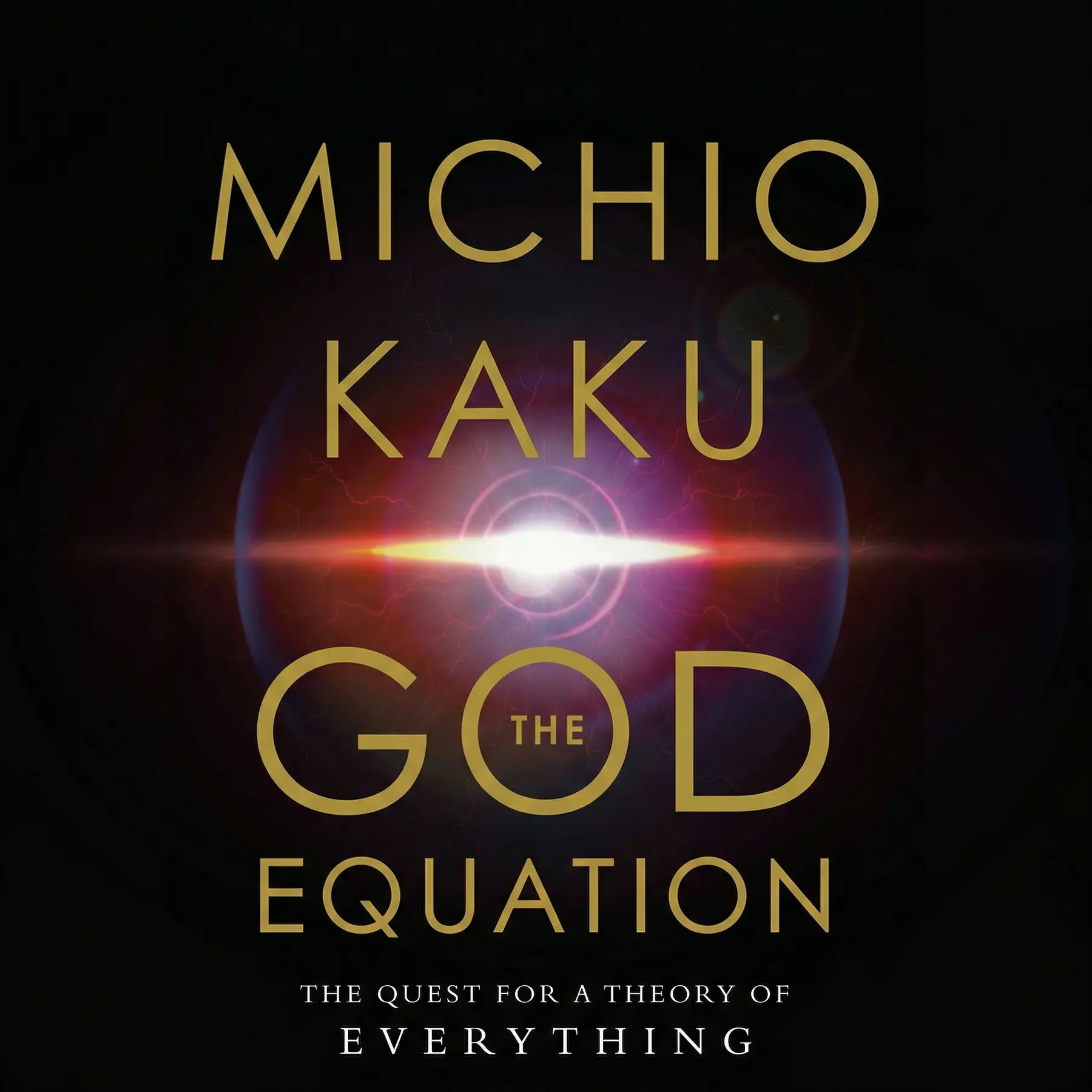
The God Equation: The Quest for a Theory of Everything
By Michio Kaku
Michio Kaku explores the grand scientific pursuit of a single, unified equation for the universe, tracing the history of physics from Newton’s gravity to the cutting-edge potential of string theory.
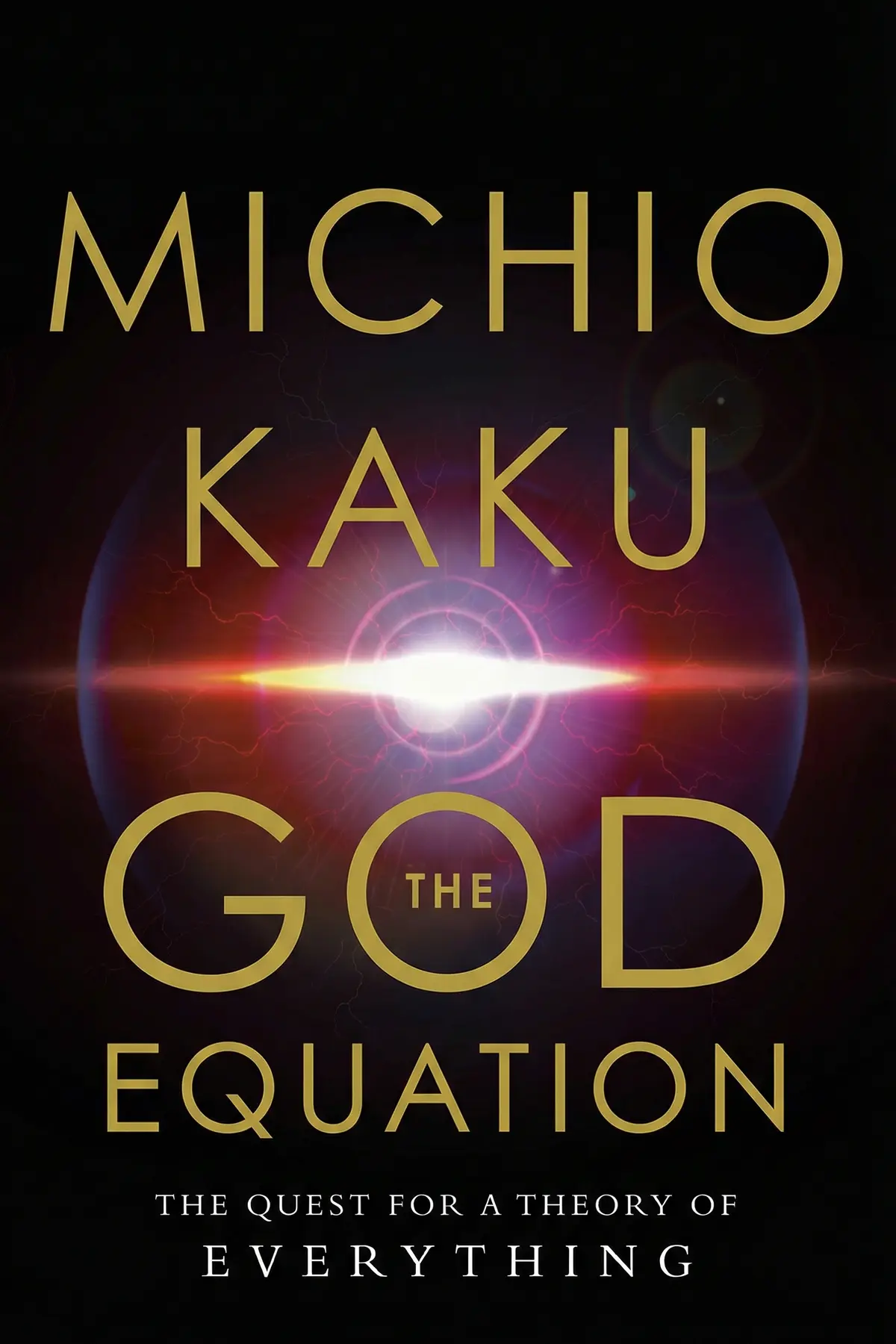
Table of Content
1. Introduction
1 min 49 sec
For thousands of years, humans have looked at the night sky and wondered if there is a secret code that explains how everything works. We see the seasons change, the stars move in predictable paths, and the constant pull of the earth beneath our feet. To the casual observer, the world can seem like a collection of separate, unrelated events. But to a physicist, these are all clues in a grand cosmic detective story. The goal of this story is to find a single, elegant mathematical formula that can explain every physical phenomenon in the universe—from the birth of a star to the behavior of a subatomic particle. This is the search for what is often called the Theory of Everything.
In this exploration, we will follow the intellectual lineage of the greatest minds in history as they tried to solve this mystery. We’ll see how early pioneers unified the laws of the heavens with the laws of the earth, and how later geniuses showed us that space and time are far more flexible than we ever imagined. We will also confront the strange, almost magical world of the very small, where logic seems to break down and particles can exist in two places at once.
Ultimately, this journey brings us to the cutting edge of modern science. We are currently standing at a crossroads where our most successful theories don’t quite fit together. The throughline of this summary is the ongoing effort to reconcile these differences. We will explore the potential of string theory to serve as the ultimate bridge, potentially revealing a universe that is far more complex—and far more beautiful—than we ever dared to dream. Get ready to dive into the history, the challenges, and the profound philosophical implications of the quest for the ultimate equation.
2. Unifying the Earth and the Heavens
2 min 27 sec
Discover how two legendary scientists proved that seemingly different forces, like gravity and electricity, are actually part of a single, universal order.
3. The Flexibility of Space and Time
2 min 46 sec
Explore Einstein’s radical realization that the universe isn’t a rigid stage, but a dynamic fabric that bends and stretches around energy and mass.
4. The Chaotic World of the Quantum
2 min 51 sec
Step into the subatomic realm where particles behave like waves and nothing is certain until it is measured.
5. The Four Forces and the Standard Model
2 min 17 sec
Learn about the four fundamental pillars of the universe and why gravity remains the one piece that won’t fit into the puzzle.
6. Testing the Limits in Deep Space
2 min 30 sec
Journey to the edge of black holes and back to the Big Bang to see how the most extreme environments in the cosmos reveal the flaws in our theories.
7. String Theory: The Music of the Spheres
2 min 36 sec
Imagine a universe made not of dots, but of vibrating strings. See how this radical idea could finally unite all the forces of nature.
8. The Philosophical Echoes of a Final Theory
2 min 39 sec
What happens if we actually find the ultimate equation? Explore the deep questions about God, the multiverse, and why the universe exists at all.
9. Conclusion
1 min 37 sec
We have traveled from the orchards of seventeenth-century England to the mind-bending dimensions of modern string theory. Throughout this journey, the goal has remained the same: to find the unity hidden within the diversity of the world. We’ve seen how Isaac Newton brought the heavens down to earth, how Albert Einstein turned gravity into geometry, and how quantum physicists revealed a world of probability and uncertainty.
The quest for the God Equation is the final step in this long history of unification. While we don’t have the final answer yet, the progress we’ve made is staggering. We’ve identified the four fundamental forces and built a Standard Model that explains almost everything we can see. We have discovered that the universe is expanding and that it contains hidden depths, from black holes to dark energy.
The lesson of this search is that the universe is far more elegant and interconnected than it appears on the surface. Whether the final answer lies in the vibrating strings of ten-dimensional space or in a breakthrough we haven’t even thought of yet, the pursuit itself is a testament to human curiosity. By seeking the equation that governs the stars, we are ultimately seeking to understand ourselves and our origins. As we continue to refine our theories and peer deeper into the cosmos, we are not just doing math; we are reading the blueprint of reality. The God Equation represents the ultimate triumph of the human mind—the hope that we can one day look at the entire universe and see it all contained within a single, beautiful thought.
About this book
What is this book about?
The God Equation chronicles the most ambitious journey in the history of science: the search for a Theory of Everything. This elusive equation would bridge the gap between the macro laws of the cosmos and the micro world of quantum mechanics, effectively uniting all four fundamental forces into one elegant framework. The book follows the intellectual evolution that began with the Enlightenment and leads to today's high-stakes debates in theoretical physics. Readers are guided through the breakthroughs of giants like Newton, Maxwell, and Einstein, while also confronting the bizarre, probabilistic nature of the quantum realm. The narrative culminates in an exploration of string theory—a controversial yet mathematically beautiful candidate for this ultimate equation. By looking at black holes, the Big Bang, and the possibility of a multiverse, Michio Kaku provides a roadmap for understanding how the universe began and what rules truly govern its existence. This summary promises a deep dive into the quest to decode the very blueprint of reality.
Book Information
About the Author
Michio Kaku
Michio Kaku is a world-renowned physicist and science educator. He’s a professor of physics at the City University of New York and has authored several best-selling books including Beyond Einstein, The Future of Humanity, The Future of the Mind, and Physics of the Impossible.
Ratings & Reviews
Ratings at a glance
What people think
Listeners value the thorough overview of breakthroughs in physics and how the work turns difficult concepts into understandable material. The prose is straightforward and easy to grasp, as one listener points out its success in demystifying intricate ideas, and many consider the text simple to track. The title earns praise for its handling of string theory, particularly one review that calls attention to the storytelling approach used. Reactions to the tempo are varied; some feel the delivery is direct while others characterize it as disorganized.
Top reviews
Nattapong
Kaku has a gift for making the most brain-bending concepts in theoretical physics feel like common sense. In this book, he traces the history of unification from the ancient Greeks all the way to the controversial world of string theory. I found the narrative regarding Maxwell’s equations and Einstein’s pursuit of a 'God equation' to be particularly gripping. It’s a slim volume, but it packs a punch by explaining how symmetry serves as a guiding light for physicists. While some might find the later chapters on the multiverse a bit speculative, I personally loved the ambition of his vision. It’s rare to find a science book that feels this poetic and accessible without sacrificing the intellectual weight of the subject matter.
Show moreLek
Finally got around to reading this during a weekend trip, and it was exactly the kind of mind-expansion I needed. Kaku frames the universe as a symphony of vibrating strings, which is a beautiful way to visualize the 'God equation.' I particularly appreciated how he addressed the philosophical implications of these theories, mentioning how Einstein’s God was one of order and elegance rather than a personal deity. The book is remarkably fast-paced and avoids getting bogged down in dense mathematics, making it perfect for the layperson. It makes you realize that behind the chaos of the world, there is a hidden mathematical harmony that we are only just beginning to decode. Absolutely fascinating and highly recommended for curious minds.
Show moreAmy
Wow, what a journey through the eons of human thought. In an era defined by daily stressors and political noise, reading about the fundamental vibrations of the cosmos is incredibly soothing and puts everything into perspective. Kaku is a master communicator who doesn't talk down to his audience. He starts with the ancient Greeks and Thales of Miletus, showing that the quest for a single substance is one of our oldest instincts. The way he describes string theory as a 'music' that makes up all matter is just stunning. It’s the kind of book that reminds you why science is so important—it’s not just about gadgets, but about fulfilling our basic human desire to understand where we came from. Five stars.
Show moreWittaya
The concept of a single 'God equation' that governs everything from the expansion of the universe to the tiny dance of subatomic particles is the ultimate scientific holy grail. Kaku’s book is a brilliant tribute to the people who dedicated their lives to finding it. I loved the specific details about how Maxwell's work paved the way for the electronic age, and how Einstein’s E=mc² changed our understanding of reality itself. Some might call the book 'pop-science,' but there is real depth in how he frames the importance of symmetry in the world of particle physics. It’s a short read, but it’s dense with big ideas that will stay with you long after you close the cover. A must-read for any science lover.
Show moreLogan
If you're looking for a crash course on how we got from Newton to String Theory, this is it. Kaku’s writing is exceptionally clear, and he manages to distill centuries of complex discovery into a very readable timeline. To be fair, the first half of the book covers ground that most science buffs will already be familiar with—Newton, Faraday, and the standard model. However, the way he connects these milestones to the current quest for a theory of everything is quite masterfully done. My only real gripe is that the pacing felt a little rushed toward the end when he finally gets into the weeds of 11-dimensional membranes. Still, for a general audience, this is a top-tier introduction to the field.
Show moreNathan
The transition from Maxwell’s electromagnetism to Einstein’s relativity is handled with such narrative grace that it feels more like a detective story than a science textbook. I’ve always struggled to understand why gravity is the 'odd man out' in the standard model, but Kaku explains the conflict between general relativity and quantum mechanics better than most. Not gonna lie, the 10th and 11th dimensions still make my head spin, but the author's clear prose helps keep you grounded. The book does feel a little short for such a massive topic, and I wish he had spent more time discussing rival theories like loop quantum gravity. Regardless, it’s an inspiring read that makes you feel the weight of our scientific heritage.
Show moreJom
After hearing Kaku on a podcast, I expected a dense tome, but I was pleasantly surprised by how briskly this moves. He has a way of summarizing complex breakthroughs—like the unification of the weak and electromagnetic forces—in just a few paragraphs without losing the core meaning. The 'God' in the title might be a bit of a marketing gimmick, but it serves to highlight the ultimate goal of physics: a single, elegant equation for everything. The truth is, it’s a very optimistic book. Even when he discusses the potential heat death of the universe, he offers the hope of the multiverse. It’s a quick, punchy read that left me thinking about the cosmos for days afterward.
Show moreParichat
In my experience, most physics books for the layperson either treat the reader like a child or lose them by page ten with complex math. Kaku finds a solid middle ground here. He walks us through the four fundamental forces with ease, though the pacing can feel a bit uneven at times. Some chapters fly by while others linger on historical anecdotes that feel slightly repetitive. Personally, I found the discussion on St. Thomas Aquinas and the 'first mover' argument to be a surprising and welcome addition. It shows that science and philosophy are often asking the same questions. While it’s not a deep dive into the math, it provides a very clear roadmap of where physics is heading.
Show moreOscar
Is this book for everyone? Probably not if you’ve already devoured everything by Brian Greene or Stephen Hawking. Frankly, I found this to be a very superficial overview of the history of physics. The first 140 pages are mostly a recap of things we’ve heard a dozen times before, and the actual 'string theory' content feels like an afterthought. Kaku writes with great energy, and his enthusiasm is definitely contagious, but there isn't much here for someone seeking deep technical insight. It’s a great 'entry-level' book for a teenager or someone new to the topic, but seasoned readers might find it a bit like a greatest hits album with no new tracks. It's fine, just not groundbreaking.
Show moreKavya
Look, I wanted to love this, but the heavy reliance on 'symmetry' as the sole proof of scientific truth felt more like an aesthetic preference than rigorous physics. Kaku spends a lot of time praising the beauty of equations, but as some critics have pointed out, nature isn't always symmetrical—just look at gastropods or the irregular shape of the Earth. The historical sections also felt a bit sloppy and hagiographic, especially his portrayal of Newton. He brushes over the fact that Newton was deeply involved in alchemy and the occult, presenting a sterilized version of history. By the time we get to string theory, it’s all hand-waving and 'what-if' scenarios without enough focus on the lack of experimental evidence. It felt more like a sales pitch than a balanced analysis.
Show moreReaders also enjoyed



A Life Decoded: My Genome: My Life
J. Craig Venter

A Planet of Viruses
Carl Zimmer
A Short History of Nearly Everything
Bill Bryson
A Thousand Brains: A New Theory of Intelligence
Jeff Hawkins
AUDIO SUMMARY AVAILABLE
Listen to The God Equation in 15 minutes
Get the key ideas from The God Equation by Michio Kaku, plus 5,000+ more titles in English and Thai.
- 5,000+ titles
- Listen as much as you want
- 7-day free trial
- Cancel anytime







