
25 min 41 sec
You Are Your Best Thing: Vulnerability, Shame Resilience, and the Black Experience
Explore the intersection of systemic racism, vulnerability, and resilience. This collection of essays examines how Black individuals navigate shame while cultivating self-love, healing, and joy in a society designed to oppress.
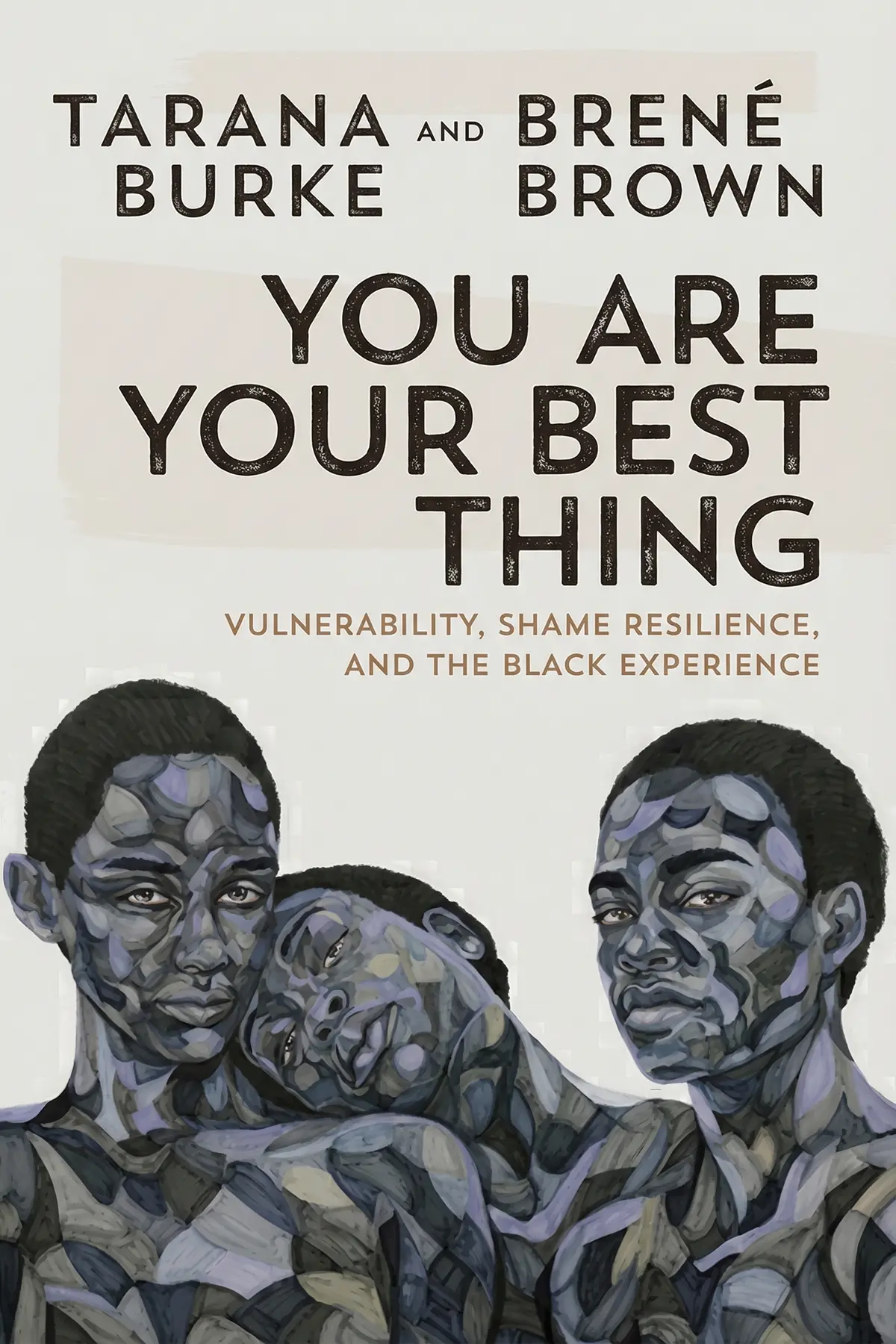
Table of Content
1. Introduction
2 min 10 sec
For many years, the global conversation around vulnerability and shame has been dominated by a specific perspective. It’s a perspective that often assumes the person being vulnerable is operating from a place of relative safety and social acceptance. But what happens when the very act of being vulnerable—of letting your guard down—actually puts you in physical or social danger? This is the central question that brought together two powerhouse voices: activist Tarana Burke and researcher Brené Brown.
Burke, who founded the Me Too movement, realized that while Brown’s research on shame was deeply resonant, it often lacked the context of the Black experience. It didn’t fully account for how systemic racism and white supremacy change the stakes of emotional openness. Together, they curated a collection of essays that serves as both a mirror and a manifesto. This isn’t just a book about surviving; it’s about thriving, dreaming, and loving yourself in a world that often tries to do the opposite.
In the journey we’re about to take, we will explore the raw, honest stories of Black activists, creators, and parents. We’ll look at how the trauma of the past lives in the bodies of the present, and why the path to social justice must include a path to personal healing. We’ll see how the concept of ‘joy’ is transformed from a fleeting emotion into a revolutionary tool for resilience.
Throughline: The path to true liberation and social justice requires Black people to reclaim their humanity and worth from a system of white supremacy, transforming vulnerability from a liability into a source of profound strength and community connection. This summary will guide you through the nuanced ways shame is internalized and, more importantly, how it can be dismantled through the radical practice of self-love and collective support. As we move through these ideas, we will witness the shift from being a ‘victim of a system’ to being the ‘hero of one’s own healing.’ Prepare to engage with heavy topics, including systemic violence and personal trauma, but also prepare to find the light of connection and the unwavering truth that you are, indeed, your best thing.
2. The Intersection of Identity and Vulnerability
2 min 17 sec
Traditional research on shame often overlooks how race changes the rules of emotional openness, making vulnerability a complex risk for those navigating systemic racism.
3. Parenting Amidst Systemic Fear
2 min 22 sec
For Black parents, the joy of raising children is constantly shadowed by the rational fear of a world that views their children through a lens of suspicion.
4. Dismantling Internalized Oppression
2 min 07 sec
Self-worth is reclaimed by recognizing that shame is often a byproduct of internalized racist stereotypes rather than a personal failing.
5. The Failure of the Medical Establishment
2 min 04 sec
A history of racism in healthcare has created a deep-seated distrust, where many Black Americans feel safer suffering alone than seeking professional help.
6. Healing Through Somatic Awareness and Identity
2 min 14 sec
Trauma isn’t just in the mind; it lives in the body. Reclaiming one’s identity requires physical and emotional ‘un-armoring’ to allow for true connection.
7. Reimagining Faith and the Church
2 min 04 sec
The church can be a source of sanctuary or a source of shame; reclaiming faith means separating spiritual truth from oppressive cultural policing.
8. Vulnerability as a Structural Condition
2 min 03 sec
Trauma is not always a past event; for many, it is a persistent environmental reality that requires safe spaces to foster emotional openness.
9. The Trap of Productivity and Worth
1 min 55 sec
Internalizing the idea that your value is tied to your labor can lead to burnout and physical collapse; true healing begins with the realization that you are enough.
10. Historic Trauma and the Cycle of Violence
2 min 03 sec
The violence faced by Black trans women is often a tragic projection of the historical emasculation and trauma experienced by Black men under white supremacy.
11. Cultivating Shame Resilience
2 min 06 sec
Resilience is built through a combination of intellectual grounding, creative dreaming, and supportive community circles.
12. Conclusion
2 min 16 sec
As we come to the end of this journey through the landscapes of vulnerability, shame, and resilience, one truth stands out above all others: healing is not a destination, but a continuous, radical practice. We have seen how the legacy of white supremacy weaves itself into the most intimate parts of life—from the way a parent looks at their child to the way a person experiences their own body. We have acknowledged that for the Black community, the stakes of being vulnerable are uniquely high, but we have also seen that the rewards are equally profound.
The stories and insights we’ve explored demonstrate that dismantling systemic racism starts with dismantling the internalized lies that racism tells us. It involves rejecting the idea that worth is earned through labor, reclaiming faith from the grip of respectability, and demanding a healthcare system that actually sees and cares for Black humanity. It requires the courage to un-armor the body and the heart, even when the world feels unsafe, by finding and building ‘containers’ of true community and support.
The ‘throughline’ of this entire experience is the reclamation of the self. To believe ‘you are your best thing’ is to commit to your own joy as a form of activism. It is to recognize that your vulnerability is a bridge to connection, and your resilience is a testament to your power. As you move forward, remember that shame thrives in secrecy and silence, but it withers in the light of shared stories and empathetic witness.
Your actionable takeaway is this: Look for your ‘circle.’ Find the people and the spaces where you can put down your armor, even if just for an hour. Seek out the art and the ideas that remind you of your intrinsic value. And most importantly, offer yourself the same grace and protection you offer to those you love. In a world that often asks you to be anything other than yourself, the most revolutionary act you can perform is to simply, wholeheartedly, be. You are not a problem to be solved; you are a human being to be celebrated. And you are, without a question, your own best thing.
About this book
What is this book about?
This summary provides a deep dive into a powerful collection of essays edited by Tarana Burke and Brené Brown. It addresses a critical gap in the study of vulnerability: the specific lived experience of Black people in a world defined by white supremacy. While traditional research on shame often assumes a baseline of physical and social safety, this work explores what happens when vulnerability is not just a psychological choice, but a structural reality. Through personal narratives from activists, artists, and intellectuals, the book promises a journey toward healing. It moves through the complexities of parenting, the failures of the medical system, the weight of intergenerational trauma, and the liberating power of community. Ultimately, it serves as a guide for finding self-worth and reclaiming joy as a form of resistance, proving that even in the face of systemic oppression, the most radical act one can perform is to believe they are their own best thing.
Book Information
About the Author
Tarana Burke
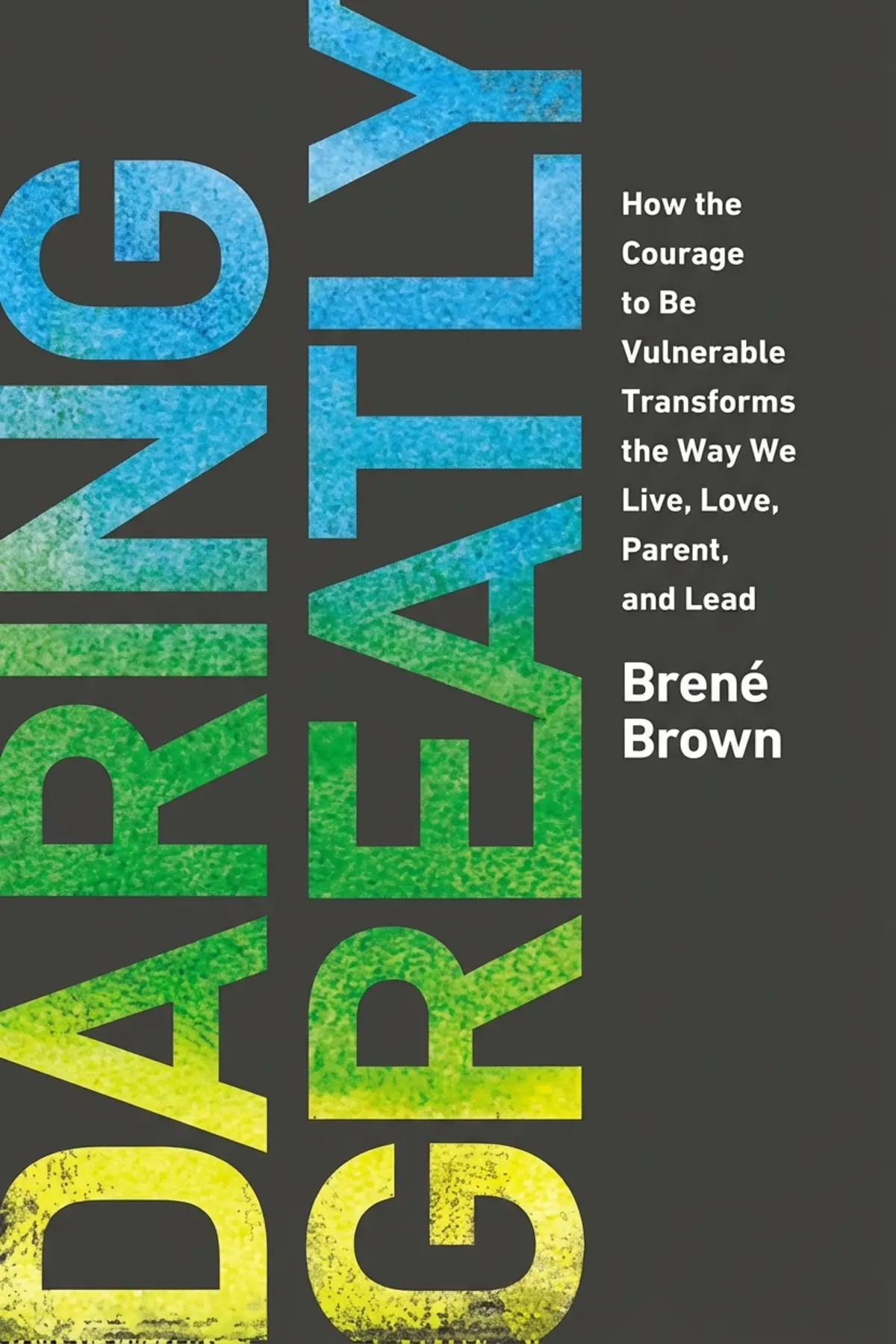
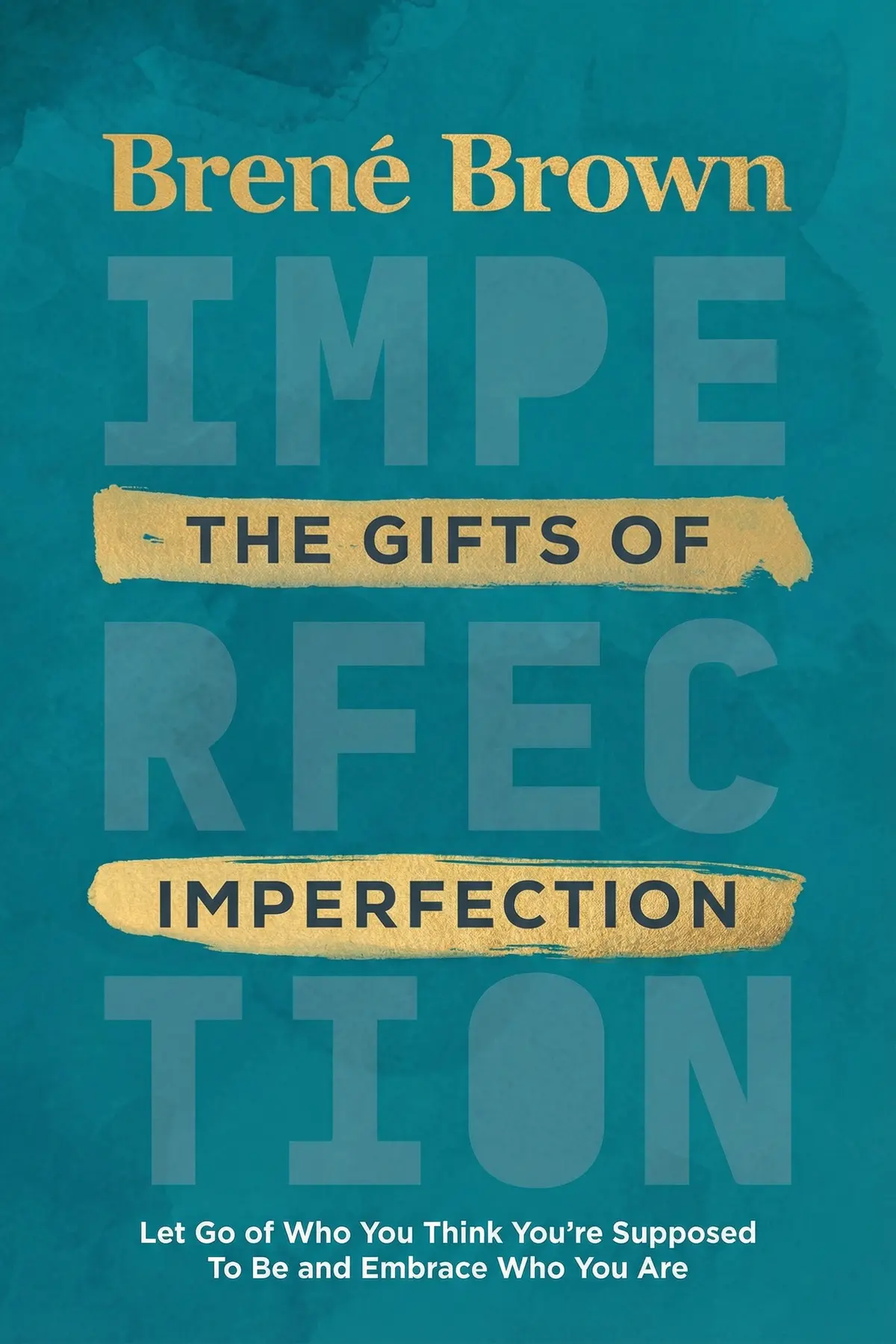
Tarana Burke is a dedicated activist and the visionary founder of the Me Too movement. For over twenty-five years, she has worked at the intersection of sexual violence and systemic inequality. Her transformative impact earned her the title of Time magazine’s Person of the Year in 2017. Brené Brown is a renowned research professor at the University of Houston. She is the author of five #1 New York Times bestsellers, including The Gifts of Imperfection and Daring Greatly, and is a leading expert on vulnerability and shame.
Ratings & Reviews
Ratings at a glance
What people think
Listeners find this work essential, highlighting its profoundly intimate narratives and the powerful empathy it generates. While it encourages listeners to embrace vulnerability, one listener notes the inclusion of robust frameworks for resilience. They value the prose's beauty and flow, while one listener characterizes the project as a gorgeous co-creation.
Top reviews
Maja
This anthology is a sacred space for Black healing that feels both expansive and deeply intimate. I found myself lingering on Kiese Laymon’s words, feeling the weight of every sentence as he navigated the intersections of vulnerability and survival. The truth is, many books try to tackle shame, but few do it with such raw, unvarnished honesty that recognizes the specific pressures of white supremacy. Some essays felt a bit shorter than I wanted, almost like they were cut off just as they found their rhythm, but the overall impact is undeniable. It is a powerful rebuttal to the idea that the Black experience is a monolith. Instead, we see a kaleidoscope of identities—queer, disabled, activist, and artistic—all wrestling with what it means to be seen. You will cry, you will reflect, and you will ultimately feel less alone in your own skin.
Show moreManee
Picked this up during a heavy month and it was exactly the balm I needed for my weary spirit. Sonya Renee Taylor’s essay, 'Running out of Gas,' absolutely floored me with its visceral descriptions of exhaustion and the radical act of simply being. It’s rare to find a book that feels like a co-creation between the authors and the readers, but Tarana Burke and Brené Brown have facilitated something truly special here. The audiobook is particularly stunning because hearing the contributors’ own voices adds a layer of empathy that text alone can't always capture. While Luvvie Ajayi’s piece felt a bit more like a promotional detour than a deep dive into shame, the rest of the collection more than makes up for it. This isn't just a book; it's an invitation to honor your own humanity in a world that often tries to strip it away.
Show moreDing
Wow, the emotional weight of these narratives is staggering and beautifully executed. This book challenges the reader to look beyond surface-level resilience and understand the grit required to maintain vulnerability under the weight of generational trauma. I was particularly struck by the segment from Irene Antonia and Diane Reece; their reflections on how anti-blackness permeates even the most private family structures were illuminating. The framework for shame resilience presented here isn't just a copy-paste of standard psychology; it is reimagined for a community that has historically been denied the safety to be vulnerable. It’s a must-read for anyone looking to understand the complexities of the Black experience. I appreciated that it didn't shy away from the pain while still managing to feel life-affirming and hopeful. This is a gift to literature and a roadmap for soul-work.
Show moreNatnicha
After hearing Tarana Burke talk about the 'Me Too' movement for years, seeing her pivot to this focus on internal healing is incredible. This collection is a masterclass in empathy-generation, forcing the reader to bear witness to stories that are often silenced or ignored. Look, it’s not always an easy read; some of these accounts of shame are raw and heartbreaking. But there is such immense beauty in the way these authors wrap words around their survival. Jessica J. Williams and Imani Perry provided insights that I will be thinking about for a very long time. The book succeeds because it doesn't try to provide a one-size-fits-all solution to trauma. Instead, it offers a collection of mirrors, allowing readers to see their own struggles reflected in a variety of Black identities. It is a powerful, transformative work of art.
Show moreNattapong
Rarely does a book leave me feeling both completely emptied and totally refilled at the same time. This anthology acts as a powerful rebuttal to the idea that strength means never showing your wounds. In my experience, the most impactful books are the ones that force you to re-examine your own biases, and this did exactly that. The writing styles vary wildly—some are poetic and airy, while others are grounded and academic—but they are bound together by a common thread of radical self-love. I loved how the contributors examined how racism adds layers of complexity to the shame we already feel as humans. It’s a brilliant, necessary co-creation. Even the essays that didn't immediately click for me had at least one sentence that stopped me in my tracks. Everyone needs to read this, regardless of their background.
Show moreTawee
Finalizing this read left me with a profound sense of gratitude for these authors' courage. Not gonna lie, I cried through several of the essays because the honesty was just that sharp. The book is an essential tool for anyone trying to navigate the wreckage of shame and find their way back to self-worth. It’s a beautifully structured piece of work that honors the specificity of Black trauma while speaking to universal human needs for belonging and love. Some people might find the shifting tones between narrative and theory jarring, but I thought it reflected the complexity of the subject matter perfectly. Tarana Burke is doing life-changing work here. This is the kind of book you buy in multiple copies to give to your friends. It’s an absolute five-star experience that stays with you long after the final page.
Show moreTum
Ever wonder how shame resilience shifts when you aren't looking at it through a purely white lens? This collection answers that with a resounding, multifaceted voice that is long overdue. I particularly appreciated the contributions from Marc Lamont Hill and Prentis Hemphill, which grounded the abstract concept of 'vulnerability' in real-world systemic struggles. To be fair, the book occasionally suffers from a lack of cohesion, feeling more like a series of disparate blog posts than a singular, flowing narrative. A few entries relied a little too heavily on therapy jargon for my taste, making the tone feel slightly clinical compared to the more visceral storytelling found elsewhere. However, the strength of the standout pieces makes the 'meh' moments easy to forgive. It’s a necessary addition to the canon of self-examination and social justice.
Show moreNongnuch
The chapter on 'Dirty Business' by Tanya Denise Fields is worth the price of admission alone. Frankly, I wasn't sure how Burke and Brown’s styles would mesh, but the introduction sets a clear, urgent stage for the voices that follow. My only real critique is that some of the essays felt over-edited, as if the transitional sentences were trimmed to fit a specific page count. This led to a few abrupt endings that left me hanging. Nevertheless, the diversity of contributors—from Laverne Cox to Yolo Akili Robinson—ensures that every reader will find a story that resonates with their specific struggle. It’s a beautiful, messy, and necessary exploration of what it means to belong to yourself. While not every essay is a home run, the ones that land really shake you up in the best way possible. I highly recommend taking your time with it.
Show moreSomsri
Gotta say, the framework for resilience provided here is unlike anything found in traditional self-help books. It’s deeply personal and rooted in the reality of living in a body that society often marginalizes. I appreciated the inclusion of writers like Kaia Naadira, whose voice felt so fresh and honest. To be fair, the book can feel a bit repetitive at times as different authors touch on similar themes of 'not being enough.' I also wish the connection between Tarana and Brené was explored a bit more in the text itself beyond the intro. However, these are minor gripes in what is otherwise a stellar collection. It’s a readable, accessible, and deeply moving look at how we can all work toward being our 'best thing.' It definitely made me rethink how I approach my own vulnerability.
Show moreLucia
As someone who follows Brené Brown’s work closely, I was curious how this collaboration would land, but I found myself feeling a bit disconnected. Personally, I think this would have worked better as a deep-dive podcast series rather than a printed anthology. The essays are quite short, usually around ten pages, which doesn't allow for the level of nuance these heavy topics deserve. Truthfully, it felt like I was constantly being rushed from one person’s trauma to the next without enough time to process the transition. Some contributors, like Jason Reynolds, are master storytellers who can do a lot in a small space, but others felt like they were just scratching the surface of their experiences. It's a noble effort and a beautiful concept, but the execution felt fragmented and uneven. I wanted to love it, but I just liked parts of it.
Show moreReaders also enjoyed
ADHD an A-Z: Figuring It Out Step by Step
Leanne Maskell


Afropean: Notes From Black Europe
Johny Pitts
All About Love: New Visions
bell hooks
AUDIO SUMMARY AVAILABLE
Listen to You Are Your Best Thing in 15 minutes
Get the key ideas from You Are Your Best Thing by Tarana Burke, plus 5,000+ more titles in English and Thai.
- 5,000+ titles
- Listen as much as you want
- 7-day free trial
- Cancel anytime







