
Ludwig Wittgenstein
Austro-British philosopher
Ludwig Wittgenstein was an Austro-British philosopher who worked on logic, mind and language. He wrote the Tractatus Logico-Philosophicus and, later, Philosophical Investigations.
2 summaries 33 min of listening
Born 1889 in Neuwaldegg, Austria Died 1951
Influenced by William James
About Ludwig Wittgenstein
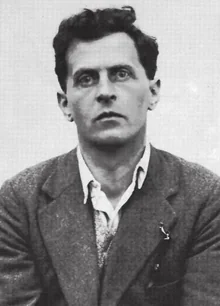
Ludwig Wittgenstein was born in Vienna on 26 April 1889 into one of Europe's richest families. From 1911 to 1913 he was a student at Cambridge, where Bertrand Russell was his teacher. His subjects were logic and the philosophy of mathematics, of mind and of language. His first major work, Tractatus Logico-Philosophicus, appeared in 1921, with an English translation in 1922. After serving in the Austro-Hungarian Army in World War I, he worked as a schoolteacher near Vienna. He later returned to Cambridge and taught there from 1930 to 1947. He did not publish another philosophical work in his lifetime. After he died on 29 April 1951, his manuscripts were edited and published, beginning with Philosophical Investigations in 1953. His thinking is often split into an early period and a later one, and these two books are the usual examples of each.