Opens in a new tab

Best Productivity Books

Fourteen books on focus, time management and energy, grouped by the problem you want to solve.

Feeling busy is not the same as getting things done. This list of the best productivity books is for knowledge workers and students who want to change how they work, not just work longer, and it treats productivity as three skills together: focus, time management and energy.

Start from your problem rather than from the most famous title. Books 1 and 2 give you a system to capture and plan your work, and books 3 to 5 help you choose what matters when everything feels urgent. Books 6 to 8 protect your focus from interruptions, and books 9 and 10 deal with procrastination. Books 11 and 12 make new routines stick through habits and energy, while 13 and 14 offer a calmer “do less” approach for anyone close to burnout.

How we chose: every book comes from the BookBits catalog, and we read the lists that currently rank for this search before picking. Most of them repeat the same famous titles in a flat ranking, so we kept the classics that earn their place, added newer books on attention and burnout, and sorted all fourteen by the problem they solve. Within each group, each book builds on the one before it, and each gets one reason, in our own words.

If time management is your main struggle, read books 1, 2, 5 and 9 first. Either way, pick one book, put one idea into practice for a week, then move on. Every title links to its audio summary on BookBits, with a free preview.
14 books, 5h 33m
Explore the first book →
Best Productivity Books cover

The books

14 books
  1. 1

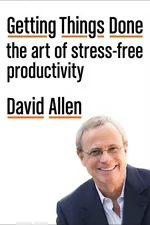
    David Allen's starting point is that your mind is good at thinking and bad at remembering. His system moves every open commitment into lists you trust, then asks one question of each item: what is the very next physical action? It suits anyone who feels overwhelmed by loose ends, from managers to students juggling courses. It comes first because every other book on this list works better once your tasks live somewhere outside your head, and it is the natural base for the planning rhythm in The 12 Week Year.

  2. 2

    The 12 Week Year

    Brian P. Moran

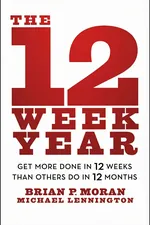
    Brian P. Moran argues that a yearly plan hides urgency: in January the deadline feels far away, so the real work slips to the last quarter. His answer is to treat twelve weeks as a full year, with a short list of goals, weekly plans, blocked time and an honest score of what you actually did. It suits people who set goals and lose them by March. It follows Getting Things Done because it adds the planning cycle and the accountability that a task list alone does not give you.

  3. 3

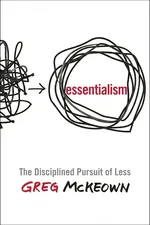
    Essentialism

    Greg McKeown

    Greg McKeown's case is simple: doing less, but better. Most people spread their effort across too many commitments and make only small progress on each, so the core skill is deciding what truly deserves your time and declining the rest without guilt. It suits anyone who says yes too often, at work or at home. It opens the "choose what matters" group because once you can capture and plan your work, the next question is whether half of it belongs on the list at all.

  4. 4

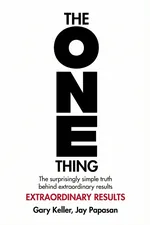
    The ONE Thing

    Gary Keller

    Gary Keller narrows Essentialism down to a single daily question: what is the one task that would make everything else easier or unnecessary? The book argues that results come from going deep on that one thing, protected by blocked time, rather than from spreading attention across a long to-do list. It suits people who finish busy days without moving their biggest goal forward. It sits after Essentialism because it turns that broad philosophy into one concrete habit you can practice each morning.

  5. 5

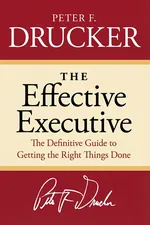
    Peter Drucker's classic was written for managers, but its lessons apply to any knowledge worker. Start by recording where your time actually goes, because it rarely matches where you think it goes. Then concentrate on the few contributions that matter most and make fewer, better decisions. It suits people whose days disappear into meetings and requests from others. It closes the priorities group because it adds what the first four leave out: measuring your real time before you try to manage it.

  6. 6

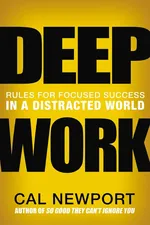
    Deep Work

    Cal Newport

    Cal Newport separates deep work, long stretches of hard thinking without interruption, from the shallow tasks of email, chat and admin that fill most working days. He argues that the ability to concentrate is becoming rare and therefore valuable, and he gives rules for building deep sessions into an ordinary week. It suits writers, programmers, analysts and students. It opens the focus group because it explains why focus matters before Indistractable and Stolen Focus explain why it is so easy to lose.

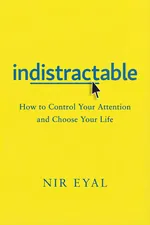
  7. 7

    Nir Eyal argues that most distraction starts inside you, as an escape from boredom, stress or discomfort, and only then reaches for the phone. His method is to understand those internal triggers, plan your day around your values, remove outside interruptions and make small commitments in advance that keep you on track. It suits people who have tried app blockers and still drift. It follows Deep Work because it supplies the practical, personal side of protecting the time Newport tells you to set aside.

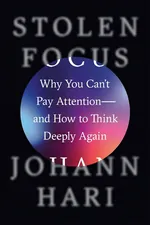
  8. 8

    Stolen Focus

    Johann Hari

    Johann Hari steps back from personal habits to ask why focus feels harder for almost everyone. He traces the problem to forces beyond individual willpower, including technology designed to hold attention, demanding work cultures and the sheer speed of information, and he discusses how attention could be reclaimed. It suits readers who want to understand the bigger picture behind their own distraction. It closes the focus group because, after two books on what you can do yourself, it shows what you are up against.

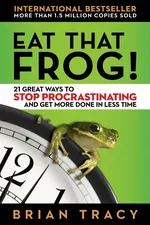
  9. 9

    Eat That Frog!

    Brian Tracy

    Brian Tracy's core rule is to identify your hardest important task, the frog, and do it first, before smaller jobs take over the day. Around that rule he offers a set of short techniques on planning ahead, setting priorities and breaking big work into steps. It suits anyone who knows what matters but keeps putting it off. It opens the procrastination group because it is the fastest book on the list to put into practice, often the very next morning, before The Now Habit goes deeper into why we delay.

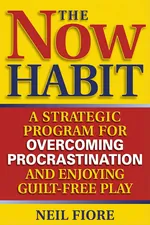
  10. 10

    The Now Habit

    Neil Fiore

    Neil Fiore treats procrastination as a defense, a way to avoid fear of failure, judgment or even success, rather than as laziness. He replaces guilt with tools such as the unschedule, where you plan your free time and play first and fit focused work around it, along with kinder self-talk. It suits perfectionists and anyone who delays the work that matters most to them. It follows Eat That Frog! because if the direct approach does not stick, the cause is usually emotional, and this book addresses it.

  11. 11

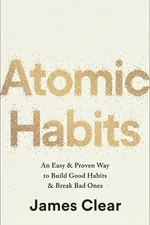
    Atomic Habits

    James Clear

    James Clear argues that small improvements, repeated daily, compound into large results over time. He shows how to make good habits easier to start and bad ones harder, by changing your environment and by building habits around the person you want to become rather than a goal. It suits anyone who starts systems with energy and abandons them a week later. It comes late in the list on purpose: use it to make the routines from books 1 to 10 actually stick.

  12. 12

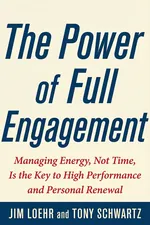
    Jim Loehr argues that energy, not time, is the resource you really need to manage, because an hour at low energy produces little. He describes energy on four levels, physical, emotional, mental and spiritual, and shows how to alternate hard effort with real recovery, the way athletes train. It suits people who plan their days well but run out of fuel. It sits beside Atomic Habits because recovery itself is a habit, and it prepares the ground for the burnout books that close the list.

  13. 13

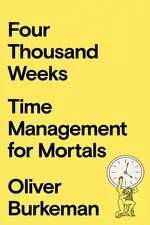
    Four Thousand Weeks

    Oliver Burkeman

    Oliver Burkeman starts from the length of an average human life, roughly four thousand weeks, and draws a humane conclusion: you will never get everything done, so stop trying and choose on purpose where your limited time goes. It suits anyone who has tried every system and still feels behind. It sits near the end because it takes the pressure out of the rest of the list, reminding you that productivity is a way to spend your time well, not a race to empty the inbox.

  14. 14

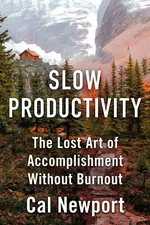
    Cal Newport returns with an answer to burnout for knowledge workers: do fewer things, work at a natural pace with busy and quiet seasons, and care deeply about the quality of what you produce. He argues that visible busyness has become a poor stand-in for real accomplishment. It suits people who feel overloaded even when they are organized. It closes the list because it pairs well with Deep Work and Four Thousand Weeks, turning their ideas into a sustainable way to work for years.

Questions

What is the best productivity book to start with?

Start with Getting Things Done if your problem is too many loose ends, because it gives you one trusted place for every commitment. If you already have a system but feel stretched across too much, start with Essentialism instead. If your days are organized but you cannot concentrate, go straight to Deep Work. Each one works on its own, so choose by the problem you have this week, not by the order of the list.

What are the best time management books?

On this list, the strongest time management books are Getting Things Done, The 12 Week Year, The Effective Executive and Eat That Frog!. Together they cover capturing tasks, planning in short cycles, measuring where your hours really go and doing the most important task first. Four Thousand Weeks is the useful counterweight: it argues that managing time well starts with accepting that you will never have enough of it.

Which books help most with focus?

Read the three focus books in order. Deep Work explains why long, uninterrupted concentration matters and how to schedule it. Indistractable shows how to handle the inner urges that pull you away from hard work. Stolen Focus explains the outside forces, from technology to work culture, that make attention harder for everyone. If you only have time for one, Deep Work gives you the most practical starting point.

How do I stop procrastinating?

Try Eat That Frog! first: pick your hardest important task and do it before anything else tomorrow morning. If that rule does not stick, read The Now Habit, which treats procrastination as a way of avoiding fear and offers gentler tools, such as planning your free time first. Atomic Habits then helps you turn a good start into a daily routine you keep.

Home

Search

Discover

Log in