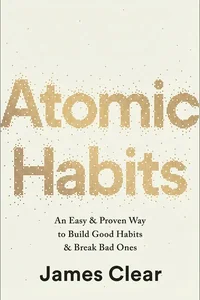
Atomic Habits vs The Power of Habit is less a contest than a choice of order. Charles Duhigg’s The Power of Habit, published in 2012, explains why habits exist and how they shape people, companies and movements. James Clear’s Atomic Habits, published in 2018, turns habit science into a set of rules you can apply tomorrow morning. If you want to act now, start with Atomic Habits. If you want to understand the machinery first, start with The Power of Habit.
Below: the facts side by side, the two models compared, where BJ Fogg’s Tiny Habits fits, and a verdict for different kinds of readers. Publication details were checked on October 6, 2026, on the publishers’ and authors’ own pages.
At a glance
Both audiobooks are read by their authors, according to the publisher pages. The paperback of The Power of Habit adds a new afterword by Duhigg.
Two models of the same loop
The books share a skeleton. Duhigg describes a habit as a loop with three parts: a cue that sends the brain into automatic mode, a routine (the behavior itself), and a reward. He adds that the loop only becomes a lasting habit once the cue starts to trigger a craving for the reward (Duhigg’s study guide for the book).
Clear builds on the same idea and makes the craving its own step. His loop has four parts, cue, craving, response and reward, and each part gets a law: make the cue obvious, the craving attractive, the response easy and the reward satisfying. To break a bad habit, you invert the laws: make it invisible, unattractive, difficult and unsatisfying (Clear’s summary of the book).
The difference is in what each author does with the loop. Duhigg uses it mainly to explain: why a product catches on, why an organization changes, why some people remake their lives while others struggle for years. Clear uses it mainly to instruct: for every step there is a lever you can pull today.
What The Power of Habit does best
Duhigg is a reporter, and the book reads like long-form journalism. Its stories run from the marketers at Procter & Gamble who worked out how to sell Febreze, to Paul O’Neill turning around Alcoa by focusing on worker safety, to Starbucks and the civil rights movement (Duhigg’s book page).
Two ideas from it are worth knowing even if you never read it:
- The golden rule of habit change. You rarely delete a habit. You keep the cue and the reward the same and insert a new routine between them. If stress is the cue and relief is the reward, find a different route to relief.
- Keystone habits. Some habits matter more than others because they set off changes in other habits. In Duhigg’s account of Alcoa, a single priority, safety, forced new routines across the company and spread from there (study guide).
That reach beyond the individual is the book’s real advantage. If you manage people, run a team or build a product, The Power of Habit gives you a way to think about habits in groups, which Atomic Habits mostly leaves aside. Our summary sits in the goals to build high-performing teams and improve company culture.
What Atomic Habits does best
Atomic Habits is a practical manual. The publisher’s description puts its central idea plainly: “You do not rise to the level of your goals. You fall to the level of your systems.” (Penguin Random House). Three tools carry most of its weight:
- Getting 1 percent better. Clear’s arithmetic: improve by 1 percent a day for a year and you end up about thirty-seven times better; get 1 percent worse each day and you decline to nearly zero (summary). The point is that small habits compound.
- Identity-based habits. Instead of chasing an outcome, decide who you want to be. Every action counts as a vote for that identity.
- The two-minute rule. A new habit should take less than two minutes to do: read one page, put on your running shoes (Clear’s article on the rule). Once the start is easy, the rest follows more often.
Where Duhigg explains, Clear gives you a checklist you can start on the day you finish the book. Its focus is the single person: your environment, your routines, your sense of self.
Where Tiny Habits fits
Searches for this comparison often include a third book, Tiny Habits by BJ Fogg, who runs the Behavior Design Lab at Stanford (Tiny Habits site). We carry it too: Tiny Habits.
Fogg’s model is B=MAP: a behavior happens when motivation, ability and a prompt come together. His method is to start with a habit so small it needs almost no motivation, and to celebrate each small success, so that the good feeling wires the habit in (HarperCollins). Its publisher markets the book as picking up where Atomic Habits left off. In practice, Atomic Habits vs Tiny Habits comes down to this: Clear gives you a broad system with many levers, while Fogg goes deeper on one lever, making the new behavior tiny and rewarding. The current US paperback (Harvest, January 2021) runs 320 pages.
Read Tiny Habits after Atomic Habits if the two-minute rule was the part that worked for you, or if you tend to blame yourself when a habit fails. Our path The Habit Starter Kit puts both books in order.
Which to read first
Pick the line that describes you:
- You want to change something this week. Atomic Habits first. Then The Power of Habit when you want to know why the tactics work.
- You want the reasons before the rules. The Power of Habit first. Its stories make the loop easy to remember, and Atomic Habits then turns it into steps.
- You manage a team or build products. The Power of Habit first, for keystone habits and organizational routines, then Atomic Habits for your own habits.
- You keep starting habits and dropping them. Atomic Habits, then Tiny Habits.
- You read slowly or have little time. Atomic Habits, the shorter of the two at 320 pages in hardcover and five and a half hours as an audiobook.
Our overall pick for a first book is Atomic Habits, because if you are choosing between these two, you most likely have a habit you want to change, and it gets you moving fastest. The Power of Habit is the better second book, and for managers it may be the better first one.
If you have already read both, our list of books like Atomic Habits sorts the next options by what you liked, and the goal to master your habits collects more of the habit books we carry. Duhigg’s later books, Smarter Faster Better and Supercommunicators, are in the catalog too.
Quick answers
Should I read Atomic Habits or The Power of Habit first?
Atomic Habits, if you want to change a habit now. The Power of Habit, if you want to understand habits first or you are thinking about a team or an organization. They cover the same loop from two angles, so reading both is rarely wasted time.
Which book is better than Atomic Habits?
It depends on what you want next. For habits in teams and companies, The Power of Habit goes further; for the start-small method on its own, Tiny Habits goes deeper; for more of the science of habit change, try Good Habits, Bad Habits. Our list of books like Atomic Habits sorts thirteen options by what you liked.
What is the 1% rule in Atomic Habits?
Clear’s idea that small improvements compound: getting 1 percent better every day for a year leaves you about thirty-seven times better, while getting 1 percent worse each day takes you close to zero.
What is the two-minute rule in Atomic Habits?
When you start a new habit, it should take less than two minutes to do. Scale any habit down to its first step, such as reading one page, and build from there.
What is the famous quote from Atomic Habits?
“You do not rise to the level of your goals. You fall to the level of your systems.” It sums up the book’s argument that systems, not goals, decide results.
Is The Power of Habit still worth reading after Atomic Habits?
Yes, if you are curious about why habits work or you lead other people. It adds the golden rule of habit change and keystone habits, and its case studies show habits at the scale of companies and movements.
Hear both before you choose
Both books have short audio previews on their BookBits pages that you can play free, without an account. Members hear the full summary in the app. BookBits Unlimited is THB 99 a month or THB 990 a year for two accounts, after a 7-day free trial; full listening requires the iOS or Android app. Plans and trial details are on our Pricing page.