Opens in a new tab

Best Nonfiction Books to Read in 2026

Fifteen standout nonfiction books first published in 2024 or 2025, grouped by the big questions on readers' minds.

This is our list of the best nonfiction books, 2026 edition, for readers catching up on recent titles worth their time. Instead of this month’s new releases, it gathers fifteen standout books first published in 2024 or 2025.

How we chose: every book had to be first published in 2024 or 2025, and we checked each date against a publisher or retailer page, because later editions and reissues often carry newer dates. One book, Moral Ambition, counts by its 2025 English edition. From there we picked books that speak to questions many readers are asking this year rather than narrow specialist titles, kept a mix of practical guides, investigations and big-idea books, and included a business history from Asia. Every pick has a BookBits audio summary.

The picks are grouped by the question they answer: how AI is changing work and the world, how our minds and emotions work, how to talk and trust better, what a good life and real wealth look like, and what business history can teach. Each note gives the year the book was first published or, in one case, the year of its English edition.

Begin wherever your curiosity is strongest right now. Each book links to a 15-minute audio summary on BookBits, and its free preview plays without an account. We will refresh the list as new titles arrive.
15 books, 4h 29m
Explore the first book →
Best Nonfiction Books to Read in 2026 cover

The books

15 books
  1. 1

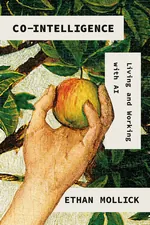
    Co-Intelligence

    Ethan Mollick

    First published in 2024, Ethan Mollick's practical guide treats AI as a coworker, tutor and creative partner rather than a threat or a magic box. He argues that the way to learn what these tools can do is to use them on real work, keep a human in the loop and stay alert to where they go wrong. It suits anyone using AI at work or in class who wants a working method rather than predictions. It opens the list because it is the most hands-on of the four AI books.

  2. 2

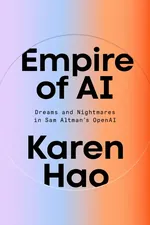
    Empire of AI

    Karen Hao

    In this 2025 investigation, journalist Karen Hao follows OpenAI from its nonprofit beginnings to its rise as one of the most powerful companies in tech, along with the internal conflicts and ethical trade-offs on the way. She also looks at the costs the race for AI places on workers and communities far from Silicon Valley. It suits readers who want the business and political story behind the tools they use. It follows Co-Intelligence because it shows the company side of the technology that book teaches you to work with.

  3. 3

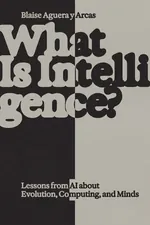
    What Is Intelligence?

    Blaise Aguera y Arcas

    Blaise Aguera y Arcas's 2025 big-idea science book argues that life and AI rest on the same principle: prediction. Living things survive by anticipating what comes next, and so do the language models behind today's AI. If he is right, the line between natural and artificial minds is less sharp than we assume, and that changes how we understand our own. It is the most philosophical of the AI picks and suits readers who enjoy big theories. It sits third, after the practical and the investigative views, to widen the question.

  4. 4

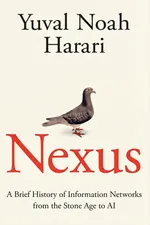
    Nexus

    Yuval Noah Harari

    In this 2024 book, Yuval Noah Harari traces information networks from early stories and clay tablets to AI. His argument is that information is not the same as truth: networks often spread myths and keep order rather than accuracy, and more information does not automatically make a society wiser. He then asks what happens when AI becomes an active member of those networks rather than just a tool. It suits readers of Sapiens who want his view of the present, and it closes the AI section by setting it in the longest historical frame.

  5. 5

    First published in 2024. Jonathan Haidt makes the case that the move from a play-based to a phone-based childhood is behind rising anxiety among young people. He proposes shared fixes that work better when families and schools act together, such as delaying smartphones and social media and giving children more independent play. The argument has critics as well as supporters, which makes it worth reading for yourself. It opens the section on the mind because its question touches almost every family with a phone.

  6. 6

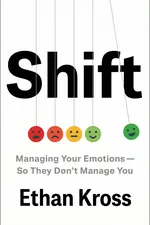
    Shift

    Ethan Kross

    Ethan Kross's 2025 book offers research-based tools for managing emotions, sorted into shifts you make inside your head and shifts you make in the world around you. Inside, that means changing how you talk to yourself, for example by stepping back and seeing your situation from a distance. Outside, it means adjusting the places where you spend time and the people you turn to. It suits readers who want practical tools grounded in psychology. It follows The Anxious Generation by moving from a society-wide problem to what one person can do today.

  7. 7

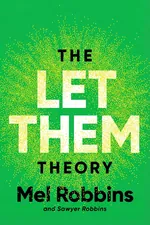
    Mel Robbins's 2024 book is built on one simple idea in two parts. Let them: allow other people to think, say and do what they will, instead of spending your energy trying to control them. Then let me: take responsibility for your own response and your next move. She applies it to friendships, family, work and the habit of comparing yourself with others. It suits anyone worn out by managing other people's opinions. It closes the section on the mind as the easiest of the three to put into practice.

  8. 8

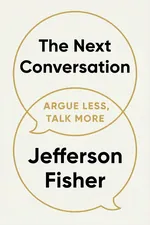
    The Next Conversation

    Jefferson Fisher

    Published in 2025, Jefferson Fisher's guide to arguing less and talking better gives you phrases and habits for hard conversations at work and at home. He focuses on staying composed when a discussion turns heated, listening for what the other person is really feeling, and saying what you mean with confidence, including the value of a well-placed pause. It suits anyone who avoids conflict or regrets what they say in the middle of it. It opens the section on talk and trust as one of the most immediately usable books on the list.

  9. 9

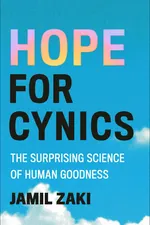
    Hope for Cynics

    Jamil Zaki

    In this 2024 book, psychologist Jamil Zaki shows that cynicism, the belief that most people are selfish and dishonest, often gets people wrong and can leave the cynic worse off. He draws on research on trust and human goodness to argue for hopeful skepticism: keep thinking critically, but test your assumptions about people instead of expecting the worst. It suits anyone who feels let down by others or worn down by the news. It pairs with The Next Conversation: one improves how you talk, the other how you trust.

  10. 10

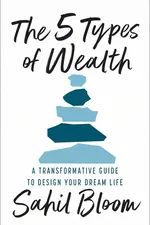
    Sahil Bloom's 2025 book widens wealth beyond money to five kinds: time, social, mental, physical and financial. His point is that people often chase the financial kind at the expense of the others and only notice the cost later. He offers a simple framework for checking where you stand on each and deciding what to work on next. It suits readers in the middle of a career who are asking what success should look like. It opens the section on a good life as the most practical of the three.

  11. 11

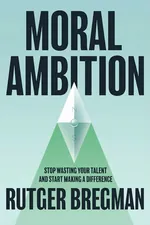
    Moral Ambition

    Rutger Bregman

    Rutger Bregman challenges talented people to aim their careers at the world's biggest problems instead of spending them on comfortable but unimportant work. He argues that ambition and idealism belong together, and that a career can be judged by the good it does as well as by its pay or prestige. The English edition came out in 2025. It suits readers who feel they are wasting their skills. It follows The 5 Types of Wealth by asking the next question: once you have enough, what is it all for?

  12. 12

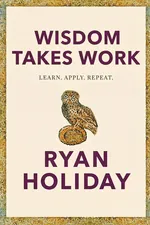
    Wisdom Takes Work

    Ryan Holiday

    In this 2025 book, Ryan Holiday treats wisdom as a practice rather than a gift: you build it by reading widely, learning from experience, staying humble enough to be wrong and applying what you learn again and again. Drawing on Stoic philosophy and stories from history, he shows how that steady effort changes the way you see problems. It suits lifelong learners and readers who already enjoy Stoic ideas. It closes the section on a good life with the longest view: how to keep growing over decades.

  13. 13

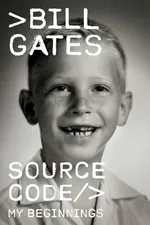
    Source Code

    Bill Gates

    In his 2025 memoir, Bill Gates tells the story of his early life, from a Seattle boyhood and his school years to the start of Microsoft. He describes the curiosity, the family and the early access to computers that shaped him, and the ways of thinking that later drove the company. It suits readers who enjoy founder stories and anyone curious about how the personal computer era began. It opens the business and history section because it is the most personal of the three, told by the person who lived it.

  14. 14

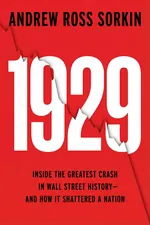
    1929

    Andrew Ross Sorkin

    Andrew Ross Sorkin's 2025 account tells the story of the 1929 crash through the people, the debt and the decisions behind it. He shows how easy credit, the aggressive selling of stocks to ordinary savers, overconfidence and weak policy turned a market fall into the start of the Great Depression. It reads like a narrative rather than an economics lesson. It suits anyone investing today who wants to recognize how a bubble feels from the inside, and it sits between two company stories as the list's look at a whole market.

  15. 15

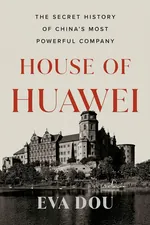
    Published in 2025, Eva Dou's history follows Huawei from its founding to its place among China's most powerful companies, with its founder at the center. She examines the company's military roots, its demanding work culture and the growing clash with the West over security and technology. It suits anyone following business, technology or politics in Asia. It closes the list because it ties several of its threads together: technology, power and the way one company's rise can shape relations between countries.

Questions

What are the top 10 nonfiction books right now?

Bestseller charts answer that week by week, and they mostly track brand-new releases. If you want the recent books still worth reading in 2026, start with ten from this list: Co-Intelligence, Empire of AI, Nexus, The Anxious Generation, Shift, The Next Conversation, Hope for Cynics, The 5 Types of Wealth, Source Code and 1929. Together they cover AI, the mind, communication, a good life and business history.

What are the top 5 nonfiction books to read?

For a short list that still covers a lot of ground, take one book from each group. Co-Intelligence shows how to work with AI. The Anxious Generation asks what phones have done to childhood. Hope for Cynics makes the case for trusting people again. The 5 Types of Wealth rethinks what a rich life means. 1929 shows how a financial bubble forms and bursts. Each one gives you a different lens on 2026.

What is a good nonfiction book about AI?

It depends on what you want to know. For practical use at work or in class, read Co-Intelligence. For the business and political story behind the biggest AI company, read Empire of AI. For the deeper question of what intelligence is and whether machines share it, read What Is Intelligence? For the long history of information and what AI changes about it, read Nexus. Together, the four give a balanced picture.

How can I read more nonfiction when I am busy?

Choose one question you care about this year and read the books on it first, rather than trying to finish everything. Audio summaries help you decide which books deserve a full read: each title on this list has a free preview on the website, and members hear the complete summary in the BookBits app for iOS or Android. Idea-driven books such as The Let Them Theory or Hope for Cynics are easy places to start.

Home

Search

Discover

Log in