Opens in a new tab

Books Like Sapiens

Fourteen books for after Sapiens, from Harari's other titles to big history, world history and human nature.

Sapiens works because it asks huge questions in plain language and tells the human story as one sweep. This list of books like Sapiens is for readers who want that feeling again, whether the part you loved was the scale, the argument about why societies differ, or what it says about human nature.

It comes in four groups. First are the three other books by Yuval Noah Harari in our catalog, all on his author page. Then come two books with the same big sweep, four on why societies turned out so differently and four on what makes us human. The Dawn of Everything closes the list with a challenge to the standard story of our past. Each note opens with the kind of similarity it offers.

How we chose: every pick shares at least one of the things that make Sapiens work, a very long time scale, one clear argument about why the human story turned out as it did, or a fresh look at human nature, and every one is written for general readers rather than specialists. Some picks disagree with each other on purpose, so you can compare answers instead of hearing one view. We started with all of Harari’s other books we carry, then ordered the rest from the widest sweep to narrower questions, and every title has a full audio summary in the BookBits catalog.

If Sapiens felt heavy going, start with the lighter picks: A Short History of Nearly Everything and Humankind. Every title links to its audio summary on BookBits, with a free preview you can play without an account.
14 books, 5h 21m
Explore the first book →
Books Like Sapiens cover

The books

14 books
  1. 1

    Homo Deus

    Yuval Noah Harari

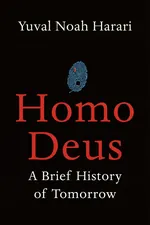
    More Harari, about the future. Picking up where Sapiens leaves off, Harari argues that once humanity has largely brought famine, plague and war under control, it will turn to new goals such as defeating death, engineering happiness and gaining godlike powers. He then asks what happens to human value when algorithms know us better than we know ourselves. It keeps the voice and sweep of Sapiens but swaps the past for the future, which makes it the most natural next book and the reason it comes first.

  2. 2

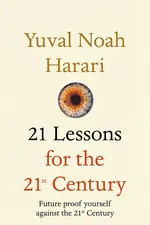
    More Harari, about today. Where Sapiens covers the past and Homo Deus the future, this book stays in the present, with short chapters on technology and work, nationalism, religion, truth and meaning. Each chapter stands on its own, so it is the easiest Harari to dip into a little at a time. It keeps his habit of questioning the stories societies tell themselves, applied to current events instead of deep history. Read it second if you want his thinking on the world you live in now.

  3. 3

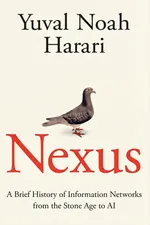
    Nexus

    Yuval Noah Harari

    More Harari, and the most recent of his books here. Nexus is a history of information networks, from early stories and clay tablets to printed books and AI, and of how those networks have served both truth and order. Harari argues that more information does not automatically bring more truth, and warns that AI is a new kind of agent inside those networks, with real risks for democracy. It carries the Sapiens idea of shared stories into the age of data. Read it if those chapters were your favorite part.

  4. 4

    The same big sweep, through science. Bill Bryson sets out to understand how we know what we know, from the origin of the universe to atoms, the age of the Earth and the arrival of life. He tells it through the curious, often eccentric people who worked out the answers, with a humor that keeps it light. It shares the Sapiens gift for making a huge subject feel personal, but stays with science instead of human societies. It is the friendliest entry point if Sapiens felt dense.

  5. 5

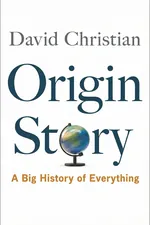
    Origin Story

    David Christian

    Big history. David Christian tells the whole story from the Big Bang to the present as a series of thresholds, moments when something more complex appeared: stars, new chemical elements, planets, life, humans, farming and finally the modern world. Humans arrive late, which places the Sapiens story inside a much larger frame. It suits readers who loved the scale of Sapiens and want to zoom out even further. It sits after Bryson because it is more structured, with one idea tying everything together.

  6. 6

    Why societies differ. Jared Diamond asks why some societies conquered others, and answers with geography and environment, not biology: which crops and animals could be domesticated, how the continents were laid out, and how farming led to dense populations, germs and new technology. Sapiens covers some of the same turning points, especially the move to farming, but Diamond builds his whole book around this one question. It opens the group because the next pick argues directly with its answer. Its BookBits summary is shorter than most here.

  7. 7

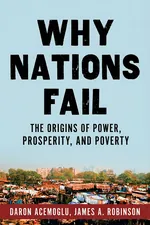
    Why Nations Fail

    Daron Acemoglu

    Why societies differ, a different answer. The authors argue that a country's political and economic institutions decide whether it grows rich or stays poor. Inclusive institutions spread power and opportunity widely and reward effort, while extractive ones let a narrow elite take the gains. They set this against explanations based on geography or culture, which makes it a natural follow-up to Guns, Germs and Steel. It is more about politics and economics than Sapiens, but shares its interest in how human choices shape history.

  8. 8

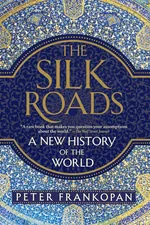
    The Silk Roads

    Peter Frankopan

    World history from the middle. Peter Frankopan moves the center of the story away from Europe to Central Asia and the trade routes that joined China, Persia, the Middle East and Europe, carrying goods, religions, ideas and disease. He shows how control of those crossroads shaped empires from the ancient world to modern geopolitics. Like Sapiens, it rethinks a familiar story; unlike Sapiens, it follows trade and power instead of biology. It suits readers in Asia who want a world history less centered on the West.

  9. 9

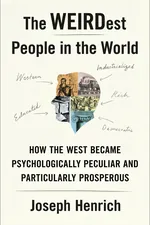
    Why the West thinks differently. Joseph Henrich argues that medieval church rules on marriage and family broke up extended kin groups in Europe, and that this slowly changed how people there thought. The result, he says, is the psychology of Western, educated, industrialized, rich and democratic (WEIRD) societies: more individualistic and more trusting of strangers than most of human history. Like Sapiens, it links culture and psychology across centuries. It closes this group by showing that the societies at the center of most history books are themselves unusual.

  10. 10

    Humankind

    Rutger Bregman

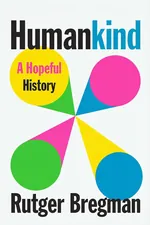
    Human nature, the hopeful version. Rutger Bregman argues that cooperation and kindness, not selfishness, define our species, and that the cynical view of people is often wrong. He revisits well-known stories and experiments that seemed to show the worst of us and finds a different picture. Sapiens also credits cooperation for our success but is often darker about what we do with it; Humankind makes the hopeful case with energy. It is one of the lighter reads here and a good next step if Sapiens felt heavy.

  11. 11

    Behave

    Robert M. Sapolsky

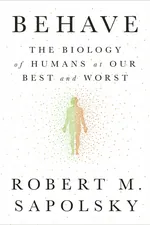
    Human nature, the biology. Robert Sapolsky takes a single action and explains it by zooming out step by step: the brain activity a second before, the hormones of the hours before, then upbringing, culture and evolution over millions of years. His point is that behavior has many causes at once and no single one explains it. It shares the long time scale of Sapiens but works at the level of the body and brain. It is the most demanding pick in this group, best for readers who want the science underneath human nature.

  12. 12

    The Selfish Gene

    Richard Dawkins

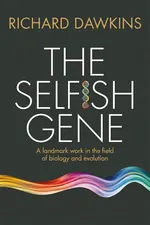
    Evolution from the gene's point of view. Richard Dawkins argues that natural selection is best understood at the level of genes, which build bodies to carry them into the next generation. That view explains both fierce competition and surprising generosity, since helping relatives can serve the same genes. The book also introduced the meme, a unit of culture that spreads from mind to mind much as a gene spreads through a population. Sapiens uses evolution as a backdrop; this is the classic that explains the engine itself.

  13. 13

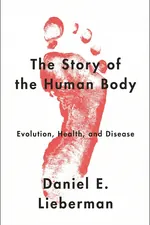
    Evolution meets everyday health. Daniel Lieberman traces how the human body was shaped over millions of years for walking, running, foraging and later farming, and why that body often clashes with modern life. Many common chronic illnesses, he argues, come from the mismatch between the world we evolved for and the comfortable, food-rich world we live in now. It takes the farming and industrial turns that Sapiens describes and asks what they did to our bodies. Read it if you want history that applies to your own health.

  14. 14

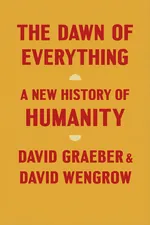
    A challenge to the standard story. The authors argue that early human societies experimented with many ways of living, sometimes moving between equality and hierarchy with the seasons, so inequality was never the inevitable price of farming or cities. That puts it at odds with the familiar arc from foragers to farmers to states, which Sapiens follows in its own way. It is dense and argumentative, which is why it closes the list. Read it after Sapiens and judge the two views of our past side by side.

Questions

What should I read instead of Sapiens?

If you have not started Sapiens and want something similar but lighter, A Short History of Nearly Everything and Humankind are easier ways into big-picture history and human nature. Origin Story covers an even longer stretch of time. If you have already read Sapiens and want a different view instead of more of the same, The Dawn of Everything argues against its familiar arc of human history, and Guns, Germs and Steel answers some of the same questions with geography.

Is Sapiens a hard read?

Sapiens is written for general readers, without jargon, but it covers a huge span of time and asks you to rethink familiar ideas such as money, religion and the nation, so some readers find it dense. If that was you, try the lighter picks on this list: A Short History of Nearly Everything and Humankind. You can also start with the 20-minute BookBits summary of Sapiens and play its free preview before you commit to the full book.

What genre of book is Sapiens?

Sapiens is nonfiction, usually shelved as history or popular science. It draws on history, anthropology, biology and economics to tell one story of our species, from early humans to the present. That mix is why books like Sapiens come from several shelves: big history (Origin Story), science writing (A Short History of Nearly Everything), economic history (Why Nations Fail) and evolutionary biology (The Selfish Gene).

Which Yuval Noah Harari book should I read after Sapiens?

Read Homo Deus next if you want the same long view turned toward the future, 21 Lessons for the 21st Century if you want his take on today’s politics and technology in short chapters, and Nexus if you care most about information, AI and democracy. Together with Sapiens, they are the four Harari books in the BookBits catalog, all on his author page.

Home

Search

Discover

Log in