
Erwin Schrödinger
Austrian theoretical physicist
Erwin Schrödinger was an Austrian physicist who shared the 1933 Nobel Prize in Physics. He is known for the Schrödinger equation and for writing What is Life?.
1 summary 19 min of listening
Born 1887 in Vienna, Austria Died 1961
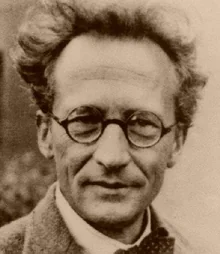
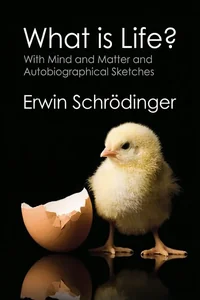
About Erwin Schrödinger
Erwin Schrödinger (1887 to 1961) was born in Vienna and worked as a theoretical physicist. He devised the Schrödinger equation, a way of working out how a system's wave function evolves with time, and he coined the term "quantum entanglement" in 1935. In 1933 he shared the Nobel Prize in Physics with Paul Dirac. His writing covered statistical mechanics, thermodynamics, color theory, electrodynamics, general relativity and cosmology. In What is Life?, he examined genetics by applying a physicist's perspective to living things. He also wrote on philosophy and theoretical biology, and many people know him for the "Schrödinger's cat" thought experiment. He left Austria in 1938 after the Nazi takeover and later settled in Dublin, Ireland, where he stayed until he retired in 1955. He returned to Vienna in 1956 as an emeritus professor and died in 1961.