
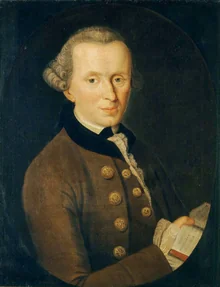
Immanuel Kant
German Enlightenment philosopher
Immanuel Kant was a German philosopher of the Enlightenment, born in Königsberg. His work on knowledge and morality remains widely discussed in Western philosophy.
2 summaries 49 min of listening
Prussian Born 1724 in Königsberg Died 1804
Influenced by Plato, Aristotle, David Hume, René Descartes, Jean-Jacques Rousseau
About Immanuel Kant
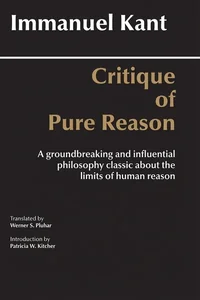
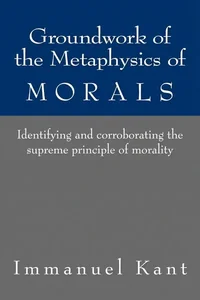
Immanuel Kant (1724 to 1804) was born in Königsberg, in the Kingdom of Prussia. Many regard him as a central figure of the Enlightenment, and he wrote on epistemology, metaphysics, logic, ethics, aesthetics, political theory and the philosophy of religion. In the Critique of Pure Reason, he argued that space and time structure all our experience, and that we know only appearances, not things as they are in themselves. He also proposed that objects of experience conform to the way our minds work. His three Critiques are counted among his main works, and the later two cover practical reason and judgment. Kant held that morality has its source in reason, and that the categorical imperative applies to every rational agent. Later thinkers such as Fichte, Schelling, Hegel and Schopenhauer saw themselves as building on and correcting his system, which led to German Idealism.