
A Promised Land
Barack Obama
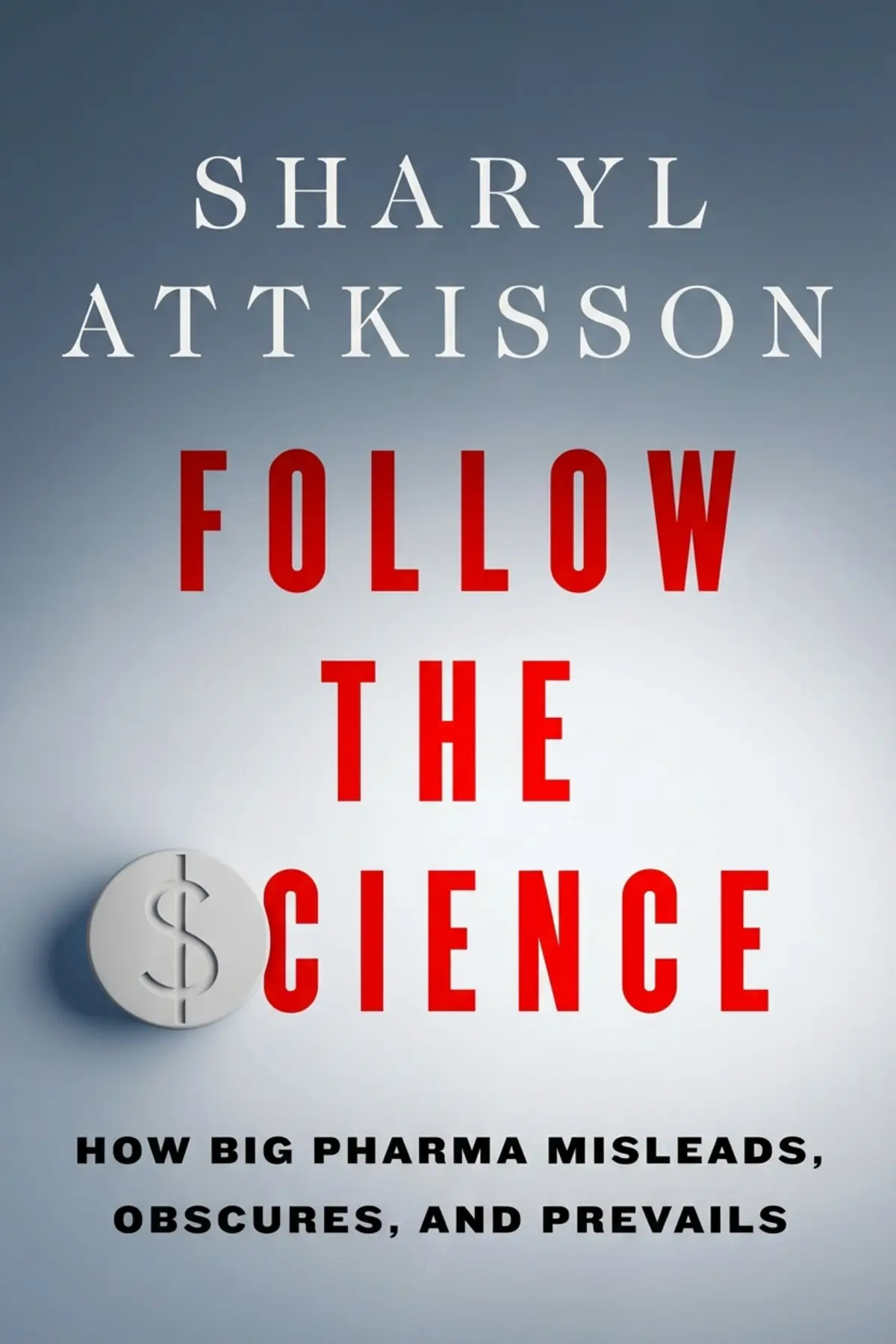
Follow the Science investigates how corporate interests and political agendas have compromised public health, uncovering the hidden influence of the pharmaceutical industry on regulatory agencies, media narratives, and medical research transparency.
1 min 45 sec
In recent years, a single phrase has become a ubiquitous mandate in our public discourse: “Follow the science.” It is often presented as a shield against misinformation and a guiding light for public policy. But what happens when the very institutions we rely on to define that science are influenced by corporate money, political pressure, and a lack of transparency? We find ourselves in a landscape where the health of the public sometimes takes a backseat to the health of a balance sheet, and where questioning the prevailing narrative is often treated as a form of heresy.
To understand the current state of medical trust—or the lack thereof—we have to look beneath the surface of official press releases and government mandates. We are currently witnessing a paradox where medical technology has never been more advanced, yet chronic illness and public confusion are at an all-time high. This isn’t just a matter of scientific debate; it’s a story of how the machinery of public health has been recalibrated over decades. From the aftermath of national security crises to the global upheaval of a pandemic, the lines between objective research and industry promotion have become dangerously blurred.
In the following exploration, we will trace the throughline of this transformation. We’ll look at how emergency responses can become permanent policy fixtures, how ethical standards in research can be quietly sidelined, and how the regulatory agencies meant to be our watchdogs have, in many ways, become partners with the companies they are supposed to oversee. This is not about being anti-science; it is about demanding that science remains a process of rigorous, open-ended inquiry rather than a finished product sold by the highest bidder. By the end of this journey, you’ll have a clearer perspective on how to navigate a medical world where information is often managed and truths are sometimes hidden in plain sight.
2 min 07 sec
Discover how the national security concerns following the 2001 terrorist attacks created a new precedent for rapid vaccine deployment and government-led health initiatives.
2 min 02 sec
Explore a troubling case where prestigious medical institutions conducted experiments on vulnerable patients without fully disclosing the life-threatening risks involved.
1 min 56 sec
Learn how the lines between drug manufacturers and the agencies meant to regulate them have blurred, leading to the approval of controversial and expensive treatments.
1 min 56 sec
Understand the legal frameworks that protect vaccine manufacturers from lawsuits and the challenges faced by those seeking compensation for medical injuries.
1 min 55 sec
Examine how official communication during the COVID-19 pandemic often prioritized messaging over nuance, leading to a significant loss of public trust.
1 min 53 sec
Analyze why inexpensive, repurposed drugs were often dismissed or stigmatized during the pandemic while expensive new treatments received emergency authorization.
1 min 51 sec
Investigate the emerging health challenges related to spike protein exposure and the independent doctors working to treat patients with persistent symptoms.
1 min 36 sec
The journey through the intersection of medicine, money, and power reveals a sobering reality. To truly follow the science, we must acknowledge that science is not a static set of rules handed down by authorities, but a dynamic, often messy process of discovery. We have seen how the legacy of national security fears, the influence of pharmaceutical funding on regulatory agencies, and the suppression of dissenting voices have all contributed to a crisis of confidence in public health. The systems that were built to protect us are, in many ways, currently structured to protect themselves and their corporate partners.
However, this realization is not a reason for despair; it is a call for vigilance and personal agency. The throughline of this investigation is that transparency is the only antidote to the corruption of science. Whether it is demanding full disclosure in medical trials, pushing for accountability in vaccine safety, or supporting independent research into long-term health issues, the path forward requires an active and informed citizenry. We must move away from a world of “managed consent” and back toward a world of true informed consent.
As you navigate your own health decisions and process the headlines of the day, remember to look beyond the slogans. Ask who funded the study, what data is being omitted, and why a particular treatment is being promoted or silenced. By reclaiming our right to ask these questions and by supporting those who prioritize patients over profits, we can begin to rebuild a healthcare system that is truly worthy of our trust. The science is there to be followed, but only if we have the courage to see where it actually leads.
In an era defined by the phrase Follow the Science, this deep dive reveals a troubling reality: the science we are told to follow is often shaped by power, profit, and political maneuvering. The book explores how the systems meant to protect our health—from the FDA to major news networks—have become entangled with the pharmaceutical industry, leading to suppressed data, rushed drug approvals, and a breakdown in public trust. Readers are taken through a series of investigative case studies, ranging from the post-9/11 push for bioterrorism vaccines to the controversies of the COVID-19 pandemic. It examines the ethical failures in medical research, the legal shields that protect manufacturers from liability, and the marginalization of independent voices. Ultimately, the work serves as a call for a return to genuine scientific inquiry and informed consent, empowering individuals to think critically about the medical advice and public health mandates they receive.
Sharyl Attkisson is an Emmy Award–winning investigative journalist known for her in-depth reporting and nonpartisan approach. She’s worked for major networks like CBS and authored several best-selling books, including Stonewalled and The Smear, which explore media bias and government transparency. Her work focuses on uncovering hidden truths in journalism, politics, and health care.
Listeners find this work both gripping and thoroughly documented, calling it essential reading for informed Americans. The investigative reporting is highly praised, as one listener points out the meticulous way the author carries out her research. Listeners characterize the book as eye-opening and stimulating, with one review emphasizing how it alters one's view of the media. The caliber of the writing earns positive feedback, and listeners value the significant amount of information disclosed throughout the text.
Picked this up after seeing a segment on Full Measure and I wasn't disappointed. Attkisson brings her signature investigative depth to a topic that most mainstream outlets are frankly too scared to touch. She explores the complex web of financial ties between regulators and the industry, showing how money often dictates the "truth" we're told. It is eye-opening to see how ghostwriting in medical journals actually works. My only minor complaint is that the formatting can feel a bit dense at times because there is just so much information to digest. If you want to understand how the system actually operates, this is a must-read for every American citizen. It's time we stop blindly trusting and start asking the hard questions.
Show moreWow, this was such a powerful and illuminating read that I truthfully couldn't put it down once I started. Attkisson has a way of taking complex data and turning it into a narrative that is both compelling and easy to follow. The information about the herbicide atrazine and its role as a hormone disruptor was particularly shocking to me. It makes you realize how little we actually know about the chemicals in our environment. While the book is quite long and covers a lot of ground, the chapters are well-organized and lead to a logical conclusion. This is investigative journalism at its finest, reminding us why we must always follow the money. This book changed my perspective on the media.
Show moreAs a skeptic of the mainstream narrative, I found this book to be an essential resource for understanding the true state of American healthcare. Attkisson’s background as an Emmy-winning reporter shines through in every chapter as she exposes the conflicts of interest that plague our regulatory agencies. The truth is, we have been misled for decades by a system that prioritizes profit over patients. I was especially impressed by her courage in discussing the links between vaccines and autism, a topic that has been unfairly silenced for far too long. This book is more than just an exposé; it is a vital tool for anyone seeking to navigate the modern world. It is time for us to demand better from those in power.
Show moreEver wonder why pharmaceutical companies spend so much on commercials when you can't even buy their products without a doctor? This book explains exactly why, pulling back the curtain on the massive influence the industry exerts over our daily lives. Attkisson meticulously details how the CDC and FDA failed the public during the COVID-19 pandemic by ignoring natural immunity and suppressing valid counterpoints. It’s a wild ride that will leave you feeling a bit paranoid but also much more informed about your health choices. In my experience, the section on mercury in vaccines was the most eye-opening part of the whole book. We need more transparency in our government agencies immediately to protect future generations.
Show moreAttkisson doesn't pull any punches here, and gotta say, it's about time someone spoke up about the corruption in our healthcare system. The way she links the funding of activist groups to the very companies producing the medications they promote is a stroke of investigative brilliance. You can tell she’s a seasoned pro by the way she structures her arguments and builds a case against the pharma-government line. Some might call her a conspiracy theorist, but the evidence she presents regarding ghostwritten studies is hard to ignore. This book is a huge wake-up call for anyone who blindly trusts their physician. I highly recommend it to anyone who wants to take control of their own medical destiny and seek the truth.
Show moreFew journalists today have the courage to stand up to the pharmaceutical industrial complex like Sharyl Attkisson. This book is a masterclass in investigative reporting, showing how billions of dollars in advertising spend effectively buy the silence of major media outlets. She challenges the idea that any science is ever truly settled, which is a perspective we desperately need in today’s polarized climate. The details regarding the Aduhelm Alzheimer's drug approval were especially gut-wrenching to read. While some readers might find her inclusions of alternative viewpoints controversial, she is simply doing the job of a real reporter. It is a compelling and necessary call to action for anyone who cares about medical freedom and the health of their family.
Show moreThe chapter on atrazine and how it affects hormonal development was absolutely chilling to read. I had no idea that a single herbicide could have such a profound impact on biology, yet remain so widely used despite the research. Sharyl Attkisson writes with a clear, direct style that makes complex medical topics accessible to a general audience. That said, I do wish she had included a more formal bibliography or a detailed list of citations at the end of the book. Without them, it’s a bit harder to verify some of the more shocking claims she makes about vaccine injuries. Despite that, the book is incredibly thought-provoking and will definitely make you question everything you hear on the news.
Show moreFinally got around to reading this after hearing Sharyl on a podcast, and I honestly have to say, it’s an incredibly dense but rewarding experience. The sheer volume of information regarding the suppression of adverse drug effects is enough to make anyone question the safety of the modern medicine cabinet. I appreciated her breakdown of the SUPPORT study involving premature babies, even though it was heartbreaking to read. Personally, my only issue is that the book feels a bit disjointed when she pivots from hard data to social commentary. However, the core message about the lack of informed consent is something every parent needs to hear. It's a solid four-star read that will stay with me for a long time.
Show moreTo be fair, this book is a bit of a mixed bag for me. On one hand, Attkisson does a phenomenal job exposing the revolving door between the FDA and major drug companies. Her breakdown of the natural immunity debate during the pandemic was particularly insightful and felt very well-researched. On the other hand, the section where she links vaccines to autism felt like a step too far into debunked territory. I also found it strange that she gave so much weight to internet posts as valid sources in certain sections. It’s a long, intense read that requires you to sift through the facts to find the real gems. If you can stay objective, there is a lot to learn here about pharmaceutical influence.
Show moreLook, I really tried to finish this, but the shift in tone halfway through was just too much for me to handle. It starts with some very rational and well-documented points about Big Pharma’s greed, which I totally agree with. However, it quickly devolves into territory that feels more like a blog post than a journalistic exposé. When the author starts citing celebrities like Robert De Niro as if their opinions are scientific evidence, she lost me completely. I also don't understand what the January 6th events have to do with pharmaceutical corruption. It’s a shame because there are some important kernels of truth hidden in here, but they are buried under too much speculation. I expected better from an Emmy winner.
Show moreBarack Obama
Masaji Ishikawa
John Rawls
Miles Taylor
Tracy Rosenthal
Jessica Valenti
AUDIO SUMMARY AVAILABLE
Get the key ideas from Follow the Science by Sharyl Attkisson, plus 5,000+ more titles in English and Thai.







