
21 min 22 sec
Leadership: Theory and Practice
Explore the foundational theories and practical styles of effective leadership. This guide breaks down how to influence others through authentic, servant, and adaptive approaches to achieve collective success in any environment.
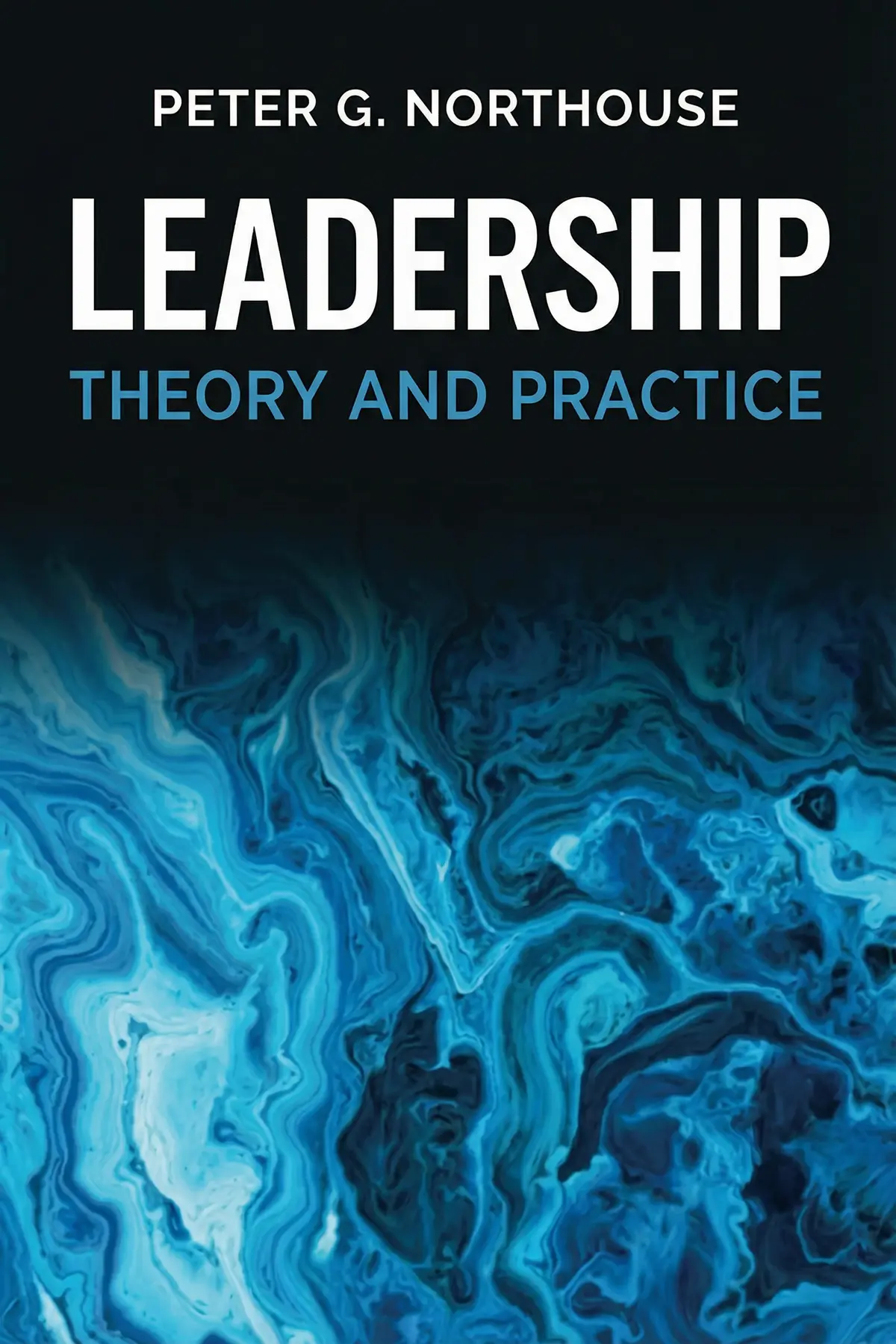
Table of Content
1. Introduction
1 min 41 sec
Leadership is a word that carries a certain weight, often evoking images of monumental figures standing on the podiums of history. We tend to view leaders as larger-than-life characters who possess an almost mystical ability to command attention and chart the course of entire nations. This perspective makes leadership seem like a rare gift, something reserved for the chosen few. However, if we look closer, we see that leadership is far more pervasive and accessible than we might think. It is the common thread in every successful group effort, from the global stage down to the local classroom or a community food drive.
At its core, leadership is about influence. It is the process by which one individual guides a group toward a shared objective. Whether you are a teacher sparking curiosity in your students or an organizer coordinating relief for those in need, you are engaging in the act of leadership. Because this influence is so vital to how our society functions, it is essential to move beyond the myths and understand the actual mechanics of how it works.
In this exploration, we are going to dive deep into the diverse theories that explain where leadership comes from and how it is practiced. We will move through different frameworks—looking at how some leaders focus on tasks, how others focus on people, and how the most effective ones learn to adapt to the shifting sands of their environment. By the end of this discussion, you will have a comprehensive view of the leadership styles available to you, helping you determine which approach best aligns with your personality and your goals. We will see that leadership isn’t just a position you hold; it’s a set of behaviors and choices that can change the world, no matter the scale of the endeavor.
2. Defining the Source of Leadership Influence
2 min 27 sec
Is leadership something you are born with, or can it be learned through practice? Explore the foundational theories that attempt to explain the origins of influence.
3. The Power of Transformation and Moral Elevation
2 min 23 sec
Moving beyond simple exchanges, discover how transformational leaders inspire followers to exceed their own expectations and strive for a higher moral ground.
4. Leading with Authenticity and Transparency
2 min 22 sec
Authenticity is the bedrock of trust. Learn how leaders build credibility by aligning their internal values with their external actions.
5. The Paradox of the Servant Leader
2 min 15 sec
What happens when a leader views themselves as a servant first? Explore how putting others’ needs at the center can drive organizational success.
6. Adapting to the Winds of Change
2 min 22 sec
In a world of constant flux, leaders must help their teams navigate uncertainty. Learn the strategies for managing adaptive challenges.
7. The Essential Balance of Inclusion
1 min 59 sec
True inclusion is more than just a headcount. Discover the delicate balance between helping people belong and celebrating their unique identity.
8. Recognizing the Shadow of Leadership
1 min 56 sec
Not all influence is used for good. Understand the ‘Toxic Triangle’ and how to identify destructive leadership before it causes harm.
9. The Ethical Pillars of Influence
2 min 09 sec
At its heart, leadership is a moral endeavor. Explore the five principles that define ethical conduct in the pursuit of a common goal.
10. Conclusion
1 min 48 sec
As we have seen throughout this journey, leadership is far more than a simple title or a set of inherited traits. It is a dynamic, complex, and deeply human process that involves a myriad of different approaches and styles. We’ve moved from the idea of the ‘born leader’ to the understanding that leadership is a craft that can be learned, practiced, and refined. Whether through the visionary inspiration of transformational leadership, the quiet service of the servant leader, or the strategic agility of the adaptive leader, the core of the work remains the same: helping a group of people achieve something they could not do alone.
The throughline in all of these models is the importance of the relationship between the leader and the follower. Whether that relationship is built on the transparency of authenticity or the shared values of an inclusive culture, it is the quality of this connection that determines the success of the endeavor. Furthermore, we’ve seen that this power of influence must be anchored in a strong ethical framework. Without respect, justice, and honesty, leadership can easily slide into the destructive patterns of the toxic triangle.
So, as you step back into your own professional or personal life, consider which of these styles resonates most with the challenges you face today. Perhaps you need to ‘get on the balcony’ to navigate a period of change, or maybe you need to focus on listening to ensure your team feels truly included. Remember that leadership is a choice you make in every interaction. By focusing on the growth of those around you and staying true to your ethical principles, you can exercise the kind of influence that doesn’t just meet targets, but truly makes the world a better place. The path to becoming an effective leader is a lifelong journey, and the tools we have explored here are your map for the road ahead.
About this book
What is this book about?
Leadership by Peter Guy Northouse serves as an essential roadmap for anyone looking to understand the mechanics of influence and group dynamics. Rather than offering a one-size-fits-all solution, it examines the vast landscape of leadership through various lenses, ranging from the innate traits of historical figures to the teachable skills that anyone can cultivate. The book delves into the nuances of how leaders interact with their followers, the importance of adapting to specific situational challenges, and the ethical responsibility that comes with holding power. Readers are guided through diverse models such as transformational, authentic, and inclusive leadership, gaining a clear understanding of what makes each style effective. The promise of this work is to demystify the aura of leadership, transforming it from an abstract concept into a set of actionable behaviors. By focusing on both the personal growth of the leader and the well-being of the group, it provides the tools necessary to lead with integrity and achieve meaningful progress in modern organizations and communities.
Book Information
About the Author
Peter Guy Northouse
Peter G. Northouse is Professor Emeritus of Communication at Western Michigan University and has taught courses on leadership and communication for more than 30 years. His other works include Introduction To Leadership, Leadership Case Studies in Education, and Health Communication: Strategies for Health Professionals.
Ratings & Reviews
Ratings at a glance
What people think
Listeners find the work to be exceptionally well-researched and packed with deep insights, with one listener highlighting how it merges theoretical frameworks with practical use. It functions as a vital resource for leadership theory and implementation, featuring activities that prompt individuals to evaluate their own leadership approaches. However, clarity and ease of use receive varied reviews; some consider it an easy read while others find it irritating. Additionally, listeners report problems with missing content, specifically pages 25-40, and though some are pleased with the value, others think it is overpriced.
Top reviews
Sue
Finally got around to finishing the 9th edition for my management seminar and I was genuinely surprised by how much I enjoyed the structure. Northouse manages to take dense, academic theories and break them down into digestible segments that actually make sense for a working professional. Each chapter follows a predictable template—theory, strengths, criticisms, and case studies—which makes it an incredible reference for long-term study. I especially appreciated the inclusion of the Skills Approach and how it contrasts with the older Trait theories from the early 20th century. While the price is definitely on the high side for a paperback, the internal worksheets and self-assessments provide real value for students. It isn't just a book you read; it's a tool you use to diagnose your own professional behavior. Highly recommended for anyone who needs to bridge the gap between high-level concepts and actual office dynamics.
Show moreGioia
Wow, this is exactly what I needed for my Teacher Leader program this semester to help me understand the dynamics of my school. The way Northouse outlines the evolution from the Great Man theories to modern adaptive leadership is nothing short of fascinating for a history buff. I personally loved the Father John case study in the servant leadership chapter; it really forced me to rethink how I listen to my colleagues. The book isn't afraid to show the negative sides of these theories, which is a level of honesty you don't always get in textbooks. My only gripe is that it feels a bit management-heavy at times, perhaps ignoring the social psychology aspect of how followers perceive leadership. Still, the self-reflection questionnaires at the end of each chapter are life-changing if you actually take the time to do them.
Show moreNongnuch
This book provides an excellent, semi-chronological overview of the leadership landscape for anyone looking to understand the core theories of the field. I especially liked the section on Howard Schultz and how his childhood experiences shaped his approach to employee healthcare at Starbucks years later. It's refreshing to see a textbook that acknowledges how personal life stories impact professional authority and the perception of authenticity in the workplace. The layout is very consistent, which helped me stay organized throughout the semester without feeling overwhelmed by the massive amount of information. I will definitely be referencing the bibliography for many years to come as I continue my graduate studies in organizational leadership. My only minor complaint is that the price is quite steep for a textbook that hasn't changed drastically between editions.
Show moreNarong
As someone who usually finds leadership textbooks to be a total slog, this one was a refreshing change of pace for my evening classes. I found the section on Path-Goal Theory particularly illuminating because it offers a clear roadmap for removing obstacles for your team. Truth be told, I did find the chapters on gender and cultural diversity a bit basic, almost like they were added as an afterthought to tick a box. They didn't really dive into the deep intercultural nuances I was hoping for, focusing more on surface-level statistics and generalities. However, the case studies, like the one about Nelson Mandela, really bring the transformational leadership model to life. It’s well-researched and cited to the moon, so you know the information is credible even if it gets a bit dry in the middle sections.
Show moreJonathan
Picked this up to design a new training module for my team and I found the interpersonal versus intrapersonal breakdown of authenticity helpful. It moves semi-chronologically, which helps you see how leadership has shifted from being about innate traits to being a teachable skill over the decades. The inclusion of current examples, like the bits about Elon Musk or Monica Aldama, keeps the theory from feeling too dusty or detached. I do think the book could use more focus on the toxic triangle of destructive leadership, as that's a huge issue in modern culture. To be fair, Northouse covers a lot of ground in 500 pages, so some superficiality is to be expected in the broader chapters. It’s a solid, reliable anchor for anyone trying to understand the history of management and organizational behavior.
Show moreRafael
The chapter on inclusive leadership alone makes this book worth the shelf space for any modern manager dealing with a diverse team. It strikes a delicate balance between the need to belong and the desire to maintain one's own unique identity, which is a struggle today. While the writing is undeniably academic and a bit stiff at times, the information is incredibly comprehensive and well-organized for quick reference. You get a thumbnail sketch of every major theory from the last century, complete with a list of strengths and weaknesses that are honest. I found the situational approach to be the most practical for my daily life, though the path-goal theory was a close second. It’s definitely more of a reference book than something you’d read for pleasure on a quiet Sunday afternoon.
Show moreLook
In my experience, most textbooks are either all fluff or all math, but this one finds a middle ground that is actually usable. I really enjoyed how the book explains that these leadership models are not mutually exclusive, meaning you can apply different styles depending on the situation. The transition from transactional to transformational leadership was especially well-articulated, showing how morality and vision are the real keys to systemic change. However, I noticed some of the gender-related discussions felt slightly ethnocentric, which was disappointing for a book in its ninth edition. Despite that, the structured layout makes it very easy to find exactly what you need for an essay or a project. It’s a classic for a reason, even if it has a few minor blind spots in its cultural analysis.
Show moreUraiwan
After hearing so much about servant leadership in my MBA program, I finally bought this to see what the academic hype was about. The truth is, Northouse provides a very sober, evidence-based look at these concepts rather than the fluffy self-help version you find in airport bookstores. I liked the focus on the dyad relationship between leaders and followers, emphasizing that leadership is a two-way street of constant influence. The case studies provide great fodder for pondering how these theories play out in the real world, though they can be a bit brief. If you’re looking for a step-by-step how-to guide, you might be disappointed because this is focused more on the research and history. It’s an intellectual journey that requires a bit of patience and focus to fully appreciate the depth of the material.
Show moreAria
Look, the content here is undeniably well-researched, but calling it an easy read feels like a bit of a stretch for the average person. The author tends to circle back to the same definitions repeatedly, which makes some chapters feel bloated with superfluous details that don't add much value. It’s an essential guide for passing a college-level exam, but it lacks the punchy, implementation focus that you'd find in more modern business books. I also had a major issue with the physical copy I received because it was missing several pages in the first section. For the premium price they charge for this text, you would expect better quality control from the publisher. It’s a decent starting point for the discipline, yet I wouldn't call it the definitive masterpiece on the subject.
Show moreErn
Not what I expected at all given the high praise I saw in the course syllabus and from my peers. Frankly, the writing style is incredibly dense and the author fails to describe major concepts with any sort of conciseness or clarity. I spent more time Googling summaries of the theories than I did actually reading the chapters themselves because the text was so frustrating. To make matters worse, my copy arrived with a printing error where pages 25 through 40 were just completely blank! How am I supposed to study the Trait Approach when the most important pages are missing from my expensive book? It is way too overpriced for such a dry, poorly edited textbook that lacks any real sense of engagement. If your professor gives you the option, just stick to the lecture slides and save your money.
Show moreReaders also enjoyed
A Year with Peter Drucker: 52 Weeks of Coaching for Leadership Effectiveness
Joseph A. Maciariello

Acting with Power: Why We Are More Powerful Than We Believe
Deborah Gruenfeld
All In: How Great Leaders Build Unstoppable Teams
Mike Michalowicz
AUDIO SUMMARY AVAILABLE
Listen to Leadership in 15 minutes
Get the key ideas from Leadership by Peter Guy Northouse, plus 5,000+ more titles in English and Thai.
- 5,000+ titles
- Listen as much as you want
- 7-day free trial
- Cancel anytime







