
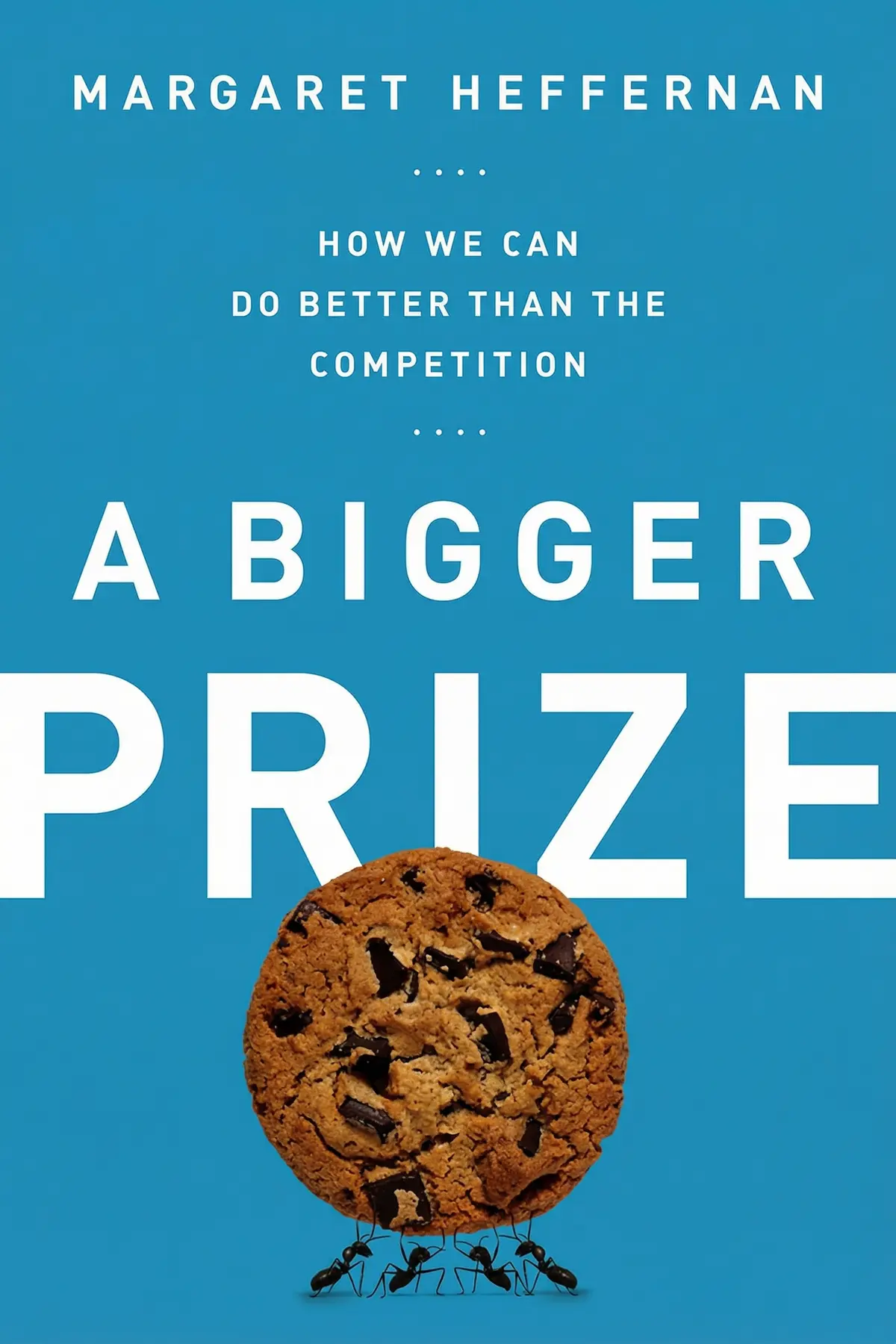
A Bigger Prize: How We Can Do Better Than the Competition
Margaret Heffernan
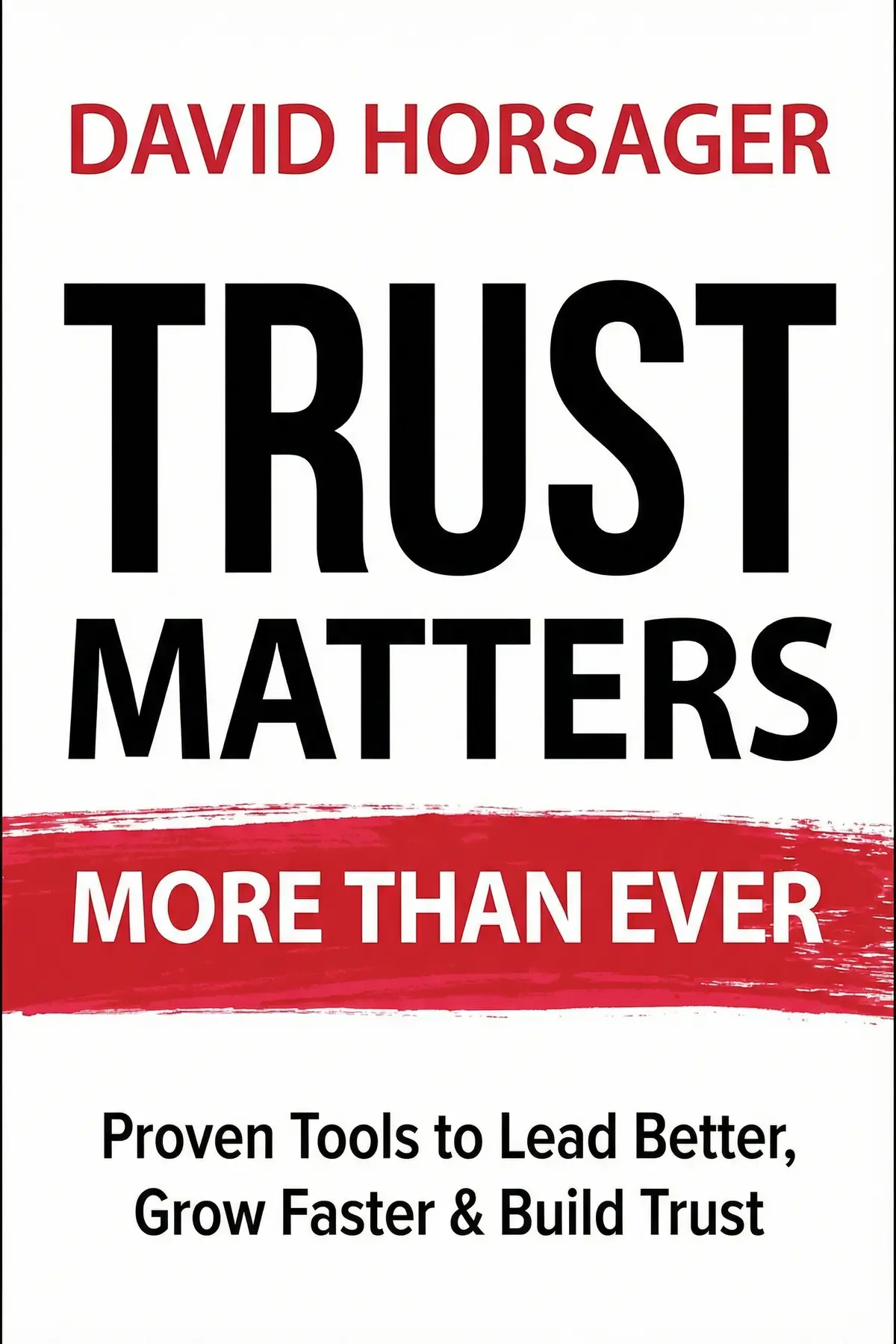
Trust Matters More Than Ever explores how reliability and integrity serve as the ultimate competitive advantages. David Horsager outlines eight essential pillars for building high-trust cultures that drive performance and loyalty.
1 min 59 sec
For generations, the way we decided who to trust was simple and local. It was based on the people we saw every day—the neighbor whose fence shared a border with ours or the local shopkeeper who knew our family. We had personal knowledge and physical proximity. But as our world grew more complex and our communities expanded into massive cities and global networks, that personal bond couldn’t scale. To keep society functioning, we shifted our confidence toward large institutions. We began to trust schools, governments, and established markets to provide the stability that individual neighbors no longer could. We relied on the system, even if we didn’t know the person behind the desk.
Today, however, that institutional foundation is shaking. If you look at the data, the shift is staggering. In the early 1960s, trust in government sat at roughly 77 percent; today, that number has plummeted to around 20 percent. This skepticism isn’t limited to politics. Across the board, from media and medicine to religion and education, the pillars of our society are facing a crisis of confidence. In response, we’ve seen the rise of distributed trust—where we rely on the collective reviews of strangers on a platform or the transparency of a network rather than a centralized authority. Yet, amidst this shift, personal connection is becoming more important than ever. The closer the link, the more we are willing to believe.
In this exploration of David Horsager’s insights, we will look at trust not as an abstract feeling, but as a tangible, measurable asset. We will examine the eight pillars that support it and learn practical tools to strengthen each one in your professional and personal life. Whether you are leading a massive corporation or trying to improve your relationships at home, the throughline remains the same: trust is the essential lever for performance. By the end of this journey, you will understand how to turn reliability into your greatest competitive advantage in a world that is increasingly starved for it.
2 min 33 sec
Discover why trust is more than just a soft skill, serving as a critical driver of speed, cost reduction, and organizational health in a skeptical age.
2 min 44 sec
Learn how eliminating ambiguity and demonstrating genuine care can instantly reduce workplace friction and foster psychological safety.
2 min 11 sec
Explore why integrity alone isn’t enough to build trust if it isn’t paired with the constant growth of your professional skills.
2 min 28 sec
See how staying true to your word during tough times and using storytelling to bridge gaps can transform a group into a loyal team.
2 min 34 sec
Understand how delivering visible results and maintaining daily habits can cement your reputation as a leader people can count on.
1 min 14 sec
As we conclude this exploration of David Horsager’s framework, it’s clear that trust is the hidden engine of success. We’ve moved through the eight pillars—Clarity, Compassion, Character, Competency, Commitment, Connection, Contribution, and Consistency—and seen how each one serves as a vital component in building a high-trust culture. From the precision of the ODC tool to the foundational health habits of the SEEDS model, these are not just ideas; they are actionable strategies for a world that feels increasingly uncertain.
However, the most important takeaway is that trust always starts with you. It is the core of your leadership and your personal life. If you do not have trust in yourself—if you don’t believe in your own ability to follow through or act with integrity—it will be impossible for others to trust you. Strengthening your self-trust requires a commitment to honesty, a willingness to admit when you are wrong, and a relentless focus on growth. When you bridge your own trust gaps, you set a standard for everyone around you. By prioritizing trust, you aren’t just improving your performance or your bottom line; you are contributing to a more reliable, connected, and effective world. Remember, trust matters more than ever, and it begins with the next choice you make.
What if the most significant barrier to your success isn't your strategy or your product, but something much more fundamental? This summary dives into the core of human and organizational interaction, arguing that trust is the most valuable asset any leader or organization can possess. In an age where confidence in institutions is at an all-time low, establishing genuine connections and proving reliability has never been more difficult—or more necessary. The book presents a comprehensive framework known as the eight pillars of trust: Clarity, Compassion, Character, Competency, Commitment, Connection, Contribution, and Consistency. By mastering these areas, you can eliminate the hidden costs that slow down communication and inflate friction within teams. You will discover practical tools, such as the ODC tool for clear communication and the SEEDS model for personal stability, designed to help you bridge the gap between intent and action. Ultimately, the promise of this work is a roadmap for leading with integrity, growing faster through collaboration, and creating a culture where people feel safe to perform at their highest level.
David Horsager is a prominent strategist, keynote speaker, and best-selling author specializing in the intersection of trust and business performance. Serving as the CEO of the Trust Edge Leadership Institute, he has dedicated his career to helping diverse clients—ranging from Fortune 500 companies to professional sports teams—cultivate high-trust environments that yield measurable results. His extensive research is reflected in several books, including The Trust Edge and The Daily Edge. Horsager’s insights have earned him recognition in leading publications such as Forbes, the Wall Street Journal, and the New York Times, establishing him as a global authority on leadership integrity.
Listeners find the content delivers compelling observations and actionable tips, while one listener observes that it is firmly grounded in real-world results. Additionally, the book provides ready-to-use resources for immediate application, and one listener specifies that it is built upon 8 key pillars of trust. They also appreciate its ability to cultivate greater trust and forge more sincere bonds in every aspect of life.
This book is essentially a masterclass in human connection that goes far beyond the typical corporate leadership manual. David Horsager treats trust like a living organism, something that requires constant nourishment and the right environment to flourish. I found the 8-pillar framework to be incredibly robust, especially the focus on 'contribution' which often gets overlooked in these types of discussions. The 40 specific tools provided are not just abstract concepts; they are actual, sharpenable implements you can use to mend relationships or build new ones from scratch. While some of the diagrams are a bit dense upon first glance, the overall impact of the 90-day plan is undeniable for anyone willing to put in the work. It’s a hopeful, sturdy guide that reminds us that while trust is easily broken, it is also something we can intentionally rebuild with steady hands.
Show moreHonestly, the way Horsager breaks down the 'Counter Forces' that erode our credibility makes this a mandatory read for anyone in a leadership position. He doesn't just tell you that trust matters; he shows you exactly how to measure it and what to do when it starts to leak out of your organization. The farmer metaphor throughout the book is beautiful and grounded, making the advice feel timeless rather than trendy. I spent a lot of time with the 'What Trust Tool do I need today?' index, which is perfect for those days when you don't have time to read a whole chapter. It’s rare to find a book that is both deeply philosophical and immediately applicable to a Tuesday morning staff meeting. This isn't just about business—it’s about how to be a person of weight and character in a world that often feels flimsy.
Show moreThe chapter on 'Compassion' felt like a breath of fresh air in a genre that usually prioritizes bottom-line metrics over human emotion. Horsager manages to prove that being a 'good' person and being a successful leader are not mutually exclusive goals, but are actually deeply intertwined. I loved the visual aids, especially the 'Counter Forces' graphic, because it gave me a language to describe why my previous team failed. This book is structured like a toolkit, and like any good toolkit, the implements are sturdy, well-designed, and ready for immediate use in the field. Every leader should keep a copy of this nearby to remind themselves that their word is their bond and their character is their greatest asset. It’s a hopeful look at how we can fix our broken institutions one relationship at a time. Truly an essential read for 2024 and beyond.
Show moreI've been searching for a way to bridge the gap between my team's output and our culture, and this blueprint for authenticity provided the missing link. David Horsager has a way of stating the obvious in a way that makes you realize you haven't been doing it at all. The 40 tools are the highlight here, providing a clear path forward when everything feels like it's falling apart during a crisis. I especially liked the 'What Trust Tool do I need today?' section because it recognizes that leadership is often about triage rather than long-term planning. This book is a steadying force in an uncertain world, offering a reminder that the harvest of trust only comes to those who work the land. It is easily the most actionable book on organizational health I have read in the last five years.
Show moreAfter seeing how quickly workplace morale can crumble, I realized that trust isn't just a soft skill but a hard currency. Horsager’s book offers a pragmatic blueprint for authenticity that felt very relevant to my current team dynamics. The division into 8 key pillars makes the daunting task of 'building trust' feel much more manageable and structured. I particularly appreciated the section on 'Consistency' because it highlights how small, repetitive actions outweigh one-time grand gestures. To be fair, some of the 40 tools felt a little repetitive, and a few examples seemed slightly dated for the modern remote-work era. However, the 'What Trust Tool do I need today?' section at the back is a genius addition for quick reference. It’s a solid resource for anyone looking to foster deeper connections in their professional life.
Show morePicked this up on a whim, and I’m glad I did because the emphasis on 'compassion' as a fundamental pillar was a total lightbulb moment. Most business books ignore the emotional undercurrents of productivity, but Horsager leans right into them with real-world examples that hit home. The writing style is clear and flows like water, making it easy to digest even when the topics get heavy or self-reflective. I’ve started implementing the 90-day trust building cycle with my direct reports, and the fresh shoots of improved communication are already visible. My only gripe is that the book can feel a bit repetitive in the middle chapters as it reinforces the core pillars. Still, the practical value of the tools far outweighs the minor pacing issues. It is a very useful guide for becoming a more intentional human being.
Show moreGotta say, I appreciated the 'Lasting Trust' diagram because it simplified complex psychological concepts into something my kids could even understand. The book does a great job of taking high-level theory and grounding it in the dirt of everyday life and work. I’ve been using one tool per week as suggested, and the intentionality has already changed the way I approach difficult conversations with my clients. To be fair, the tone can be a bit 'cheerleader-ish' at times, which might grate on more cynical readers who prefer a drier, more academic style. However, if you can get past the enthusiasm, the actual strategies for building consistency and contribution are gold. It’s a very practical guide that focuses on real-world results rather than just feeling good about yourself. I’d recommend it to anyone managing a team.
Show moreIs trust really the 'soil' of our interactions, or is it just another corporate buzzword used to mask underlying power dynamics? David Horsager makes a compelling case for the former, though the book sometimes feels like it’s trying to solve every human problem with a single hammer. The 8 pillars are a useful mental model, but I found some of the 40 tools to be a bit simplistic for complex organizational conflicts. Frankly, the 'Lasting Trust' diagrams were helpful, but the text surrounding them felt like it could have been edited down for more impact. It’s a decent read if you’re new to the concept of trust as a business metric, but seasoned leaders might find some of it to be common sense. It’s definitely actionable, though I struggled to stay engaged through the more anecdotal sections of the middle chapters.
Show moreLook, the core message here is solid, but I found the sheer volume of 40 different tools to be a bit overwhelming for a single volume. While the 8-pillar framework is a great way to categorize the concepts, I felt like the book sacrificed depth for breadth in several sections. Some of the tools are fantastic and provide immediate clarity, while others feel like filler that could have been summarized in a few bullet points. I appreciated the actionable nature of the 90-day plan, but sticking to it requires a level of discipline that the book assumes everyone already possesses. It’s a helpful resource to keep on your desk for occasional reference, but reading it straight through was a bit of a slog for me. A good book, just not the revolutionary experience I was expecting based on the hype.
Show moreNot what I expected in terms of pacing, as the book asks for a significant time commitment to really work through the 90-day plan effectively. While I respect the research behind the 8 pillars, I found the writing to be somewhat repetitive, constantly circling back to the same themes without adding new layers. The 40 tools are hit-or-miss; some are absolute game-changers for communication, while others felt like common-sense advice repackaged in fancy terminology. In my experience, trust is more organic and less mechanical than the 'implement' metaphor suggests, making some of the steps feel a bit forced. It’s a decent manual for someone who needs a very rigid structure to follow, but it lacked the nuance I was hoping for. It's okay, but maybe a bit over-engineered for such a fundamental human experience.
Show moreMargaret Heffernan
Joseph A. Maciariello
Deborah Gruenfeld
Mike Michalowicz
AUDIO SUMMARY AVAILABLE
Get the key ideas from Trust Matters More Than Ever by David Horsager, plus 5,000+ more titles in English and Thai.







