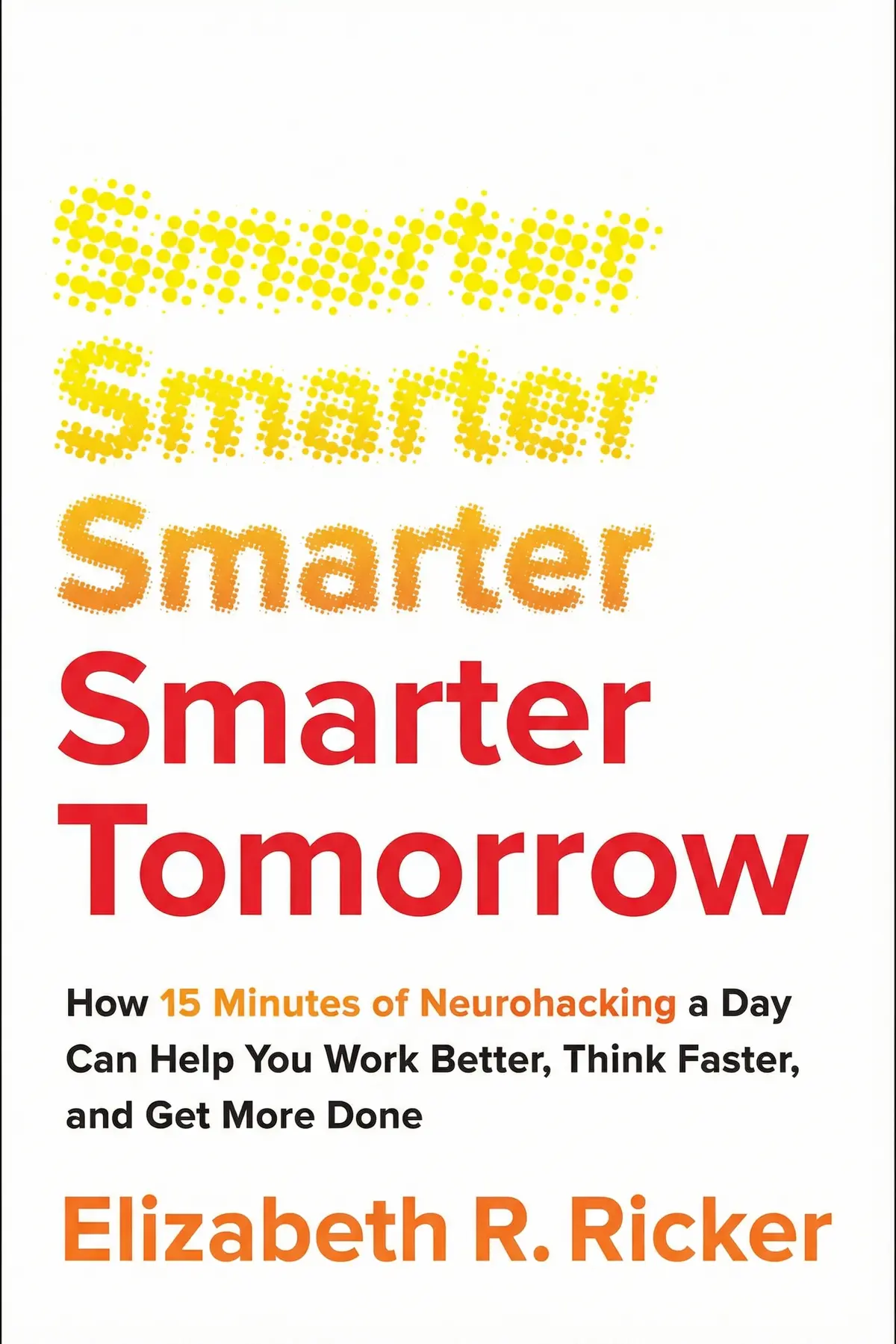
Smarter Tomorrow: How 15 Minutes of Neurohacking a Day Can Help You
Elizabeth R. Ricker
Explore the inner workings of the human mind with this neuroscience-based guide. Learn to enhance your cognitive potential through practical strategies for focus, learning, and emotional resilience in daily life.
1 min 40 sec
Imagine for a moment that you have been handed the most sophisticated, powerful, and intricate piece of technology in the known universe. It is capable of processing massive amounts of data in milliseconds, storing a lifetime of memories, and orchestrating every single movement and emotion you experience. Now, imagine that this incredible device came with absolutely no instructions. This is the reality for every human being. We all possess a brain, a three-pound marvel that defines who we are, yet most of us go through life without truly understanding how it works or how to keep it running at its best.
In this exploration of the human mind, we are going to bridge that gap. We are going to look at the brain not just as a mysterious grey mass, but as a dynamic, adaptable organ that you can actually influence. The core throughline here is empowerment. By understanding the biological and chemical foundations of our thoughts and feelings, we can stop being passive observers of our mental states and start becoming active participants in our cognitive health.
We will move through the basics of brain anatomy and the history of how we came to understand it, before diving into the practical ways we can sharpen our focus, stabilize our moods, and even restructure our neural pathways. Whether you are struggling with the mid-afternoon slump, looking to overcome the barriers of overthinking, or simply curious about why your brain works the way it does, this guide offers the scientific framework you need to navigate your internal world. Get ready to turn the key on your cognitive potential and discover the manual you never knew you were missing.
2 min 32 sec
Delve into the intricate machinery of neurons and neurotransmitters that creates your reality, and see how historical breakthroughs paved the way for modern neuroscience.
2 min 17 sec
Discover how your brain reacts to pressure and how aligning your activities with your internal clock can unlock hidden levels of productivity.
2 min 35 sec
Learn why simple lifestyle factors like hydration and social bonds are actually non-negotiable requirements for a healthy, high-functioning brain.
2 min 33 sec
Interpret the signals your brain sends when things are off-balance and gain strategies to manage headaches, overthinking, and mental fatigue.
2 min 42 sec
Move beyond labels and explore how conditions like ADHD and Autism represent unique variations in human brain architecture rather than just deficits.
2 min 45 sec
Unlock the secrets of top performers by mastering the art of deliberate practice and learning how to trigger a state of effortless focus.
1 min 48 sec
As we wrap up this journey through the landscape of the human mind, it is clear that the brain is far more than just a biological processor. It is a living, breathing, and constantly changing organ that is shaped by everything you do. We have seen how the microscopic world of neurons and neurotransmitters creates the foundation for your thoughts, and how the physical structure of your brain can be rewired through the power of neuroplasticity. We’ve explored the essential roles of sleep, hydration, and social connection, and we’ve learned how to read the signals—like brain fog and overthinking—that let us know when our internal systems are out of balance.
The throughline of all these insights is simple: you are the steward of your own cognitive health. By respecting your biological rhythms, embracing your unique neurodiversity, and utilizing the science of deliberate practice, you can move from surviving to thriving. You now have the initial pages of that ‘owner’s manual’ we discussed at the start. The work of optimizing your brain doesn’t happen overnight, but through small, consistent choices that support your mental architecture.
Remember that your brain is a precision instrument, and like any fine tool, it requires regular care and understanding. Whether you are aiming for a state of flow in your work or simply looking for more emotional stability in your daily life, the strategies we’ve covered today provide the roadmap. Take what you have learned and start applying it—one glass of water, one good night’s sleep, and one focused moment at a time. Your brain has the potential to achieve incredible things; all it needs is for you to listen to it and give it the support it deserves.
This summary provides a deep dive into the most complex organ in the human body, offering what is essentially an owner's manual for the brain. It demystifies the biological processes that drive our thoughts, moods, and actions, moving from the microscopic world of neurons and neurotransmitters to the visible impact of daily habits. Listeners will discover how the brain physically restructures itself through neuroplasticity and how to leverage natural biological rhythms to maximize productivity. The guide addresses common mental hurdles like brain fog and overthinking, provides a compassionate overview of neurodiversity, and outlines the specific steps required to reach peak performance. By the end, you will have a comprehensive toolkit for optimizing your mental health, improving memory, and unlocking a state of creative flow.
Elizabeth R. Ricker is an award-winning neuroscientist with degrees from MIT and Harvard. She is also the author of Smarter Tomorrow, which was named a top book of the year by the Wall Street Journal and won the 2022 Nautilus Book Award in Science & Cosmology.
Elizabeth R. Ricker
Listeners admire the way this book clarifies intricate neuroscience, transforming it into an approachable and interesting guide for those who do not have a scientific education. They also highlight the colorful graphics, charts, and margin notes that make the data visually stimulating and simple to process. Furthermore, listeners appreciate the integration of functional tools and assessments, with one listener specifically mentioning the utility of the ten-minute test for evaluating cognitive function and decision-making. The book also addresses a wide array of subjects, from nutritional advice to various life stages, delivering a transparent and educational perspective on preserving overall brain health.
Elizabeth Ricker manages to turn what could have been a dry academic text into a vibrant, living guide for the everyday person. I was immediately struck by the gorgeous illustrations and sidebars that help break down the more complex neurological pathways. It’s rare to find a book that balances high-level science with such an approachable tone, yet this one nails it perfectly. I particularly enjoyed the sections on how our environment—like lighting and nutrition—actually shapes our cognitive performance day-to-day. While some might find it a bit introductory, it’s exactly what I needed to jumpstart my interest in biohacking and brain health. It’s a stunning physical book that deserves a spot on your coffee table for easy reference. You will find yourself flipping through it constantly just to look at the colorful charts.
Show moreAs someone who has always struggled with "science-speak," I found this guide to be a total breath of fresh air. Ricker has a gift for simplifying the complex nature of our neurons and synapses into something that feels relevant to my actual life. I was especially fascinated by the chapters exploring the connection between our minds and gut health. Who knew that what we eat has such an immediate impact on our mood and clarity? The book is also just beautiful to hold, with vibrant colors that make you want to keep reading. It’s organized in a way that doesn’t feel overwhelming, even when discussing serious topics like andropause or learning differences. This is the first time I’ve actually finished a book about biology without feeling like I was reading a dictionary. It's incredibly accessible.
Show moreWow, what a comprehensive resource for anyone wanting to maximize their mental potential. I picked this up hoping for a few tips on productivity, but I walked away with a full-scale understanding of how my brain has evolved since childhood. The way it tracks development through various life stages is brilliant and very relatable. I especially appreciated the inclusion of self-assessment tools that help you identify your own cognitive strengths and weaknesses. To be fair, I’ve read a lot of self-help books, but this one feels more grounded in actual data rather than just "positive thinking" fluff. The illustrations really do make a difference in helping you visualize the concepts. It's a fantastic gift for a student or anyone interested in self-improvement. The author clearly knows her stuff and presents it with real authority.
Show moreAfter hearing several people recommend this, I finally bought the hard copy, and the visuals are even better in person. The author’s expertise as a neuroscientist really shines through, yet she keeps the language accessible for common people like myself. I was particularly interested in the specifics on left-handedness and how our brains process information differently depending on our physical traits. It’s filled with "aha!" moments, like learning how even minor dehydration can significantly tank your cognitive performance. The charts are super helpful for those of us who learn better through images than just blocks of text. Frankly, it’s one of the best overviews of the human mind I’ve come across in years. It’s informative without ever feeling like a chore to read, making it perfect for casual learning.
Show moreThe chapter on life stages alone makes this book worth the purchase. Learning about how the brain changes from the utero stage all the way through adulthood and into the later years was eye-opening. I had never even heard of "andropause" before, but the way Ricker explains it makes so much sense in the context of brain health. The sections on learning differences were also incredibly helpful for me as a parent trying to understand my child's unique perspective. Everything is written with such clarity that you don't need a PhD to follow along. It’s rare to find a science book that is this engaging and visually stunning at the same time. I’ve already recommended it to several friends who are interested in biohacking and personal development. It is an excellent overview for the layperson.
Show moreEver wonder why your focus slips after lunch or why certain habits are so hard to break? This book provides those answers without burying the reader in jargon. The standout feature for me was definitely the ten-minute brain performance test, which gave me tangible data on my own decision-making processes. It’s a very hands-on experience compared to other science books that just lecture you. My only minor gripe is that I wished some of the "how-to" sections went a bit deeper into the long-term biological mechanisms. However, for a general overview that is both engaging and aesthetically pleasing, it’s a solid win. The layout makes it incredibly easy to flip to a random page and learn something new about your gray matter without feeling like you are back in school.
Show moreFinally got around to reading this, and I’m glad I did because it’s surprisingly practical. The author doesn’t just explain the brain; she gives you tools to actually use it better. For instance, the section on decision-making and the associated quizzes really highlighted some of my own biases that I wasn't aware of before. The two-page spread format for different subjects makes it a perfect "commuter read" because you can digest a whole concept in five minutes. Not gonna lie, I think a few chapters could have used more references for the claims being made, but the overall package is very high quality. It’s a nice mix of a textbook and a coffee table book. Definitely worth checking out if you want to understand your own quirks better and improve your daily performance.
Show moreThe visual presentation of this book is undeniable, but I found myself wanting more meat on the bones. While the charts and colorful graphics are lovely to look at, the actual scientific explanations felt a bit thin for someone who already knows the basics of neuroscience. Each topic only gets about two pages of coverage, which is great for a quick browse but frustrating if you want to understand the "why" behind the advice. I’ll admit the section on hydration and brain fog was a good reminder, and the life stages chapter from utero to adulthood was informative. Still, it feels more like an infographic collection than a deep-dive manual. If you're looking for a light, breezy introduction, this is it, but seasoned science readers might be disappointed by the lack of granular detail.
Show morePersonally, I found this to be a bit of a mixed bag. On one hand, the layout is beautiful and the information is presented in a very clear, easy-to-follow format. On the other hand, the "10-minute test" felt a bit like a magazine quiz rather than a clinical assessment. It’s fun to do, and it gets you thinking about your brain performance, but don't expect it to change your life overnight. It's a simple read for when you want to learn something new without having to focus too intensely. I liked the sections on nutrition and lighting, but I think the book tries to cover too many topics at once, leaving some of them feeling a bit rushed. It’s a decent introductory text, but it stays very much on the surface level of the science.
Show moreLook, I really wanted to love this because the cover and internal graphics are absolutely stunning. However, after finishing the whole thing, I felt like I had just read a series of very pretty blog posts. There is a lot of "what" but not enough "how" for my taste. For a book that claims to be a guide, I expected more actionable protocols for daily life rather than just general facts about dehydration and sleep. Truth is, if you’ve spent any time on health podcasts, you probably already know 90% of what is in here. It's a great "intro to the brain" for a middle schooler or someone with zero science background, but for me, it lacked the technical depth to be truly useful. It’s visually appealing, but it didn't offer enough new information to justify the price.
Show moreAUDIO SUMMARY AVAILABLE
Get the key ideas from Brain by Elizabeth R. Ricker, plus 5,000+ more titles in English and Thai.