Culture Architecture: Design the Team Environment That Performs
Stop managing behavior. Design the conditions that produce it.
For experienced leaders and founders who want to move beyond day-to-day management and shape the cultural and organizational systems that make high performance the default. The path is strategic, grounded in research and built for people who think at the level of the whole organization.
Explore the first book →← All paths for this goal
Your reading order
9 books- 1
Lencioni's most complete argument about organizations: the biggest competitive advantage is not strategy or technology but health. This book frames the whole path by showing that culture is not a soft extra but the foundation of everything else.
- 2
Next, see that culture is not one fixed thing: it moves through five distinct tribal stages. Logan's framework helps you find where your organization stands now and which specific moves will lift it to the next level of shared performance.
- 3
Culture does not change by accident. Once you know where you stand, Oakes gives an 18-step plan drawn from real companies that changed their culture, showing leaders how to rebuild culture on purpose without destroying what already works.
- 4
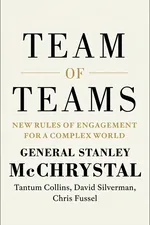
McChrystal's redesign of the Joint Special Operations Command is a leading case study in rebuilding an organization for speed and adaptability. After Culture Renovation, this book shows what a truly restructured, decentralized team looks like in practice.
- 5
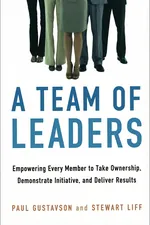
Building on McChrystal's decentralized model, this book gives the practical structure for turning every team member into a self-sufficient leader, with specific tools for role design, visual management and shared accountability.
- 6
Appelo treats organizations as living complex systems, not machines. After the tools of A Team of Leaders, Management 3.0 gives you a modern language and toolset for leading adaptive teams that respond to change without waiting for permission from the top.
- 7
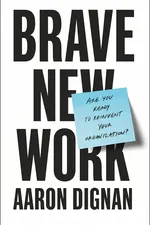
Dignan's Brave New Work takes the systems thinking introduced by Appelo to its full philosophical and practical end: a complete roadmap for building organizations that keep evolving themselves, dropping bureaucracy in favor of real human agency.
- 8
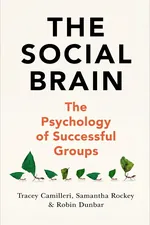
Now ground your culture design in evolutionary biology. After the big organizational models, this book shows the cognitive and social limits that shape how humans naturally connect in groups, giving you science-based constraints for designing smarter, more human team structures.
- 9
Close the path with Cameron's research on positive energy as a force multiplier in organizations. After designing the right structures and culture, this book shows how leaders themselves become the source of energy that sustains peak performance over the long term.