Deep Focus for Knowledge Workers
Reclaim your attention in a world engineered to steal it
For professionals whose work needs long stretches of focused thinking but whose days are broken up by notifications, meetings and digital noise. This path moves from understanding the attention crisis to building a setting and a routine where deep work becomes your default.
Explore the first book →← All paths for this goal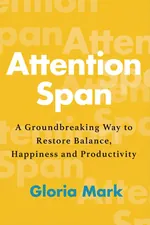
Your reading order
8 books- 1
Start with the science: Gloria Mark's research shows how broken up our attention has become and why it costs far more than we think. Seeing the problem this clearly makes every solution that follows feel urgent and necessary.
- 2
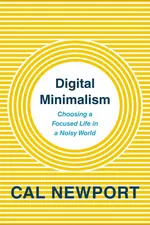
With that research in hand, Newport's Digital Minimalism gives you a philosophy for rethinking how you use technology. It offers more than tips: a values-based framework for deciding which tools deserve your time.
- 3
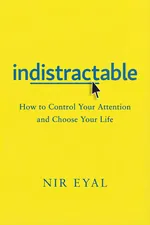
Where Digital Minimalism handles your surroundings, Indistractable tackles the internal triggers that pull you away even when your phone is in another room. Eyal's model is the missing piece most focus books skip.
- 4
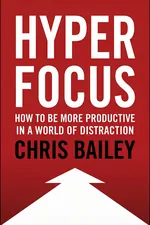
Now that you understand distraction, Hyperfocus teaches you to create the opposite state on purpose. Bailey's two modes, hyperfocus and scatterfocus, show you how to protect deep work and still leave room for creative thinking.
- 5
A short but strong read that reinforces everything you have built so far. Singletasking takes apart the multitasking myth in clear terms and gives you practical steps for staying on one thing at a time.
- 6
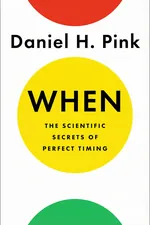
With your focus habits forming, When brings in the science of timing: matching your deep work blocks to your biological peak, so you do your hardest thinking when your brain works best.
- 7
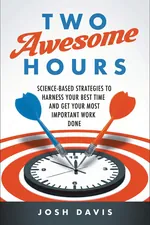
Pink's timing science pairs well with Davis's neuroscience-based argument: you don't need more hours, you need two peak hours set up the right way. This book shows you how to create those conditions.
- 8
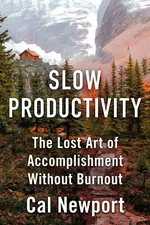
The capstone for this path. Newport's Slow Productivity pulls everything together into a sustainable approach to deep work without burning out: do fewer things, work at a natural pace and obsess over quality.