History’s Hidden Wiring
The forces that shaped the world are stranger than you think
For knowledge workers who suspect that the standard historical narrative leaves out the most interesting parts. This path digs beneath the surface of empires, economies, and civilizations to show the surprising forces that actually drive human events: fish, cotton, genes, and germs.
Explore the first book →← All paths for this goal
Your reading order
7 books- 1
Start by breaking a basic myth: the Americas before Columbus were not a wilderness but a complex world full of people. It is a reminder that the history we inherit is always incomplete.
- 2
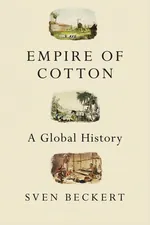
Building on this theme of hidden complexity, Sven Beckert shows how a single crop, cotton, built the structure of modern capitalism, colonialism, and global inequality all at once.
- 3
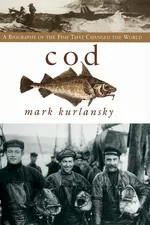
If cotton built capitalism, cod built the North Atlantic world. Mark Kurlansky's micro-history of a fish shows how the smallest subjects can carry the weight of entire civilizations.
- 4
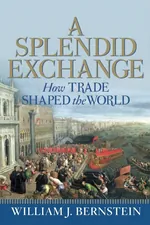
Zooming out from single commodities to the full sweep of trade, William Bernstein traces how the human urge to exchange goods has been the engine of history from Mesopotamia to the modern world.
- 5
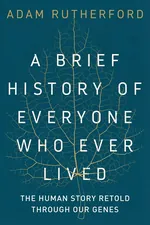
Now turn inward: Adam Rutherford uses modern genetics to retell the human story. He breaks myths about race and ancestry and shows that our biological past is far stranger and more connected than we imagined.
- 6
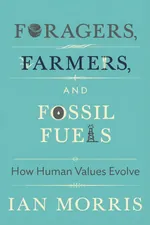
Ian Morris ties it all together with a grand theory: the way humans capture energy (foraging, farming, fossil fuels) has shaped our deepest moral values, not the other way around.
- 7
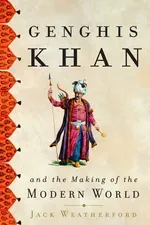
A fitting last book: Genghis Khan, history's most misunderstood figure, turns out to be the architect of the first truly globalized world. It is a final reminder to question every story you are handed.